
How to Identify the German Bavaria Thaler
A large silver crown-sized coin issued by the Kingdom of Bavaria in the 19th century, typically bearing the reigning monarch's portrait and Bavarian coat of arms.
Read the full German Bavaria Thaler encyclopedia entry →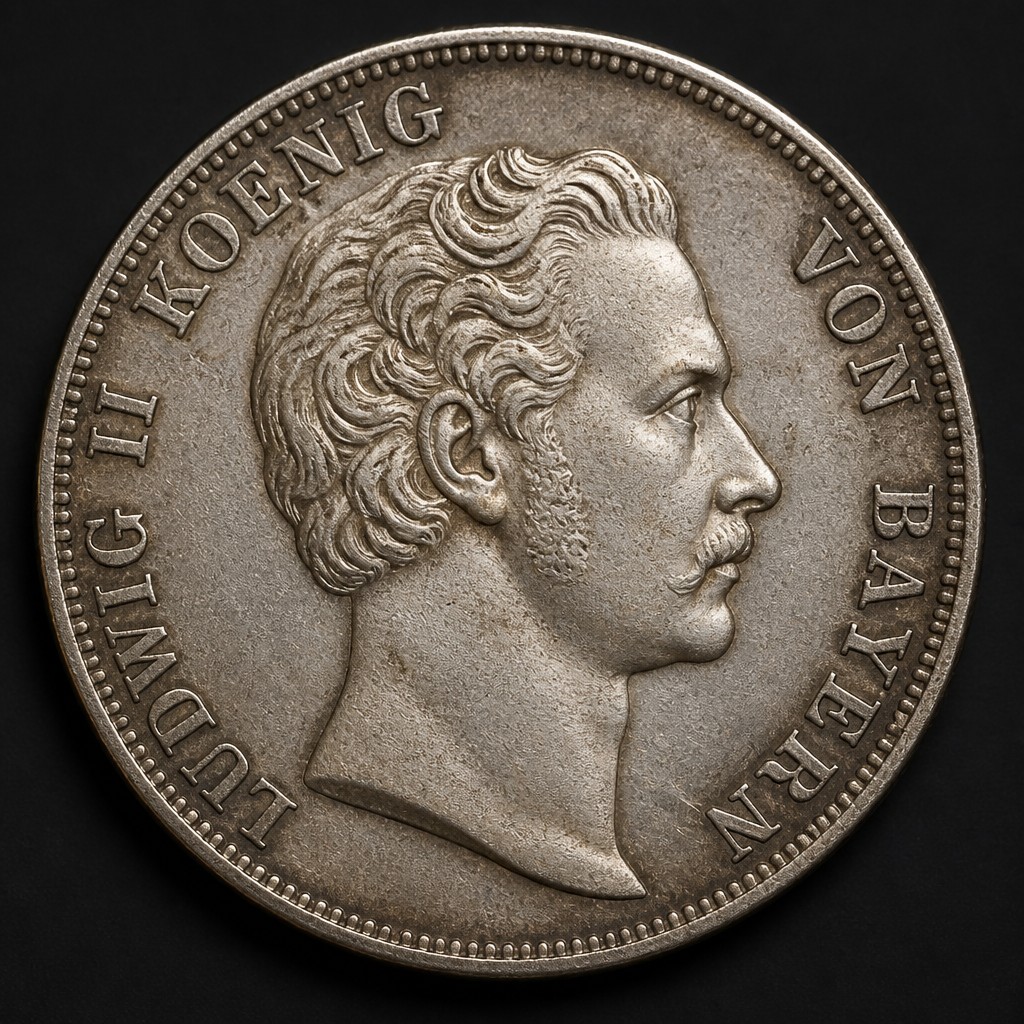
What It Is
The Bavaria Thaler was a large silver coin produced by the Kingdom of Bavaria during the German Confederation and early German Empire era, roughly from the early 1800s through the 1870s when Germany transitioned to the mark system. Many Bavarian thalers were also commemorative issues marking historical events, jubilees, or building dedications.
Obverse Design
The obverse typically shows a portrait of the reigning Bavarian king in profile, such as Maximilian I Joseph, Ludwig I, Maximilian II, or Ludwig II, with his name and royal title in the surrounding legend, for example "LUDWIG II KOENIG VON BAYERN."
Reverse Design
The reverse commonly displays the crowned Bavarian coat of arms supported by lions, or, on commemorative issues, a special design tied to the occasion being honored, such as a monument, building, or historical scene, with the denomination and date included in the design or legend.
Size, Weight, and Metal
Bavarian thalers are large silver coins, generally around 33 mm in diameter and weighing close to 18.5 grams, struck in .900 fine silver. The edge is usually lettered with a motto or reeded, depending on the specific issue and mint year.
Mint Marks and Where to Find Them
Look near the base of the design on the reverse, often below the coat of arms or portrait truncation, for a small mint mark or the initials of the mint master. Munich was the principal Bavarian mint, and its mark or the engraver's initials frequently appear in small letters along the rim.
Telling It Apart from Similar Coins
Bavarian thalers can resemble other German state thalers of the same period, such as those from Prussia, Saxony, or Hanover, since all share the general crown-sized silver format used across the German Confederation. The key distinguishing feature is the ruler's name and title in the legend, plus the specific Bavarian arms design, which differs from other states' emblems.
Judging Condition at a Glance
Examine the portrait's hair and facial features, and the fine details of the coat of arms, for wear. A well-struck thaler with sharp lion manes on the arms and crisp lettering suggests higher grade, while smoothed, shiny high points indicate significant circulation wear.
Authenticity Red Flags
Because large silver crowns are a common target for cast counterfeits, check for a seam line around the edge, a grainy or pitted surface (signs of casting rather than striking), and verify weight and diameter against known standards. Genuine struck coins show crisp, slightly raised design elements rather than soft, rounded details typical of cast fakes.
Frequently asked questions
Which Bavarian kings appear on these thalers?
Common portraits include Maximilian I Joseph, Ludwig I, Maximilian II, and Ludwig II, each identified by name in the coin's legend.
What is the typical silver purity and weight?
Most Bavarian thalers are struck in .900 fine silver and weigh close to 18.5 grams with a diameter around 33 mm.
How do I know which German state issued my thaler?
Read the ruler's name and title in the obverse legend and compare the coat of arms design on the reverse, since each German state used its own distinct arms.
Are commemorative Bavarian thalers different from regular circulation ones?
Yes, commemorative issues replace the standard arms reverse with a special design tied to an event, such as a jubilee or monument, while keeping the same general size and portrait style.