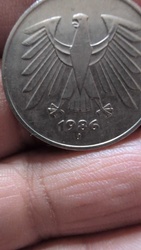
How to Identify the German 5 Deutsche Mark Commemoratives
West Germany issued silver and later copper-nickel 5-mark commemoratives from 1952 to 1986. Look for the theme on the reverse and the eagle obverse.
Read the full German 5 Deutsche Mark Commemoratives encyclopedia entry →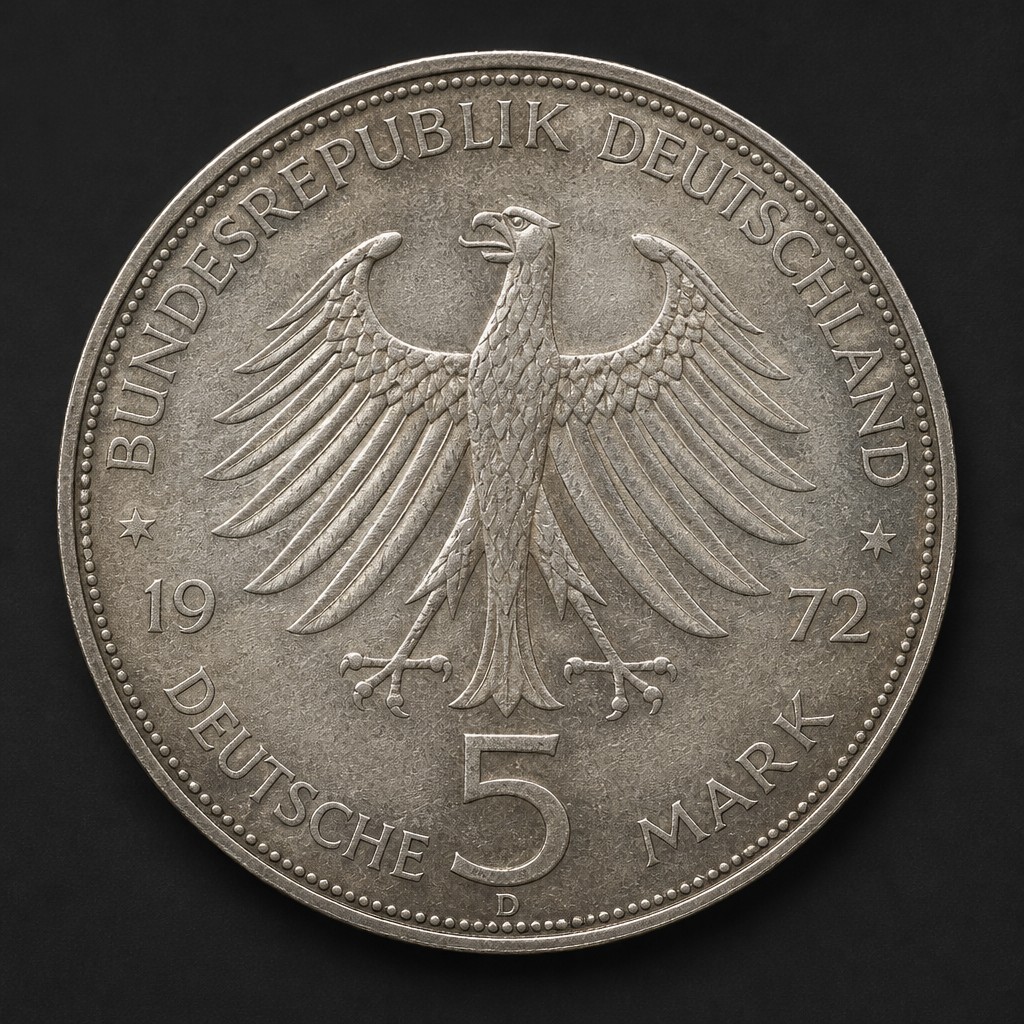
What These Coins Are
Between 1952 and 1986, the Federal Republic of Germany issued 5 Deutsche Mark commemorative coins marking anniversaries, notable people, and historic events. The earliest issues are silver and quite scarce, while later ones are more common. They stand apart from the ordinary circulating 5-mark coin through their special reverse designs.
Obverse Design and Inscriptions
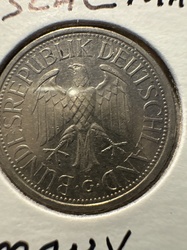
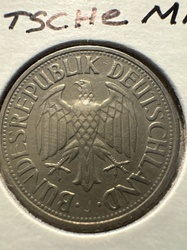
Most commemoratives show the German federal eagle (Bundesadler) with the inscription BUNDESREPUBLIK DEUTSCHLAND around it and the denomination 5 DEUTSCHE MARK, plus the year and mint mark. Some issues place the eagle differently, but the country name and denomination consistently appear on one face.
Reverse Design and Inscriptions
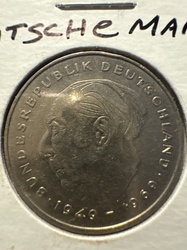
The reverse carries the commemorative theme, which varies widely: portraits of figures such as Friedrich Schiller or the Brothers Grimm, buildings, or event emblems, accompanied by an identifying inscription and dates. This side identifies the specific coin.
Size, Weight, Metal and Edge
Silver commemoratives (1952-1979) are 29 mm in diameter, weigh 11.2 grams, and are 62.5% silver. From 1979 the standard 5-mark commemorative shifted to copper-nickel of the same size and weight. Edges carry lettering, often a motto relevant to the theme or the country name.
Mint Marks and Where to Find Them
A single letter identifies the mint: D Munich, F Stuttgart, G Karlsruhe, J Hamburg, and G or others for earlier issues. The mark appears on the obverse near the eagle or date. The same design may exist from several mints, distinguished only by this letter.
Telling It Apart From Similar Coins
The standard circulating 5-mark coin shows a plain eagle and a large numeral 5, with no commemorative theme. If the reverse depicts a person, building, or event with explanatory text, it is a commemorative. Silver issues also ring differently and feel heavier than the later copper-nickel pieces of equal size.
Judging Condition at a Glance
Examine the eagle's feathers and the high points of the reverse portrait or scene. Sharp detail with reflective fields indicates a well-preserved or proof coin; smoothed feathers and dull surfaces indicate wear. Silver coins may tone gray or golden, which is normal and not damage.
Authenticity Red Flags
Scarce early silver dates such as the 1952 Germanic Museum coin are targets for counterfeiting. Check weight and diameter against published specifications, listen for the clear ring of genuine silver, and be wary of coins whose edge lettering looks mushy or incorrectly spaced.
Frequently asked questions
Are all 5-mark commemoratives silver?
No. Issues from 1952 to 1979 are 62.5% silver, but later commemoratives were struck in copper-nickel.
How do I tell a commemorative from a regular 5-mark coin?
The regular coin shows a plain eagle and large numeral 5; commemoratives depict a person, building, or event with descriptive text.
What does the letter near the eagle mean?
It is the mint mark: D Munich, F Stuttgart, G Karlsruhe, and J Hamburg.
How can I check if a silver one is genuine?
Compare its 29 mm size and 11.2 gram weight to specifications and listen for the clear ring of silver.
German 5 Deutsche Mark Commemoratives identified by the community
Recent German 5 Deutsche Mark Commemoratives coins identified with Coin Identifier.