
How to Identify the George VI Small Cent (Maple Twig)
Canada's bronze one-cent coin issued 1937-1952 under King George VI, identified by his portrait on the obverse and the familiar two-maple-leaves-on-a-twig reverse.
Read the full George VI Small Cent (Maple Twig) encyclopedia entry →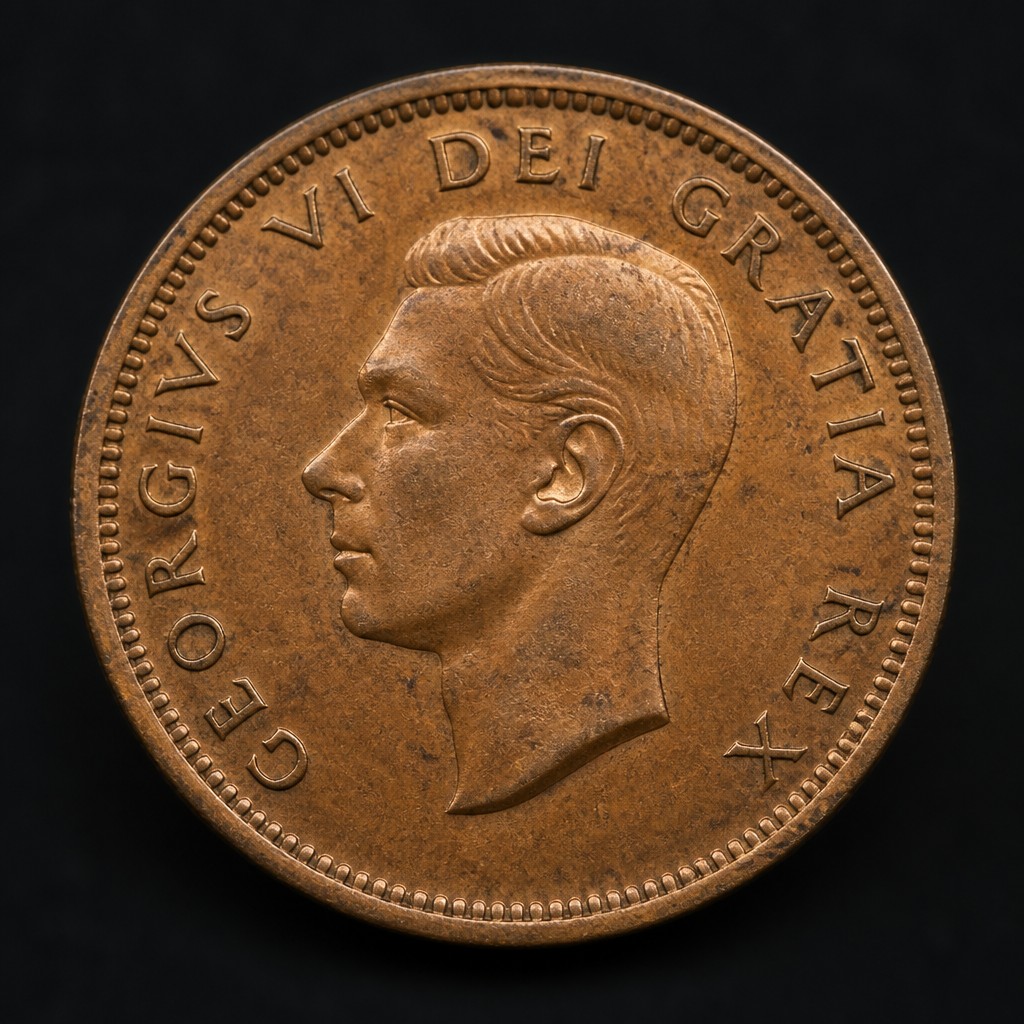
What It Is
This is Canada's standard small bronze cent minted throughout the reign of King George VI, from 1937 until his death in 1952. It continues the "maple twig" reverse design introduced when Canada's cent was reduced to its modern small size and format, and it is one of the most commonly encountered older Canadian coins in circulation-find collections.
Obverse Design
The obverse shows King George VI facing left. Coins dated 1937 through 1947 carry the legend GEORGIVS VI DEI GRATIA REX ET INDIAE IMPERATOR, reflecting his title as Emperor of India. After India's independence in 1947, the "IND IMP" portion was dropped, so coins dated 1948 through 1952 read simply GEORGIVS VI DEI GRATIA REX. This legend change is a quick way to bracket a worn coin's date range even if the numerals are hard to read.
Reverse Design
The reverse shows two maple leaves joined on a small twig, with CANADA arched above and the date below. There is no spelled-out denomination; the cent's value is understood from its size and copper color rather than printed text.
Size, Weight, Metal & Edge
The coin is struck in bronze, weighs about 3.24 grams, measures roughly 19.05mm in diameter, and has a plain edge, consistent with Canadian small cents both before and after this reign.
Mint Marks & Notable Varieties
All examples were produced at the Royal Canadian Mint in Ottawa and carry no mintmark. Because of the same kind of die-timing issue that produced the 1936 Dot Cent, 1947-dated cents struck into early 1948 (before new dies without "IND IMP" were ready) sometimes show a small maple leaf placed next to the date, signaling they were actually struck in 1948 using old-style dies. Collectors distinguish "1947" from "1947 Maple Leaf" cents by checking for this tiny leaf beside the last digit of the date. Because this series ran for sixteen years through a world war, mintage levels varied considerably by year, so some dates turn up far less often in circulation-find collections than others, even though none approach the extreme rarity of the 1936 Dot Cent.
Telling It Apart From Similar Coins
At a glance, this coin can be confused with the small cents struck both before 1937 (under George V, with a different obverse portrait and legend) and after 1952 (under Queen Elizabeth II, again with a different obverse). Since the reverse maple-twig design and overall bronze color stayed consistent across all these reigns, the obverse portrait and legend wording are the fastest way to confirm you are looking at a George VI-era coin rather than one from a neighboring reign.
Judging Condition
Look at George VI's cheek, jaw, and hair for flattening, and check the twig and leaf veins on the reverse for softness. A coin with crisp leaf edges and full hair detail grades noticeably higher than one with smoothed, rounded features from circulation wear. Because bronze coins can also acquire dark toning, spotting, or corrosion from decades of storage, overall eye appeal and surface color are worth noting alongside the strict wear-based grade.
Authenticity Red Flags
This is a common series overall, so outright counterfeits are unusual, but the 1947 Maple Leaf variety and other minor date varieties can be targets for an added or altered leaf mark. Examine any claimed variety mark under magnification for signs of tooling, and compare wear patterns on the rest of the coin to make sure they are consistent with the claimed date and variety. A genuine variety mark should share the same natural wear and patina as the rest of the coin's surface, rather than looking fresher or more sharply cut than its surroundings.
Frequently asked questions
How can I tell an early from a late George VI cent without reading the date clearly?
Check the legend: coins reading 'REX ET INDIAE IMPERATOR' date from 1937-1947, while those reading just 'DEI GRATIA REX' date from 1948-1952.
What is the 1947 Maple Leaf cent?
It is a 1947-dated cent with a tiny maple leaf beside the date, indicating it was struck in early 1948 from old dies while new ones without the India reference were being prepared.
What metal is this cent made of?
It is bronze, primarily copper with small amounts of tin and zinc, giving it the familiar reddish-brown color of old Canadian pennies.
Does the coin have a mintmark?
No, all George VI cents were struck at the Royal Canadian Mint in Ottawa and carry no mintmark letter.
Are these cents rare?
Most dates are common and worth only modest amounts, though a few varieties like the 1947 Maple Leaf carry a collector premium over an ordinary date.