
How to Identify the George V Ten Cents
Canada's silver dime struck 1911-1936 under King George V, including the famous 1911 'Godless' variety and a silver fineness reduction that began in 1920.
Read the full George V Ten Cents encyclopedia entry →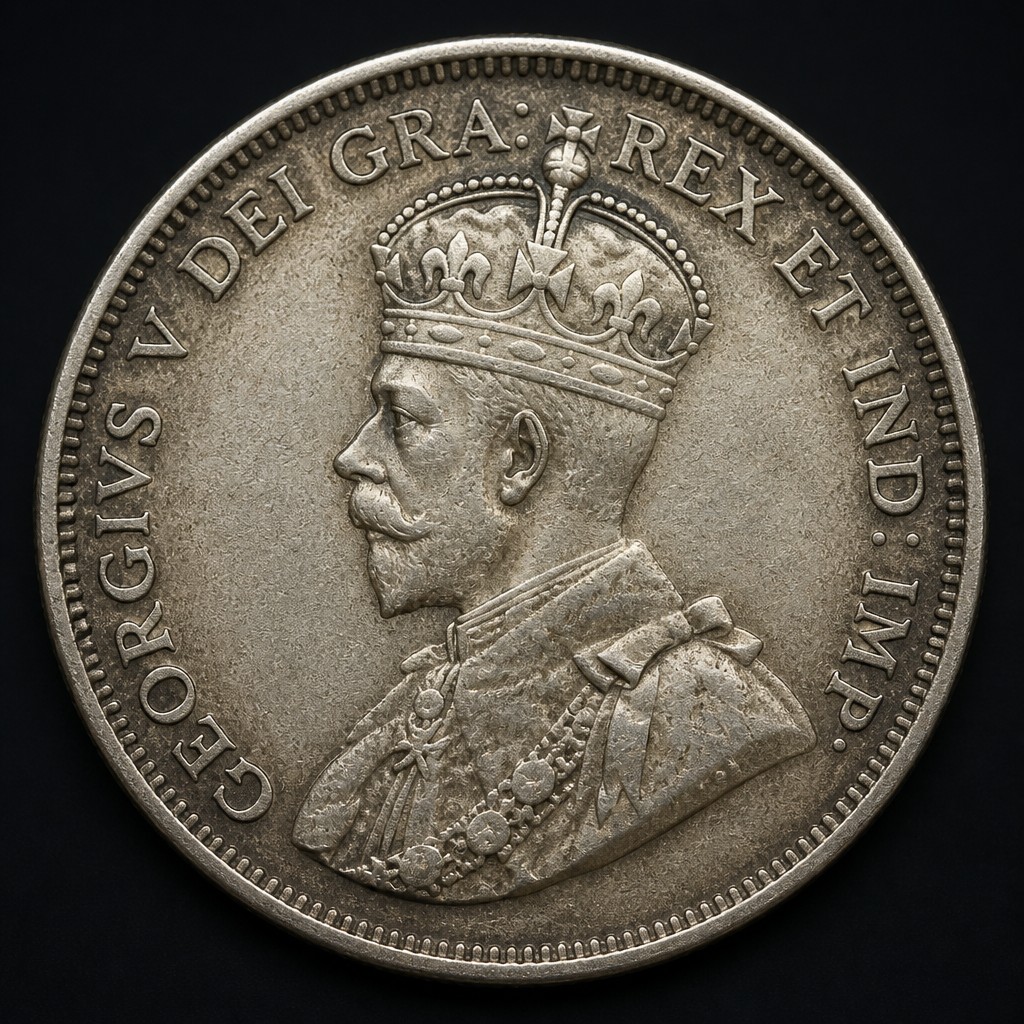
What It Is
This dime was issued for Canada from 1911 through 1936, spanning the reign of King George V, and includes some of the most discussed varieties in the broader wreath-design silver dime series.
Obverse Design
The obverse shows King George V facing left. As with the five-cent and twenty-five cent pieces of the same year, the 1911 issue is part of the famous "Godless" set, omitting "DEI GRATIA" from the legend; this was corrected beginning with coins dated 1912.
Reverse Design
The reverse continues the long-standing maple wreath design surrounding "10 CENTS" and the date.
Size, Weight, Metal & Edge
The coin was struck in .925 sterling silver from 1911 through 1919. Starting in 1920, Canada reduced the silver fineness of its coinage to .800 fine as a cost-saving measure, a change that applies across this and other silver denominations from that year onward. Physical dimensions remain about 18mm in diameter and roughly 2.32 grams in weight throughout, with a reeded edge.
Mint Marks
By this period, coins were produced domestically at the Royal Canadian Mint in Ottawa and generally carry no mintmark.
Telling It Apart From Similar Coins
Checking the legend on a 1911-dated coin for the presence or absence of "DEI GRATIA" immediately identifies whether it is the Godless variety or a later, corrected strike. This coin should be distinguished from the earlier Edward VII dime by its cleaner-shaven, younger royal portrait, and from the later Bluenose-design dime introduced in 1937, which replaces the wreath reverse entirely with a sailing ship. Since this series runs across a fineness change in 1920, a coin's exact date also matters for understanding its silver content, even though the two finenesses cannot be told apart visually.
Judging Condition
Check George V's portrait detail, especially the hair and laurel, and the wreath's leaf veins on the reverse, for signs of flattening from circulation. As with other coins of this era, decades of pocket wear mean that lower-grade, well-worn examples are far more commonly encountered than sharply detailed ones.
Authenticity Red Flags
Because the 1911 Godless variety carries a collector premium, examine the legend area closely for signs that letters have been altered, removed, or added after striking. More generally, watch for cleaned or artificially shined coins that may misrepresent true wear, and verify weight and diameter against known specifications for any coin in doubt.
Frequently asked questions
What is the 1911 'Godless' dime?
It is the 1911-dated dime whose legend omits 'DEI GRATIA,' a wording later corrected starting with coins dated 1912.
Did the silver content change during this series?
Yes, fineness dropped from .925 to .800 silver starting with coins dated 1920, though this cannot be confirmed by eye alone.
How is this different from the dime that came before it?
The previous Edward VII dime shows a mature, bearded portrait, while the George V dime shows a younger, clean-shaven likeness.
When did this wreath-reverse design end?
It was replaced in 1937 by the Bluenose ship design, which continued under later monarchs.
Does the coin carry a mintmark?
No, coins from this period were struck at the Royal Canadian Mint in Ottawa without a mintmark.