
How to Identify the George V Large Cent
How to identify a Canadian George V large cent by its bare-headed portrait, maple leaf wreath reverse, the 1911 Godless variety, and the scarce 1921 date.
Read the full George V Large Cent encyclopedia entry →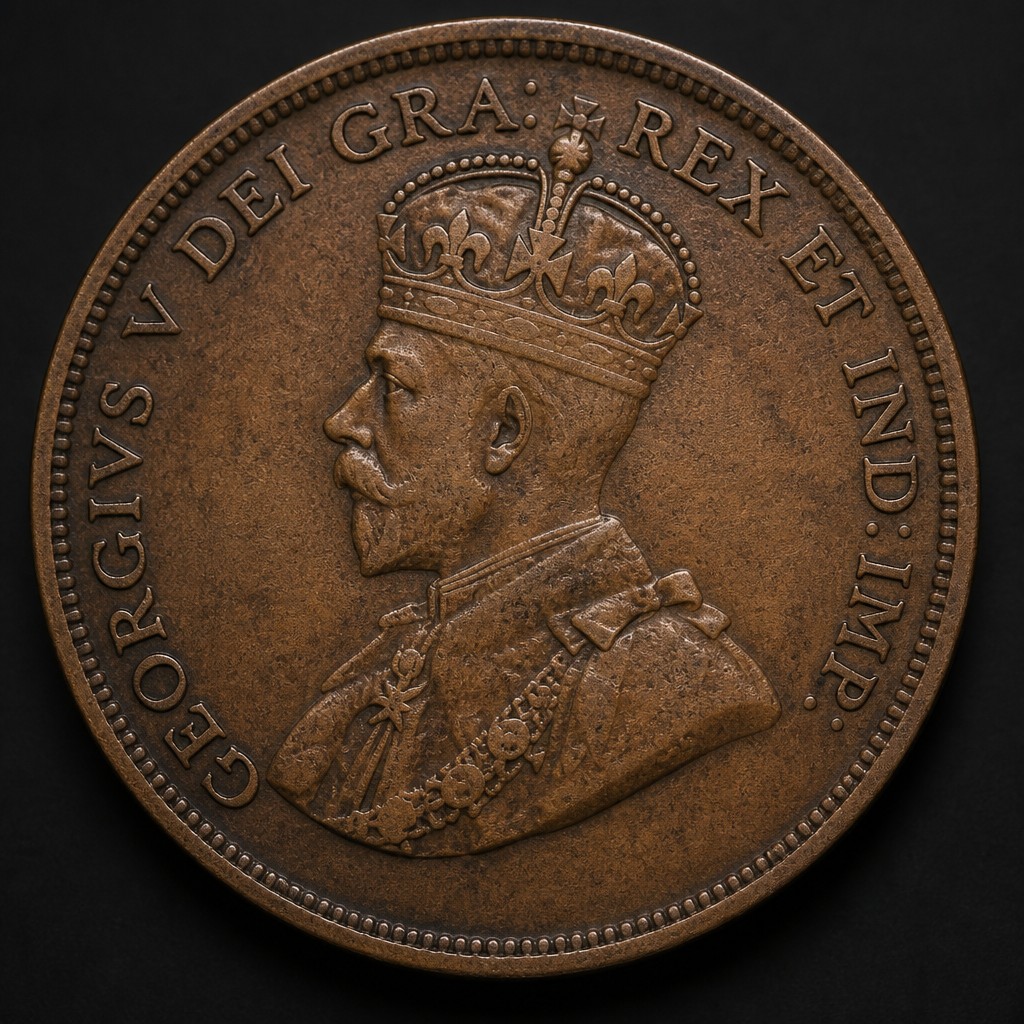
What It Is
The George V large cent was struck for Canada from 1911 to 1920, the final large-cent series before the country permanently switched to the smaller cent diameter still used in more recent decades.
Obverse Design & Inscriptions
The obverse shows a bare-headed portrait of King George V facing left, with a Latin legend naming him king. Coins dated 1911 are historically known as the "Godless" issue, because the traditional abbreviation "DEI GRA" (by the grace of God) was initially left off the legend, sparking public controversy; the phrase was restored starting with coins dated 1912.
Reverse Design & Inscriptions
The reverse carries on the familiar maple leaf wreath encircling "ONE CENT" and the date, in the same general style used for the previous two reigns.
Size, Weight, Metal, and Edge
Struck in bronze, the coin measures about 25.4mm across and weighs approximately 5.67 grams, with a plain edge.
Mint Marks & Where to Find Them
By this period, production had shifted mainly to the Ottawa mint, which opened in 1908, so most George V large cents carry no separate mintmark. The date itself, rather than a mintmark, is the key detail to check when placing a coin within the series.
Telling It Apart From Similar Coins
Check first for the presence or absence of "DEI GRA" in the legend to identify the 1911 "Godless" cents specifically. Also be aware that 1921 is the key date of the entire large-cent series: large-cent production effectively ended as Canada moved to small cents in 1920, and most of the small 1921 large-cent mintage was later melted down, leaving genuine low-grade survivors scarce.
Judging Condition & Grade
Examine the fine detail in George V's hair and the wreath's ribbon for the earliest signs of wear. As with earlier large cents, a natural even brown patina versus a cleaned or artificially recolored surface is a major factor in overall condition.
Authenticity Red Flags
For the scarce 1921 date especially, check the final digit of the date carefully for signs of alteration from a more common year such as 1920 or 1911, compare the numeral spacing and font against genuine references, and be cautious of added or re-punched details and artificially aged surfaces.
Frequently asked questions
What is the 1911 Godless large cent?
It refers to 1911-dated coins that initially omitted the abbreviation DEI GRA (by the grace of God) from the obverse legend, a change that caused public controversy and was reversed starting with the 1912 coins.
Why is the 1921 large cent considered rare?
Large-cent production was ending as Canada switched to small cents in 1920, and most of the limited 1921 large-cent mintage was later melted down, leaving relatively few genuine survivors.
How do I know if a large cent was struck at the Ottawa mint?
Most George V large cents from this period carry no separate mintmark since production had shifted mainly to Ottawa, so the date is the main clue rather than a mint symbol.
What should I check on a coin claimed to be a 1921 large cent?
Look closely at the final digit of the date for signs of alteration from a more common year, and compare the numeral style and spacing against known genuine references.