
How to Identify the George V Fifty Cents
Canada's 50-cent piece from 1911 to 1936, featuring King George V's portrait and a crowned shield reverse, including the famous 1911 'Godless' variety.
Read the full George V Fifty Cents encyclopedia entry →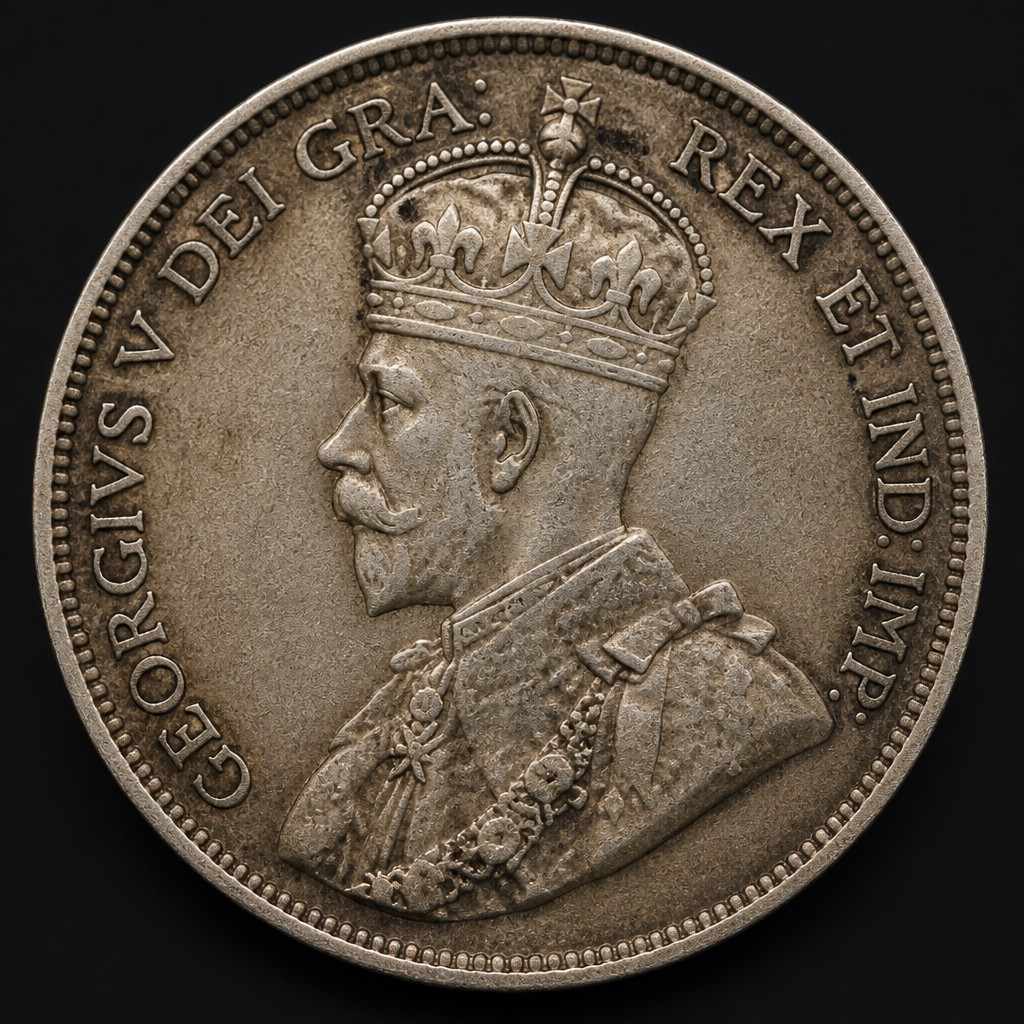
What Is This Coin?
This series covers Canadian 50-cent coins struck during George V's reign, continuing the crowned-shield format established under Queen Victoria. It includes several notable varieties and one legendary rarity (1921), making careful date and detail checking especially worthwhile. Spanning a quarter century of production, the series also documents the country's gradual shift away from higher-fineness silver as economic pressures affected coinage standards worldwide.
Obverse Design
The obverse shows George V's bare-headed portrait facing right. The 1911 issue famously omitted "DEI GRATIA" (by the grace of God) from the legend due to a design decision, sparking public complaints; the phrase was restored from 1912 onward. Checking whether "DEI GRA" appears in the legend can help pinpoint whether a worn coin is the 1911 variety.
Reverse Design
The reverse depicts a crowned shield bearing the emblems of Canada's founding provinces, surrounded by a wreath of maple leaves, with "50 CENTS" and the date beneath. The shield's crown style was updated in 1929, giving later George V half dollars a subtly different look from the earlier ones. Comparing the crown's outline against reference images for the two eras can help place a worn coin into the earlier or later portion of the reign.
Size, Weight & Metal
These coins are sterling silver (.925) through the early 1920s, then .800 fine silver in later years, weighing about 11.66 grams with a diameter near 29.72 mm and a reeded edge. The silver fineness reduction was a broader Canadian coinage change and doesn't require different handling for identification.
Mint Marks & Where to Find Them
No mint marks appear on Ottawa-struck coins from this period; the series was produced domestically without the "H" designation seen on some earlier Victoria and Edward VII issues struck in England.
Telling It Apart From Similar Coins
Compare the obverse legend and portrait style to distinguish George V coins from the earlier Victoria and Edward VII half dollars, and from the later George VI issues, which show a different, more mature royal portrait. The crown style on the reverse shield (pre- versus post-1929) offers another way to narrow down an approximate date range on a worn coin.
Judging Condition at a Glance
Wear appears first on George V's hair curls above the ear and on the highest ridges of the crown and shield. A coin retaining sharp, separated hair strands and a fully defined crown typically grades in the higher circulated ranges, while smoothed, flat details indicate significant circulation wear.
Authenticity Red Flags
The 1921 date within this series is heavily counterfeited due to its extreme rarity and value; treat any example claiming that date with particular caution and look for altered digits or mismatched fonts. For other dates, standard red flags apply: soft details, incorrect weight, or poorly defined reeding suggest a counterfeit or cast copy. When in doubt about any scarcer date in this run, comparing against certified population data and reference photos from a trusted numismatic source is a sensible extra step before assuming a coin is genuine.
Frequently asked questions
What is the 'Godless' 1911 fifty cents?
It refers to the 1911 issue, which left out 'DEI GRATIA' from the royal legend, a wording choice that drew public criticism and was corrected starting in 1912.
Are George V fifty-cent coins made of pure silver?
No, they're struck in sterling (.925) or later .800 fine silver alloy, not pure silver, matching the standards used elsewhere in Canadian coinage of the era.
How do I identify the crown style change on the reverse?
Coins from 1929 onward show an updated, more modern crown shape atop the shield compared to earlier George V half dollars, which is a useful way to roughly date a worn coin.
Which date in this series is most valuable?
The 1921 half dollar is famously the key rarity of the series and among the most celebrated in Canadian numismatics, though other dates vary in scarcity as well.