
How to Identify the George IV One Quarter Spanish Dollar
A collector's checklist for confirming the 1822 George IV quarter Spanish dollar: shield, legend, anchor reverse, size and authenticity cautions.
Read the full George IV One Quarter Spanish Dollar encyclopedia entry →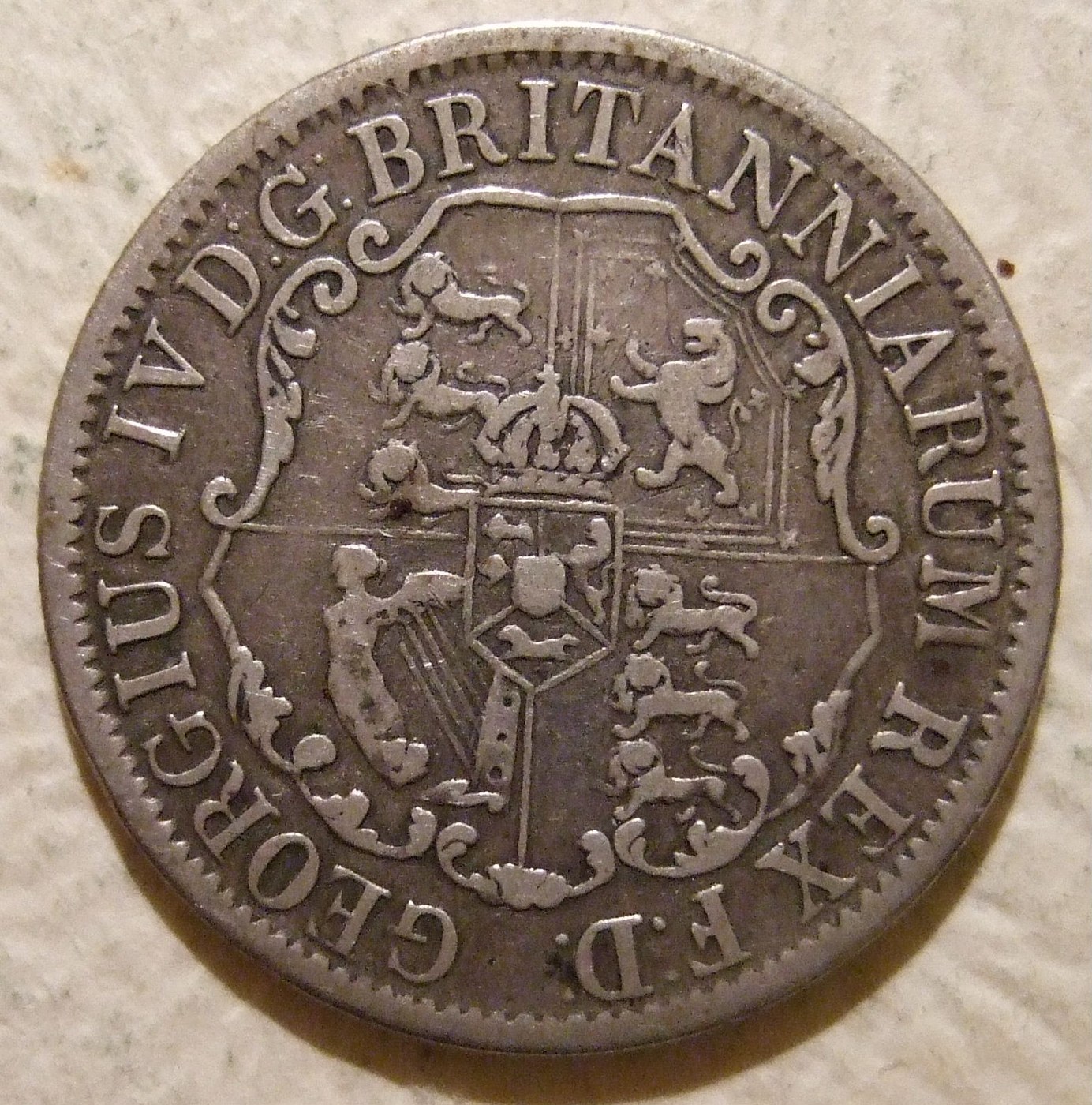
Start with the obverse legend and shield. A genuine piece shows a crowned heraldic shield of the royal arms with the lion and unicorn supporters, ringed by a Latin legend containing D:G: (Dei Gratia, "by the grace of God") and a BRITANNIA / BRITANNIAR: element. Confirm the date reads 1822: that date places it in the George IV issue, distinct from the earlier 1820 George III striking that otherwise looks similar.
Check the reverse if you can see it. On this type the reverse bears a large anchor inside a beaded or toothed border, with the denomination expressed as a stacked fraction, 1 over 4 for the quarter dollar. The anchor is the signature of the whole "Anchor Money" series; a coin lacking it, or showing an anchor with a different fraction, is a different denomination or a different type entirely.
Confirm size and denomination together. The quarter is the largest of the common fractions (the series also includes one eighth and one sixteenth), so a coin that seems too small for a quarter may actually be a lower fraction. Because these are debased colonial silver, do not judge authenticity by ring or shine alone; weigh and measure against a trusted reference for the specific denomination.
Watch for the usual problems on small colonial silver: heavy wear that erases the shield quartering, harsh cleaning that leaves hairlines, tooling that re-cuts the anchor or legend, and holes or solder traces from use as jewelry or a pocket piece. Any of these should prompt caution and, for a valuable grade, a second opinion.
When in doubt, compare your coin side by side with authenticated images of the 1822 quarter dollar and with the 1820 issue, and match the legend spacing, shield style and anchor form. For higher-grade or higher-value examples, third-party authentication or grading is the safest route given the presence of altered and counterfeit colonial pieces in the market.
Frequently asked questions
What is the single fastest way to confirm the type?
Read the obverse for the crowned royal shield with lion-and-unicorn supporters and the 1822 date, then check for the large anchor and stacked 1/4 fraction on the reverse. Those together identify the George IV quarter-dollar Anchor Money.
How do I tell a quarter from the smaller fractions?
The reverse fraction states the denomination directly (1 over 4 for the quarter), and the quarter is physically the largest of the common Anchor Money pieces, so both the numeral and the size should agree.
Should I clean a dirty example before identifying it?
No. Cleaning small colonial silver leaves hairlines and lowers value; identify and grade it as-is, and leave any conservation to a professional.
How can I guard against fakes or altered coins?
Compare against authenticated references for the legend, shield and anchor, weigh and measure the coin, watch for holes, solder or re-cut detail, and use third-party grading for higher-value pieces.