
How to Identify the Gela Man-Headed Bull Tetradrachm
A Sicilian silver tetradrachm from Gela showing a charioteer or horseman on the obverse and the man-headed bull river-god Gelas on the reverse.
Read the full Gela Man-Headed Bull Tetradrachm encyclopedia entry →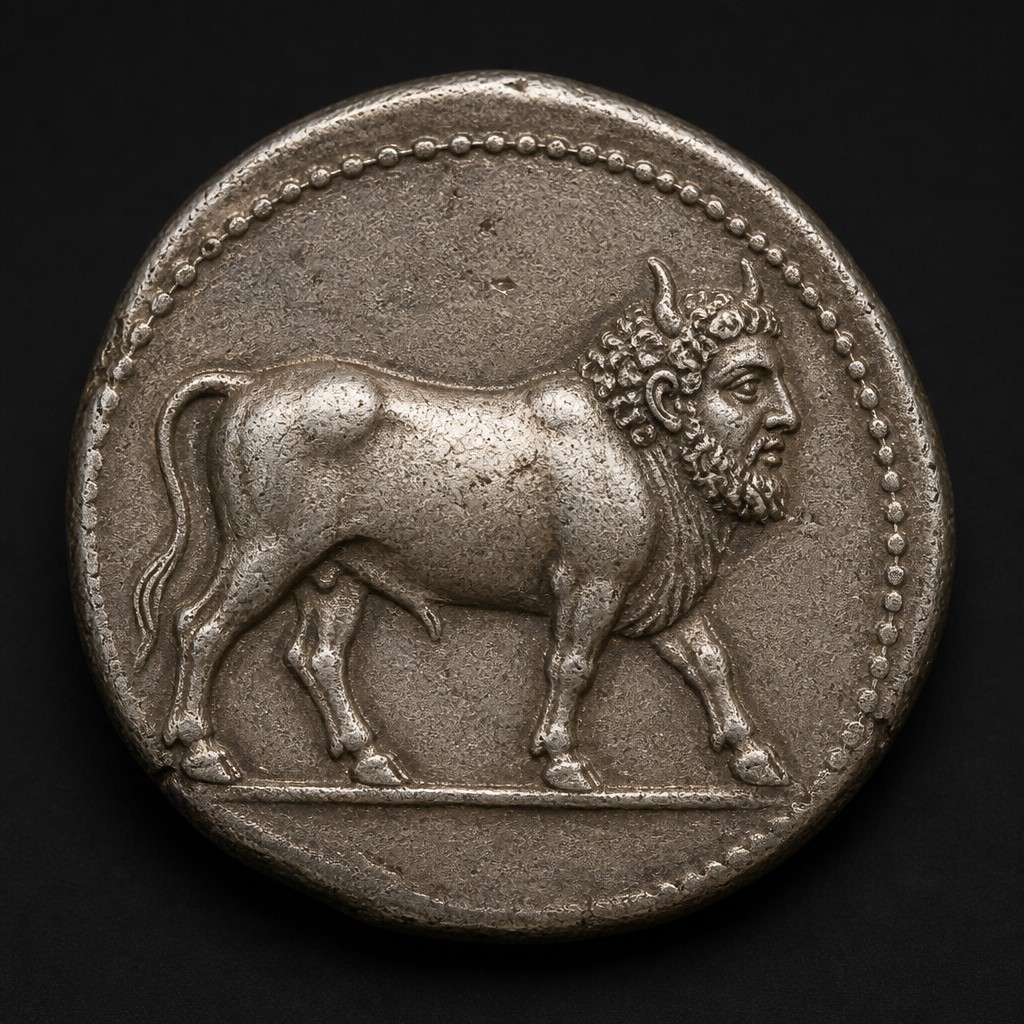
What This Coin Is
This is a silver tetradrachm struck by the Greek city of Gela on the southern coast of Sicily, mainly during the fifth century BC. Gela's coinage is famous among ancient numismatists for its consistent use of a river-god bull design, referencing the river Gelas that gave the city its name.
Obverse Design
Early issues typically show a nude horseman or a charioteer driving a slow quadriga (four-horse chariot), often at a walk rather than a gallop, reflecting the somewhat archaic and formal style of early Sicilian coin engraving. Later issues sometimes replace the quadriga with other closely related chariot scenes, occasionally with a small Nike flying above to crown the horses in more developed examples.
Reverse Design
The reverse is the coin's most distinctive feature: a man-headed bull, representing the local river god Gelas, shown either standing, walking, or charging, with a bearded human face on a bull's body. Below the bull, the ethnic ΓΕΛΑΣ or ΓΕΛΩΙΟΝ (of the Geloans) is usually inscribed in the exergue, sometimes accompanied by a small fish or other symbol referencing the river or coastal setting.
Size, Weight, and Metal
Struck in silver on the Attic-Sicilian weight standard, these tetradrachms typically weigh around 17 grams and measure roughly 24 to 27 millimeters in diameter. The edge is plain, hand-struck, with no milling.
Mint Marks and Where to Find Them
The city ethnic in the exergue beneath the man-headed bull is the primary identifying inscription. Small accessory symbols, such as a fish, barley grain, or leaf, sometimes appear in the field or exergue and can help distinguish between different issues within the series.
Telling It Apart From Similar Coins
The man-headed bull is Gela's signature device and separates its coinage at a glance from plain-bull types used elsewhere, such as the Athena-and-bull nomos of Thurii. However, several other Sicilian and South Italian cities also used man-headed bull or river-god imagery, including later Sicilian issues, so always check the exergue ethnic to confirm a Gela attribution specifically rather than assuming from the bull-man motif alone.
Judging Condition at a Glance
On the obverse, check the horse or horses' legs and the charioteer's figure for wear, since these thin, high-relief details flatten quickly. On the reverse, the man-headed bull's bearded face and horns are the focal wear points; a coin that still shows clear facial features on the bull-man is in noticeably better condition than one where this area has smoothed out. Confirm that the exergue legend remains legible, as this is often one of the first areas to wear away or be struck off-flan.
Authenticity Red Flags
Because the man-headed bull design is visually striking and well known, it has been a target for both old-style casts and modern decorative reproductions. Look for a grainy or overly smooth surface texture inconsistent with genuine worn silver, a seam line around the edge, or lettering in the ethnic that looks uneven or anachronistic. A weight or diameter that falls well outside the normal range for genuine Gela tetradrachms is also a signal to examine the piece more closely before accepting it as ancient.
Frequently asked questions
What does the man-headed bull represent?
It represents Gelas, the local river god associated with the river that gave the city of Gela its name, a common way Greek cities personified rivers as bull-bodied, human-faced figures.
How do I confirm this coin is from Gela and not another city using similar imagery?
Check the exergue for the ethnic ΓΕΛΑΣ or ΓΕΛΩΙΟΝ; other cities with river-god or bull-man types used their own distinct city names in the same position.
Why does the obverse chariot scene look slow or static compared to later Greek coins?
Early Sicilian die engravers often depicted chariots at a formal walking pace rather than a dynamic gallop, a stylistic feature typical of fifth-century BC Sicilian coinage before more dynamic Nike-crowned quadriga scenes became common.
What weight should a genuine example have?
Genuine Gela tetradrachms generally weigh close to 17 grams, in line with the Attic-Sicilian silver standard used across much of Sicily during this period.