
How to Identify the Gallienus Antoninianus
A guide to identifying Gallienus's antoninianus (253-268 AD), tracing the coin's shrinking size and silver content over his long reign, including the famous late 'zoo' reverse series.
Read the full Gallienus Antoninianus encyclopedia entry →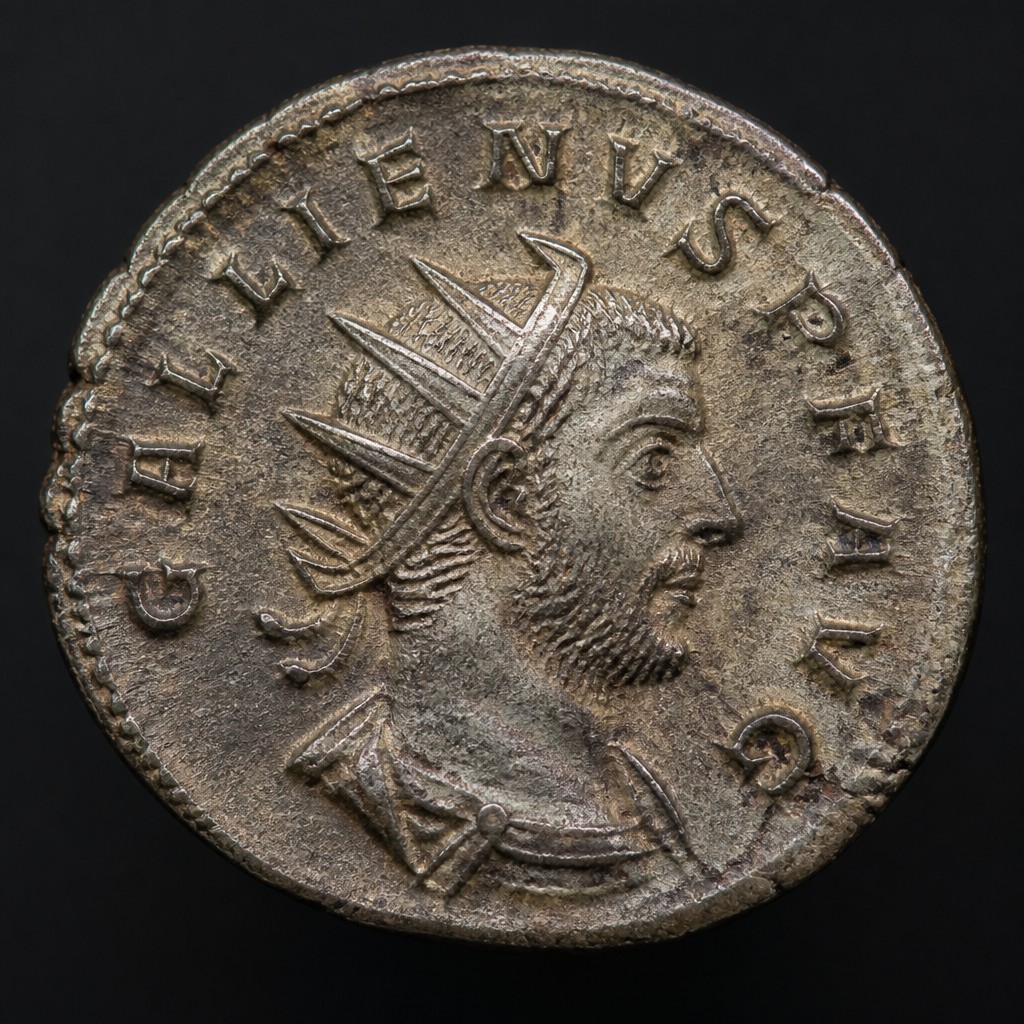
What Is the Gallienus Antoninianus?
Gallienus reigned jointly with his father Valerian from 253 to 260 AD and alone from 260 to 268, one of the longest and most turbulent reigns of the third-century crisis. His antoninianus survives in vast numbers and, struck across such a long period, shows the clearest visual record of the currency's ongoing decline within a single reign.
Obverse Design and Inscriptions
The obverse shows a radiate bust right. During the sole reign the legend usually reads GALLIENVS AVG; earlier joint-reign coinage reads IMP GALLIENVS PF AVG or similar, sometimes paired with his father's name on related issues.
Reverse Design and Inscriptions
Reverse types are extremely varied, including a distinctive late series sometimes called the "zoo" or "legionary" series, featuring animals such as a stag, antelope, lion, goat, centaur, or griffin, paired with legends tied to gods like Diana or the Sol cult. Other common types include Providentia, Salus, Uberitas Augg, and Laetitia.
Size, Weight, and Metal
Early joint-reign coins measure roughly 20-21mm and weigh about 3-3.5 grams with modest silvering. By the mid-260s the flans had shrunk to roughly 15-18mm and 1.5-2.5 grams, with only a faint silver wash, some pieces appearing almost pure bronze or copper in color.
Mint Marks and Where to Find Them
Coins were struck at many mints, including Rome, Milan, Siscia, and Antioch, often marked in the exergue or field with officina numerals or letters such as P, S, T, Q, or Roman numerals.
Telling It Apart from Similar Coins
His wife Salonina's coins show a female diademed bust, an easy visual distinction. His sons Valerian II and Saloninus, both short-lived Caesars, carry their own named legends and youthful portraits.
Judging Condition at a Glance
Given the generally poor strike quality of this period, especially on later issues, judge condition mainly by how much design detail survives rather than expecting sharp definition even on lightly worn coins.
Authenticity Red Flags
The crude, thin-flan late issues are commonly imitated in cast form; check for a granular cast surface and underweight flans. Because genuine late Gallienus coins are inherently rough-looking, an example that looks unusually crisp or "too perfect" for its type also deserves a closer look.
Frequently asked questions
Why do Gallienus's coins vary so much in size and quality?
His eighteen-year reign spanned a period of accelerating currency debasement, so early joint-reign coins are larger and better silvered, while later sole-reign issues are smaller, thinner, and barely silvered at all.
What is the 'zoo' series on Gallienus's coinage?
A distinctive late reverse series featuring animals such as a stag, lion, antelope, goat, centaur, or griffin, tied to religious themes like the cult of Diana.
How do I tell Gallienus's coin from his wife Salonina's?
Salonina's portrait is a female diademed bust, clearly different from Gallienus's male radiate portrait.
Are worn, crude-looking Gallienus coins likely to be fake?
Not necessarily - genuine late-reign coins are often crudely struck on small, thin flans to begin with, so roughness alone is not a reliable red flag; a cast seam, porous texture, or wrong weight are better indicators of a fake.