
How to Identify the Gallic Imitation Stater
A collector's guide to reading the stylized Celtic head, ornamental horse, gold fabric, and tribal clues that mark a Gallic gold stater.
Read the full Gallic Imitation Stater encyclopedia entry →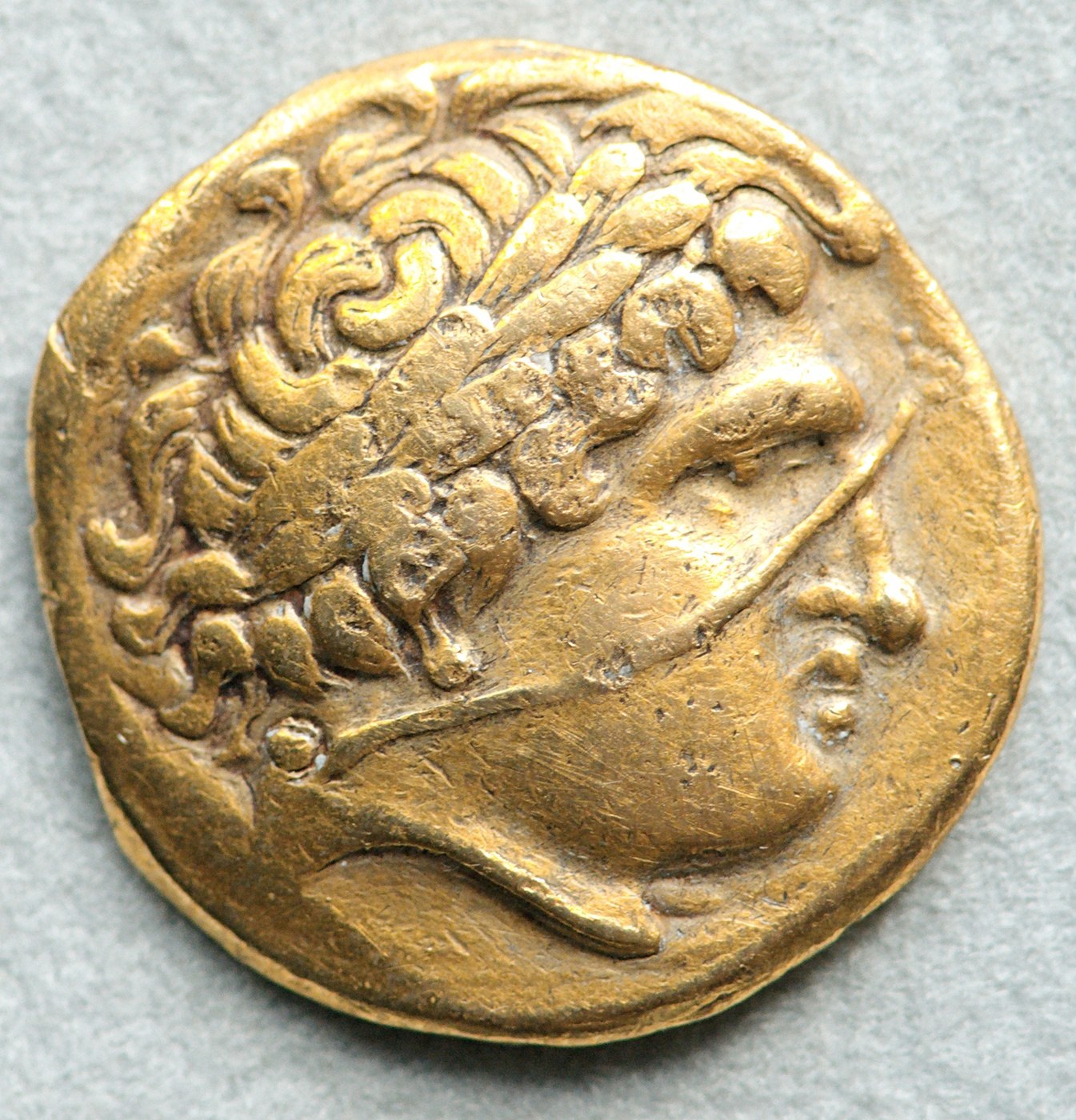
Start with the two core motifs. A Gallic imitation stater pairs a head on the obverse with a horse on the reverse, both rendered in an abstract, ornamental style rather than the naturalistic manner of Greek or Roman coins. On this coin the obverse is a head facing right whose hair is broken into curls, crescents, and disconnected locks, while the reverse shows a single horse in profile surrounded by pellets, rosettes, wheels, or other geometric filler. If you can trace both a stylized head and a horse amid the ornament, you are almost certainly looking at a coin in the Gallic gold-stater tradition.
Check the metal, size, and weight. These are gold coins struck on small, thick flans, typically around 15-20 mm across and on the order of 6-8 grams for a full stater, with smaller fractions such as quarter staters also known. The gold ranges from a rich yellow to paler, debased tones in later issues, so color and heft are useful first clues to purity. Unlike Roman coins there are no long Latin legends; most Gallic staters are entirely uninscribed, and where any lettering exists it is a short tribal name, not a sentence.
Read the ornament to work toward a tribe. Because the designs are abstract, attribution depends on the specific arrangement of motifs: how the hair is organized on the obverse, the exact pose of the horse, and the symbols above, below, and around it, such as a charioteer, a wheel, a boar, or a pattern of pellets. Compare these details against published Celtic coin references, which group staters by tribe and region. Small, consistent differences in the ornament, rather than any inscription, are what separate one issue from another.
Beware of look-alikes and fakes. Other Celtic peoples beyond Gaul, and neighboring regions in Britain and central Europe, struck related stylized gold that can resemble Gallic work, so regional attribution should be made carefully. Gold Celtic coins are also a favored target for forgers. Warning signs include a visible casting seam, a soft or grainy surface, weight or diameter well outside the expected range, suspiciously bright or brassy color suggesting a non-gold alloy, and design details that do not match any published type. For any significant purchase, favor coins with documented provenance and seek an attribution from a specialist in Celtic coinage.
Frequently asked questions
What is the quickest way to recognize a Gallic imitation stater?
Look for the pairing of a stylized head facing right and a single horse on the reverse, both broken up by ornamental pellets and curves, struck on a small thick gold flan of roughly 15-20 mm and about 6-8 grams with no Latin legend.
How do I tell a Gallic stater from a British or other Celtic one?
All descend from the same Macedonian prototype and share the abstract style, so distinguishing them relies on the specific treatment of the hair and horse and on fabric and weight. Compare the exact ornament against references that separate Gallic, British, and central European issues, and attribute regionally with care.
There is no writing on the coin. Is that normal?
Yes. Most Gallic gold staters carry no legend at all, and any lettering that does appear is a short tribal name rather than the long Latin inscriptions of Roman coins. The absence of writing is expected and is not a sign of a problem.
How can I guard against buying a fake gold stater?
Weigh and measure the coin, check that the color is consistent with gold, and look for casting seams or grainy surfaces. Match the design to a published type, and for valuable pieces insist on documented provenance and a specialist attribution in Celtic coinage.