
How to Identify the Galerius Follis
An identification guide to Galerius's follis as Caesar and Augustus (293-311 AD), and why his shared name 'Maximianus' makes careful legend-reading essential to avoid misattribution.
Read the full Galerius Follis encyclopedia entry →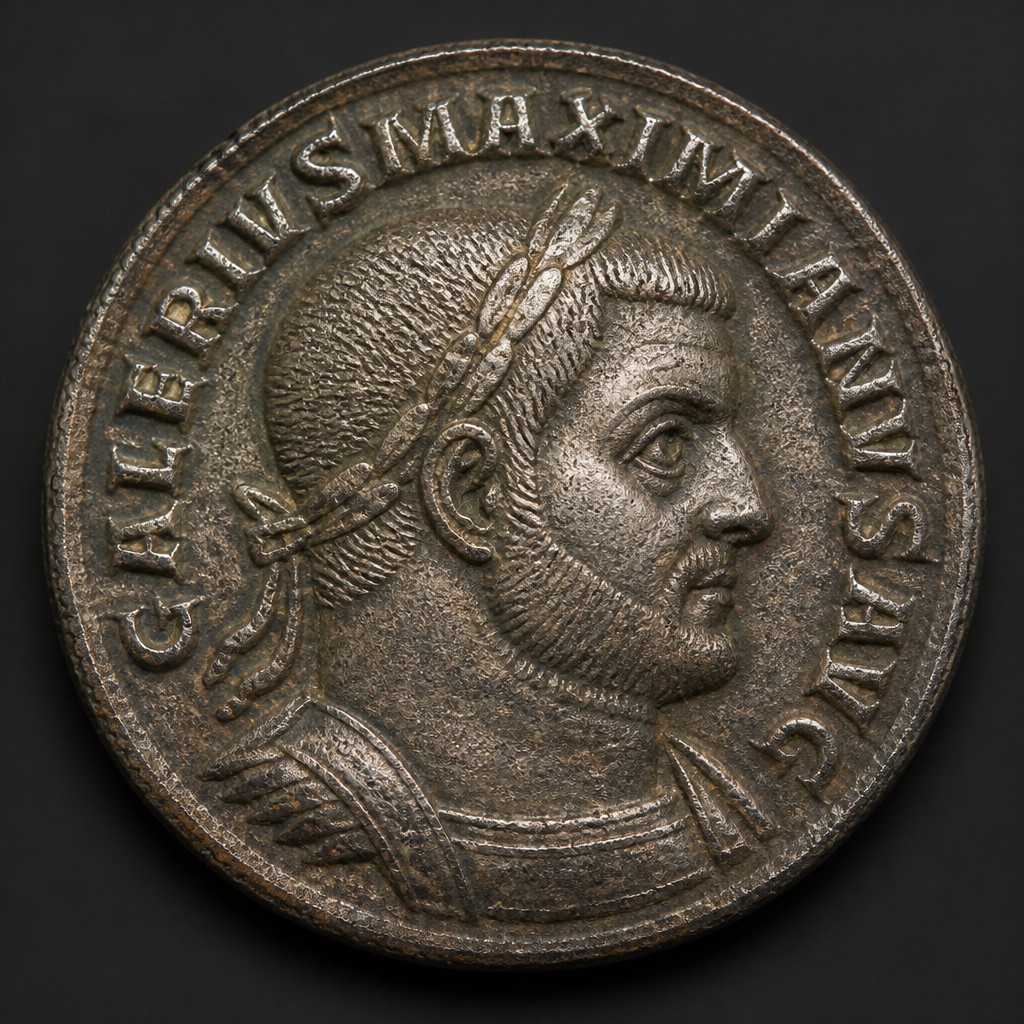
What Is the Galerius Follis?
Galerius served as junior Caesar under Diocletian from 293 and became Augustus of the eastern Tetrarchy from 305 until his death in 311. He is remembered for issuing the Edict of Toleration ending official persecution of Christians shortly before his death. His full official name, Gaius Galerius Valerius Maximianus, causes frequent confusion with the senior emperor Maximian, since both share the name "Maximianus" on their coins.
Obverse Design and Inscriptions
As Caesar, the legend reads MAXIMIANVS NOB CAES or GALERIVS VAL MAXIMIANVS NOB CAES, with a laureate head right. After 305 as Augustus, it reads GAL VAL MAXIMIANVS AVG or a close variant.
Reverse Design and Inscriptions
The shared Tetrarchic GENIO POPVLI ROMANI type appears, along with Genio Augusti variants used by Caesars specifically.
Size, Weight, and Metal
Standard Tetrarchic follis dimensions and the same declining weight standard apply as with the other Tetrarchs.
Mint Marks and Where to Find Them
Eastern mints predominate given his responsibility for the Balkans and later the eastern provinces; look for marks from Siscia, Serdica, Thessalonica, Heraclea, Nicomedia, Antioch, and Alexandria.
Telling It Apart from Similar Coins
Because Galerius's official name is also "Maximianus," carefully reading the full legend for GALERIVS or GAL is essential to avoid confusing his coins with those of the senior emperor Maximian, whose legend instead reads simply MAXIMIANVS without the GAL element. His Caesar-period legend with NOB CAES also separates earlier issues from his later Augustus-period coinage.
Judging Condition at a Glance
Judge condition using the same criteria as other Tetrarchic folles, checking portrait detail and surviving silvering.
Authenticity Red Flags
The same general cautions apply as with the other Tetrarchic folles regarding re-silvering and mint-mark tooling. Given the name overlap with Maximian, misattribution rather than outright forgery is actually the more common identification pitfall, so double-check the full legend before assuming which emperor a coin belongs to.
Frequently asked questions
Why is Galerius's coinage easily confused with Maximian's?
Galerius's full official name also included 'Maximianus,' so his coin legends can look similar at a glance to those of the senior emperor Maximian; reading the full legend for the GAL or GALERIVS element is the key distinguishing check.
What historical event is Galerius best remembered for?
Issuing the Edict of Toleration in 311, which ended official Roman persecution of Christians shortly before his death.
Which mints are associated with Galerius's coinage?
Mostly eastern mints tied to his territory, including Siscia, Serdica, Thessalonica, Heraclea, Nicomedia, Antioch, and Alexandria.
How do I know if a coin was struck while Galerius was Caesar or Augustus?
Check for NOB CAES in the legend for the Caesar period before 305, versus AVG for the Augustus period from 305 to his death in 311.