
How to Identify the French West Africa 1 Franc
A collector's checklist for the 1948 aluminum French West Africa 1 Franc: weight and metal, the allegorical head, the AFRIQUE-OCCIDENTALE FRANCAISE legend, and look-alikes.
Read the full French West Africa 1 Franc encyclopedia entry →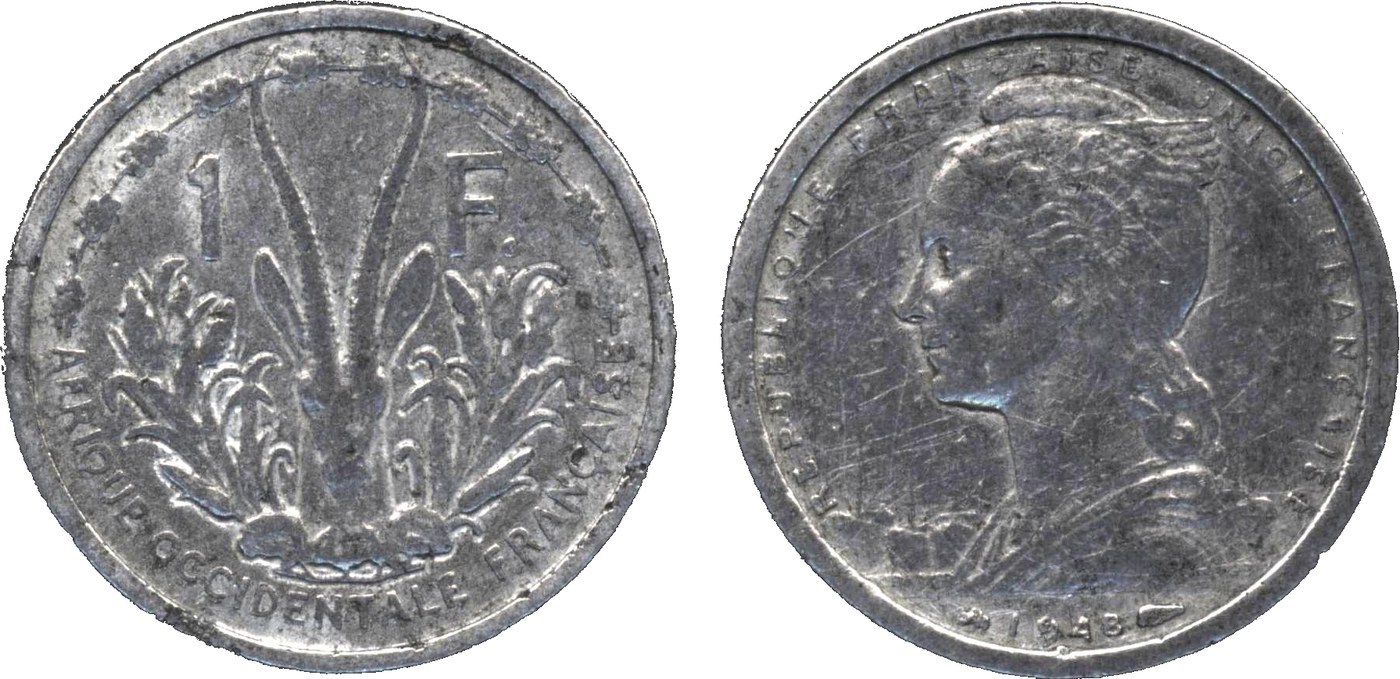
Start with weight and metal, because they are the fastest tell. This 1 Franc is struck in aluminum, so it feels strikingly light for its size and shows a pale, matte silvery-gray surface rather than the yellow of brass or the warm brown of bronze. If a coin this size feels almost weightless, you are probably holding aluminum, which narrows the field immediately.
Read the obverse. You should see a female profile head, an allegorical figure in the French republican tradition, together with the word FRANC. This is a symbolic personification rather than a named ruler, so do not expect a monarch's portrait or a named leader. The style follows standard French and French-colonial coinage of the mid-twentieth century.
Read the reverse and confirm the legend. The value appears as a large numeral 1, surrounded by the federation name AFRIQUE-OCCIDENTALE FRANCAISE. Check that the date reads 1948. The combination of the aluminum fabric, the value 1, and the spelled-out federation legend is what pins the identification down, so verify all of them rather than judging by the portrait alone.
Separate it from close relatives. The companion 2 Francs of the same series carries the identical design but the numeral 2, so read the denomination carefully. After independence in the region around 1960, West African states issued coins under different national names or a shared regional currency; those carry other legends and should not be confused with this colonial federal issue. The AFRIQUE-OCCIDENTALE FRANCAISE inscription is the deciding factor.
Apply sensible authentication cautions. Aluminum is soft, so dents, bends, scratches, corrosion, and white oxidation spots are common and are condition issues, not proof of a fake. There is no special mint letter you need to find to identify this type. When a piece looks correct on metal, design, value, and legend but is priced as a top-grade example, compare it against a trusted image of a genuine 1948 coin before buying, since surface quality drives value on soft aluminum coins.
Frequently asked questions
What is the quickest way to confirm this coin?
Check three things together: a very light aluminum coin with a pale gray surface, a female head with the word FRANC on the obverse, and a numeral 1 surrounded by AFRIQUE-OCCIDENTALE FRANCAISE with the 1948 date on the reverse.
How do I tell the 1 Franc from the 2 Francs?
They share the same design and legends, so read the large numeral of the value. A 1 identifies the 1 Franc, while a 2 is the companion 2 Francs. Do not rely on the portrait, which is the same on both.
Could I confuse it with a later West African coin?
Yes. After independence, the region's coins carry different national names or a shared regional currency legend. This colonial issue is distinguished by the spelled-out AFRIQUE-OCCIDENTALE FRANCAISE inscription, so match that legend rather than assuming from the region alone.
Are corrosion spots a sign the coin is fake?
No. Aluminum is soft and reactive, so white oxidation, dents, and scratches are common on genuine circulated examples. They lower the grade and value but are not evidence of a counterfeit; judge authenticity from metal, design, value, and legend.