
How to Identify the French Napoleon 20 Francs Gold
The French 20 Francs gold piece, often called a "Napoleon," was struck under multiple French rulers from the early 1800s through the early 1900s, typically showing a monarch's or emperor's head with a value or heraldic reverse.
Read the full French Napoleon 20 Francs Gold encyclopedia entry →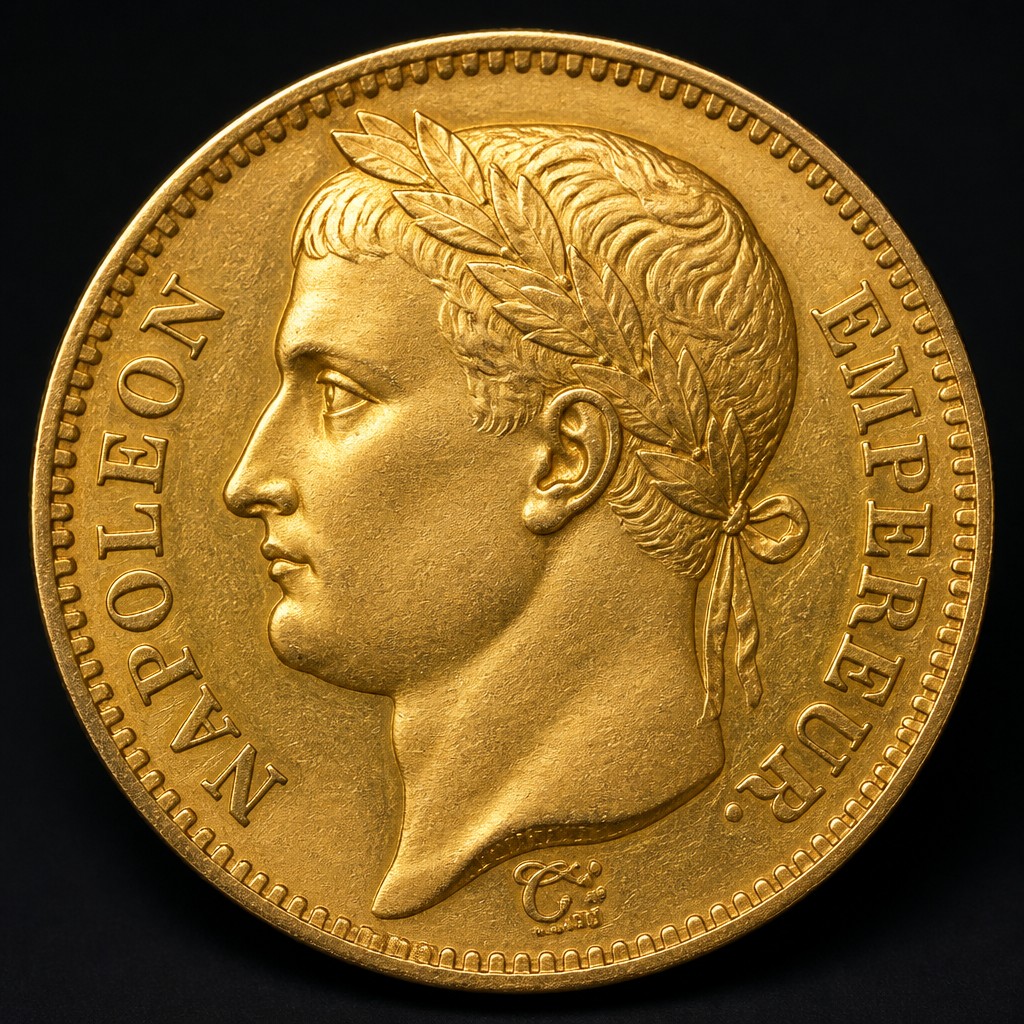
What It Is
The "Napoleon" is the popular name for the French 20 Francs gold coin first introduced under Napoleon Bonaparte in the early 1800s and continued, with changing portraits, under later French rulers including Louis XVIII, Charles X, Louis-Philippe, the Second Republic, Napoleon III, and the Third Republic (with a rooster design). Because production spanned roughly a century, "Napoleon" today is used loosely to describe the whole 20 Francs gold series, not just coins bearing Napoleon's own portrait.
Obverse Design
The obverse typically shows the head of the reigning ruler in profile: Napoleon I bare-headed or laureate, Louis XVIII or Charles X in profile with royal titles, Louis-Philippe as "King of the French," and Napoleon III either bare-headed (early) or laureate (later). Third Republic issues instead show a standing figure or a Marianne-style head, depending on the exact type.
Reverse Design
Reverse designs vary by ruler: Napoleon I issues typically show a crowned eagle with wings spread, wartime and empire imagery, or a simple value within a wreath; Bourbon Restoration coins show a crowned French shield; and later Third Republic "Coq" (rooster) 20 Francs show a rooster standing on a mound with a laurel branch, along with "LIBERTE EGALITE FRATERNITE."
Size, Weight & Metal
Across nearly all issuers, the coin was struck in 90% gold, weighing approximately 6.45 grams with a diameter of about 21 mm, making the various "Napoleons" broadly interchangeable in gold content despite design differences, which is part of why the coin became a widely trusted bullion piece.
Mint Marks & Where to Find Them
French coinage from this era carries a mintmark letter (such as "A" for Paris) along with a mint director's privy mark, both usually found near the date or at the base of the reverse design. These small symbols help pin down the exact mint and period of striking and are worth examining under magnification.
Telling It Apart from Similar Coins
Because the "Napoleon" name covers many different rulers and decades, identification starts with the obverse portrait and its accompanying legend, which names the ruler. From there, compare the reverse motif (eagle, shield, or rooster) and the specific date to pin down the exact type and issuing period.
Judging Condition at a Glance
Wear shows first on the high points of the portrait's hair or laurel wreath and on the eagle's or rooster's breast on the reverse. Because these coins circulated widely and were also hoarded and re-struck as bullion for decades, condition varies enormously between well-worn circulated examples and sharp, lightly handled pieces.
Authenticity Red Flags
Given its established gold weight and diameter, testing against those specifications is a strong first check. Common concerns include underweight pieces, incorrect diameter, blurry or mismatched date-to-ruler combinations (a portrait style paired with a date it wasn't struck in), and soft, mushy details typical of cast counterfeits rather than genuine milled coins.
Frequently asked questions
Why is it called a "Napoleon" if other rulers appear on it too?
The name stuck from Napoleon Bonaparte's original 20 Francs coin, and collectors and dealers continued using it informally for the whole series of French 20 Francs gold pieces that followed.
What is the gold content of a 20 Francs gold coin?
Nearly all issuers used 90% gold, with the coin weighing about 6.45 grams and measuring roughly 21 mm across.
How do I know which ruler's version I have?
Read the obverse portrait's surrounding legend, which names the ruler, and compare that to the corresponding reverse design (eagle, shield, or rooster) typical of that era.
What does the rooster design mean?
The rooster ('Coq') reverse was used on Third Republic issues and symbolizes the French Republic, distinct from the earlier eagle and shield designs of the Empire and Restoration periods.
Where is the mintmark located?
Look near the date or at the base of the reverse design for a small mint letter and privy mark identifying the specific French mint and period.