
How to Identify the French Ecu (Louis d'Argent)
The French ecu, or "Louis d'argent," was the standard large silver crown coin of pre-revolutionary France, typically showing the reigning king's portrait and a crowned shield of arms.
Read the full French Ecu (Louis d'Argent) encyclopedia entry →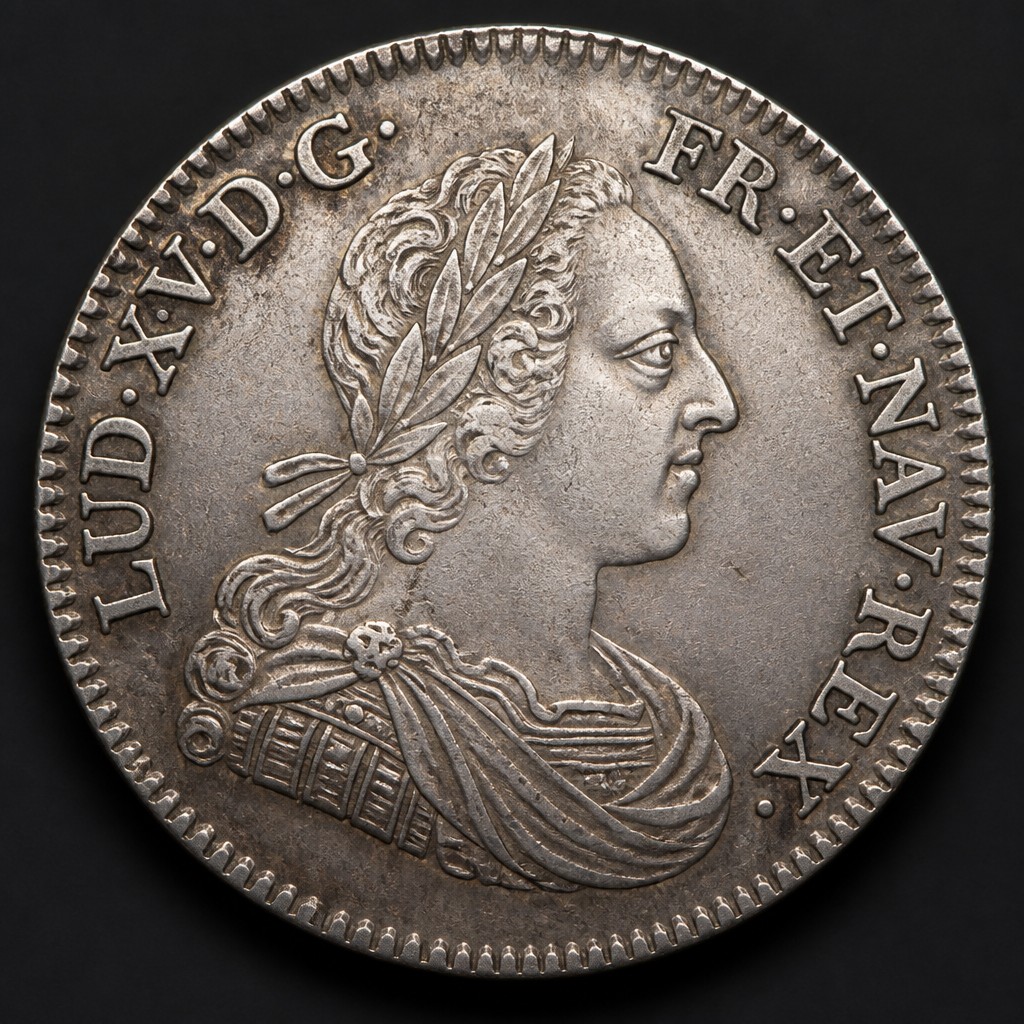
What It Is
The ecu (sometimes called the Louis d'argent, the silver counterpart to the gold Louis d'or) was the principal large silver coin of the Kingdom of France for much of the 17th and 18th centuries, used across the reigns of several Bourbon kings including Louis XIV, Louis XV, and Louis XVI. It functioned much like other European "crown" coins, serving as a high-value silver denomination for larger transactions.
Obverse Design
The obverse shows a right- or left-facing portrait of the reigning king, often in armor or with a draped cloak, and a Latin legend naming the king with his ordinal number, such as "LUD XV D G FR ET NAV REX" for Louis XV, "King of France and Navarre by the Grace of God."
Reverse Design
The reverse typically displays a crowned French shield of arms (three fleurs-de-lis) flanked by additional shields or ornamental scrollwork, along with the mint's location legend and the date. Some ecu types also incorporate crossed scepters or additional royal emblems around the central shield.
Size, Weight & Metal
The ecu was struck in silver, typically around .917 to .920 fineness depending on the exact period and reform, weighing approximately 29-30 grams with a diameter around 39-41 mm, making it a substantial, heavy coin by the standards of its time.
Mint Marks & Where to Find Them
French royal coinage used a system of mint letters (such as "A" for Paris, "B" for Rouen, "D" for Lyon) placed near the date on the reverse, along with a mint master's privy mark, often a small symbol tucked into the design. These marks are essential for pinpointing exactly where and under what mint administration a given ecu was struck.
Telling It Apart from Similar Coins
Because ecus were minted across multiple reigns and mint reforms, the portrait style and accompanying royal title are the primary way to date a coin to a specific king. Collectors should also be careful not to confuse the ecu with smaller-denomination French silver coins of the same era, such as the demi-ecu or various sol and livre denominations, by checking the coin's size and legend closely.
Judging Condition at a Glance
Wear appears first on the king's cheek, hair, or wig curls on the obverse, and on the crown and fleurs-de-lis details on the reverse. Because these coins circulated extensively over long periods, well-preserved examples with sharp portrait detail and full legends are less common than heavily worn, smooth pieces.
Authenticity Red Flags
Given the coin's age and historical popularity, reproductions and later restrikes exist. Check weight and diameter against the expected range for the specific type and period, and look for crisp, well-executed lettering and portrait detail, since blurry, shallow, or stylistically inconsistent engraving can indicate a later copy rather than an original period strike.
Frequently asked questions
What is the difference between an ecu and a Louis d'or?
The ecu is a large silver coin, sometimes called the Louis d'argent, while the Louis d'or is its gold counterpart; both circulated during the same general period of French royal coinage.
Which kings appear on French ecus?
Ecus were struck across multiple reigns, most commonly associated with Louis XIV, Louis XV, and Louis XVI, each identifiable by the obverse portrait and accompanying royal title.
What is the typical silver content of an ecu?
Most ecus were struck at roughly .917 to .920 fine silver, though exact fineness varied by period and mint reform.
How can I tell where an ecu was minted?
Look for a mint letter near the date on the reverse, along with a smaller privy mark identifying the mint master, both of which pinpoint the specific French mint.
How heavy is a typical ecu?
Approximately 29-30 grams, with a diameter in the range of 39-41 mm, making it a large, substantial silver coin.