
How to Identify the French 40 Francs Gold (Napoleon I)
A collector's guide to confirming a Napoleon I 40 francs gold coin by its portrait, wreathed value, size, mint mark and legends.
Read the full French 40 Francs Gold (Napoleon I) encyclopedia entry →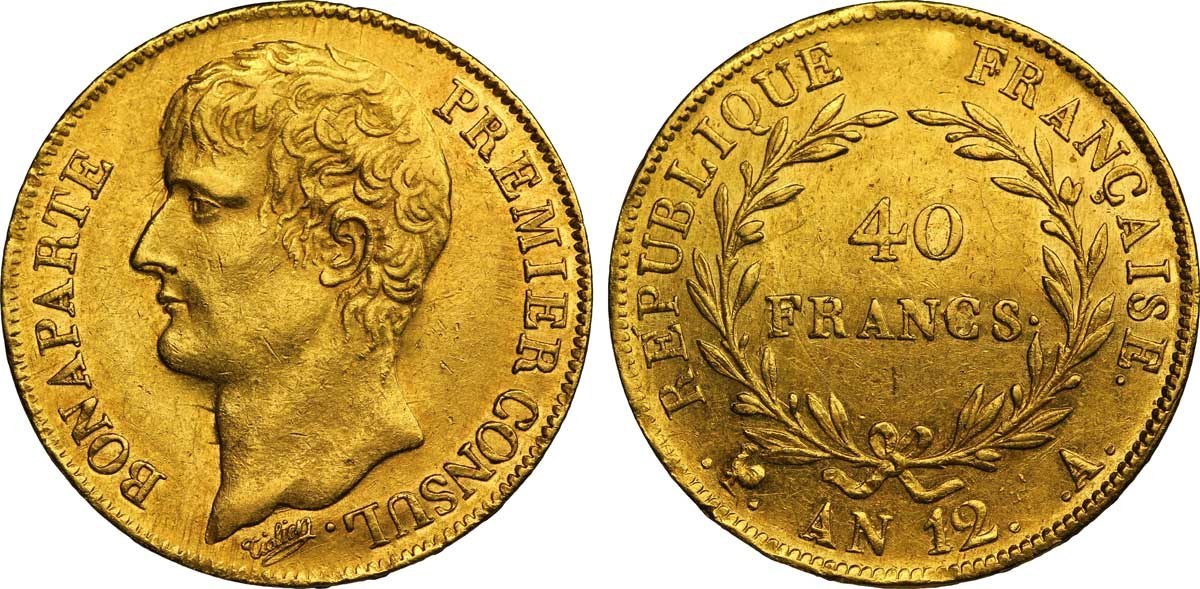
Confirm the portrait and the value together. The defining pair is the bare left-facing profile of Napoleon on one side and the value 40 FRANCS set within a laurel wreath on the other. If a coin shows Napoleon's head and the wreathed 40-franc value, you are looking at this denomination rather than the smaller 20 francs, which is otherwise similar in design.
Read the legends to place the exact issue. The obverse legend names Napoleon as BONAPARTE PREMIER CONSUL on the earliest coins and as NAPOLEON EMPEREUR after he became Emperor. The reverse rim reads RÉPUBLIQUE FRANÇAISE on the transitional issues and EMPIRE FRANÇAIS later. These legend changes, together with the date — which may appear as a year like 1804 and/or a revolutionary An year — pin down where a coin sits in the series.
Check size, weight and metal. This is a large gold coin, clearly bigger and heavier than the common 20 francs, struck in gold of about 90% fineness with a warm yellow tone. Weighing and measuring the coin against published standards for the 40 francs is one of the most reliable checks, because underweight or off-size pieces are a warning sign. The color should be consistent gold throughout, with no coppery or brassy cast.
Locate the mint mark and privy marks. A small letter at the base of the reverse identifies the striking mint, accompanied by tiny privy symbols. These marks matter because scarcity and value differ by mint, and their presence and correct form are part of authenticating the coin. Missing, wrong, or crudely rendered marks should raise suspicion.
Watch for look-alikes and fakes. The most common confusion is with the 20 francs Napoleon of the same portrait style — always confirm the 40 FRANCS value. Because this is a high-value gold coin it is a target for counterfeits and for pieces that have been mounted as jewelry, cleaned, or re-engraved; look for file marks or solder traces at the rim, weak or mushy detail, and unnatural surfaces. Given the sums involved, a coin of real importance is best confirmed by weight and diameter and, ideally, by a professional grader or reputable dealer rather than by eye alone.
Frequently asked questions
How do I tell the 40 francs from the 20 francs Napoleon?
Read the value in the wreath. Both share Napoleon's profile, but the larger coin is marked 40 FRANCS and is noticeably bigger and heavier than the 20 francs.
Where is the mint mark?
Look for a small letter, with tiny privy symbols, at the base of the reverse near the wreath. It identifies the mint that struck the coin and helps confirm the exact issue.
What legend should the coin carry?
Napoleon is named on the obverse as First Consul or Emperor, and the reverse rim reads République Française on the earlier issues or Empire Français on the later ones.
How can I be sure a gold example is genuine?
Check that weight and diameter match published standards for the 40 francs, look for mounting or cleaning damage, and for a coin of this value have it verified by a professional grader or trusted dealer.