
How to Identify the French 10 Francs Gold (Napoleon Rooster)
A small French gold coin from the Third Republic era featuring Marianne on the obverse and the Gallic rooster striding on the reverse.
Read the full French 10 Francs Gold (Napoleon Rooster) encyclopedia entry →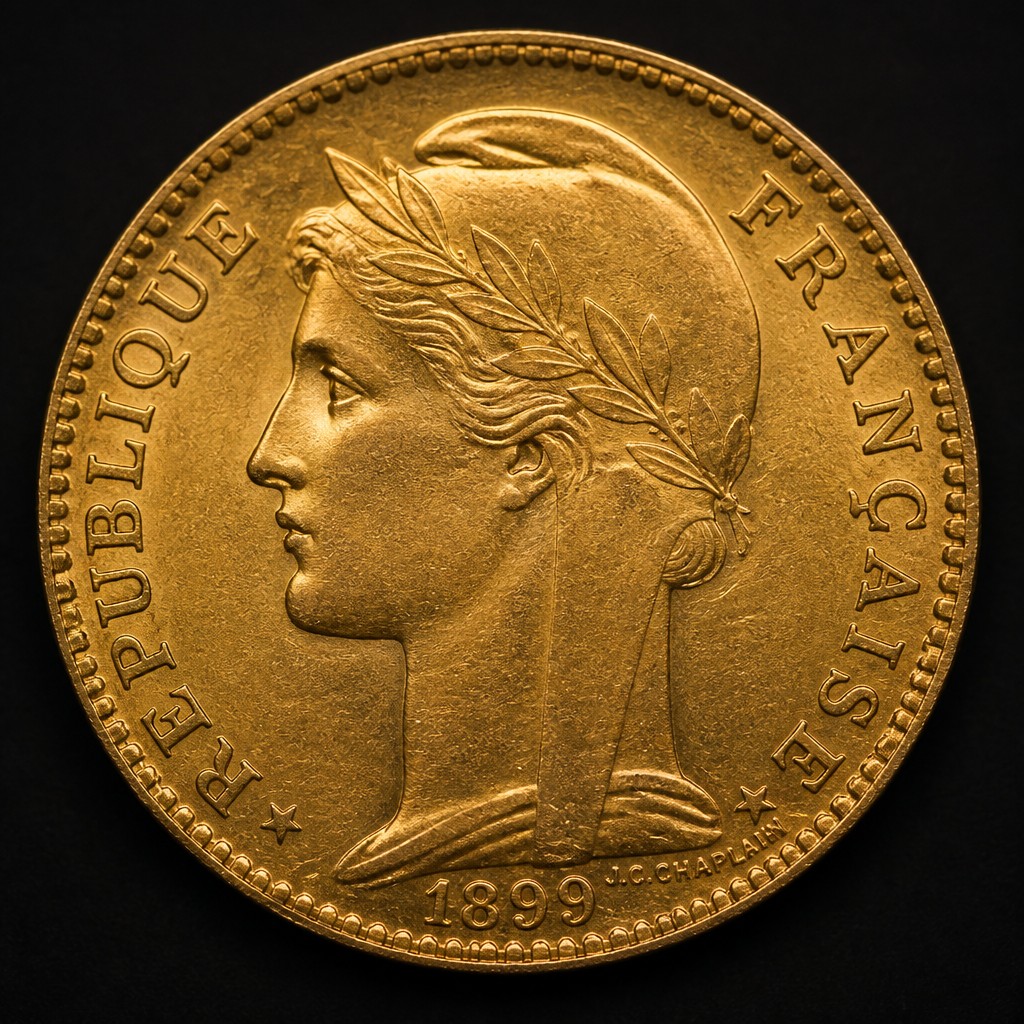
What Is the French 10 Francs Gold (Napoleon Rooster)?
Despite the popular nickname referencing Napoleon, this coin actually dates from the French Third Republic and does not depict any Napoleon at all — the "Napoleon" name became a generic nickname for French gold franc coins because earlier issues under Napoleon I and Napoleon III used a similar format. The 10 Francs gold piece described here is the Republic-era "Coq" (Rooster) type, designed by Jules-Clément Chaplain and first struck starting in 1899, using a smaller version of the design also seen on the well-known 20 Francs gold "Rooster."
Obverse Design
The obverse shows the head of Marianne, the personification of the French Republic, facing left and wearing a Phrygian cap wreathed with laurel and oak leaves. The legend "REPUBLIQUE FRANCAISE" curves around the top of the coin, with the designer's initials appearing in small letters near the truncation of the neck.
Reverse Design
The reverse depicts a Gallic rooster standing in profile, wings partly raised, symbolizing French vigilance and pride, with rays of sunlight in the background. The national motto "LIBERTE EGALITE FRATERNITE" appears around the rim, and the date is placed below the rooster.
Size, Weight & Metal
The coin is struck in .900 fine gold, weighs approximately 3.23 grams, and measures about 19 millimeters in diameter, with a reeded edge — noticeably smaller and lighter than its companion 20 Francs piece.
Mint Marks
French gold coins of this era carry a small mint mark, typically the letter "A" for the Paris mint, along with a privy mark (a small emblem chosen by the mint's engraver-general) near the base of the rooster on the reverse. These small marks help confirm the coin's origin and period of striking.
Telling It Apart from Similar Coins
The most common point of confusion is with the larger 20 Francs "Rooster" gold coin, which shares an identical design theme but is noticeably bigger, heavier, and more valuable in gold content. Comparing diameter and weight is the quickest way to separate the two. It should also not be confused with earlier Napoleon I or Napoleon III era 10 Francs gold coins, which show an emperor's portrait rather than Marianne and the rooster.
Judging Condition at a Glance
Check the fine strands of Marianne's hair beneath the cap and the individual feathers of the rooster for sharpness. A well-preserved coin shows clear, separated detail in both areas, while a circulated example shows a smoothed cap edge and less distinct feather texture.
Authenticity Red Flags
Because gold coins of this size are a frequent counterfeiting target, weigh the coin carefully against the 3.23-gram standard, check the edge reeding for evenness, and confirm the mint mark and privy mark combination is consistent with genuine Paris mint production. A coin that feels slightly too large, too thick, or oddly colored compared to typical .900 fine gold luster warrants closer inspection.
Frequently asked questions
Does this coin actually depict Napoleon?
No — despite the popular 'Napoleon' nickname used for French gold franc coins generally, this Republic-era 10 Francs shows Marianne and a rooster, not any Napoleon.
What is shown on the reverse?
A Gallic rooster standing with wings partly raised, a national symbol of French vigilance, with sunrays in the background.
How is it different from the 20 Francs Rooster gold coin?
The designs are the same theme, but the 10 Francs is noticeably smaller and lighter, weighing about 3.23 grams versus the 20 Francs' larger weight and diameter.
What is the coin's gold purity?
It is struck in .900 fine gold, with the remainder made up of copper for added durability.
Where can I find the mint mark?
Look for a small letter 'A' (for Paris) and a privy mark symbol near the base of the rooster on the reverse.