
How to Identify the Follis of Maximian
A collector's guide to recognizing Maximian's large silvered-bronze follis by its laureate portrait, standing-figure reverse, size, and mint marks.
Read the full Follis of Maximian encyclopedia entry →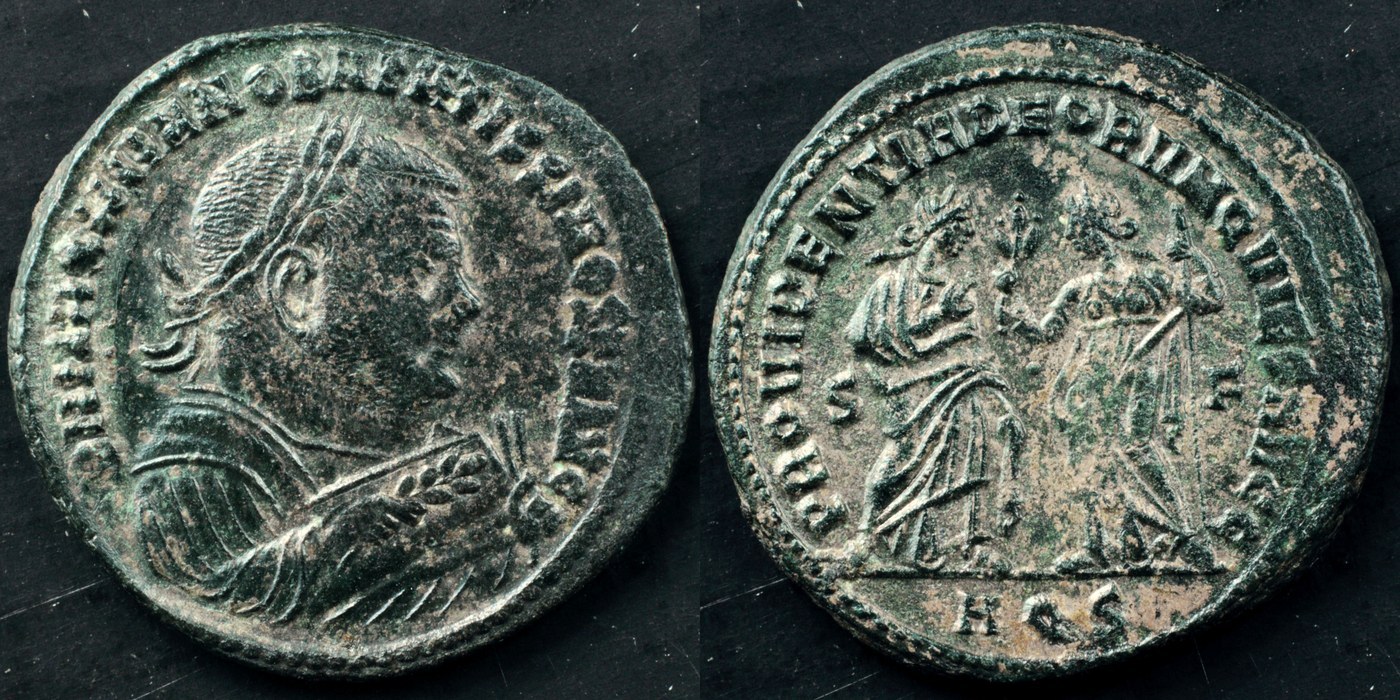
Begin with the obverse portrait and legend, because together they identify both the denomination and the ruler. A follis of Maximian shows a laureate head or bust facing right, wearing a laurel wreath rather than the spiked radiate crown of earlier third-century coins. Read the legend around the edge: it should contain his name, commonly in forms such as MAXIMIANVS or the fuller IMP C M A MAXIMIANVS P F AVG. The name in the legend, not the portrait style alone, confirms the emperor.
Measure and weigh the coin next. An early reform follis is large and heavy for a Roman bronze, roughly 26-30 mm across and often about 8-11 grams, clearly bigger than a debased radiate of a few decades earlier. The metal is a copper alloy that was originally silvered, so expect a brown or greenish patina, sometimes with silvery traces in protected areas of the design. A bright, fully silvered surface is uncommon and, on an unworn coin, worth scrutinizing.
Study the reverse figure and its legend. The signature reform type is the Genius of the Roman People: a standing male figure wearing a modius on his head, pouring from a patera in one hand and holding a cornucopia in the other, with the legend GENIO POPVLI ROMANI. Match the attributes to the legend to attribute the type. Then check the exergue beneath the figure for a mint mark, a short group of letters that identifies the striking mint and helps place the coin within the empire-wide reform system.
Watch for look-alikes. Diocletian, Constantius I, and Galerius struck near-identical folles with the same Genius reverse during the Tetrarchy, so the obverse name is essential to separate Maximian's coins from those of his colleagues. Later folles shrink noticeably in size and silvering, which helps date a piece. As with all ancient bronzes, be alert to cast counterfeits and tooled surfaces: warning signs include a seam around the edge, an unnaturally smooth or grainy surface, mismatched portrait and legend styles, and weight far outside the normal range. For a significant purchase, seek attribution from a specialist in Roman imperial coinage or a coin with sound provenance.
Frequently asked questions
How do I tell a follis from an earlier radiate coin?
Check the crown and the size. A follis shows the emperor in a laurel wreath and is a large, heavy bronze, roughly 26-30 mm and about 8-11 grams. The earlier antoninianus wears a spiked radiate crown and is smaller and lighter.
How do I know the coin is Maximian and not another Tetrarch?
Read the obverse legend for his name, such as MAXIMIANVS. Diocletian, Constantius I, and Galerius struck almost identical folles with the same reverse, so the name in the legend, not the design, identifies the ruler.
What is the standing figure on the reverse?
It is most often the Genius of the Roman People, shown wearing a modius and holding a patera and cornucopia, with the legend GENIO POPVLI ROMANI. Matching the attributes to the legend confirms the type.
Where do I find the mint mark?
Look in the exergue, the space beneath the reverse figure. A short group of letters there identifies the mint that struck the coin and helps place it within Diocletian's empire-wide reform coinage.