
How to Identify the Follis of Galerius
A collector's guide to reading the GAL VAL MAXIMIANVS legend, laureate Tetrarchic portrait, silvered bronze fabric, and mint marks of Galerius's folles.
Read the full Follis of Galerius encyclopedia entry →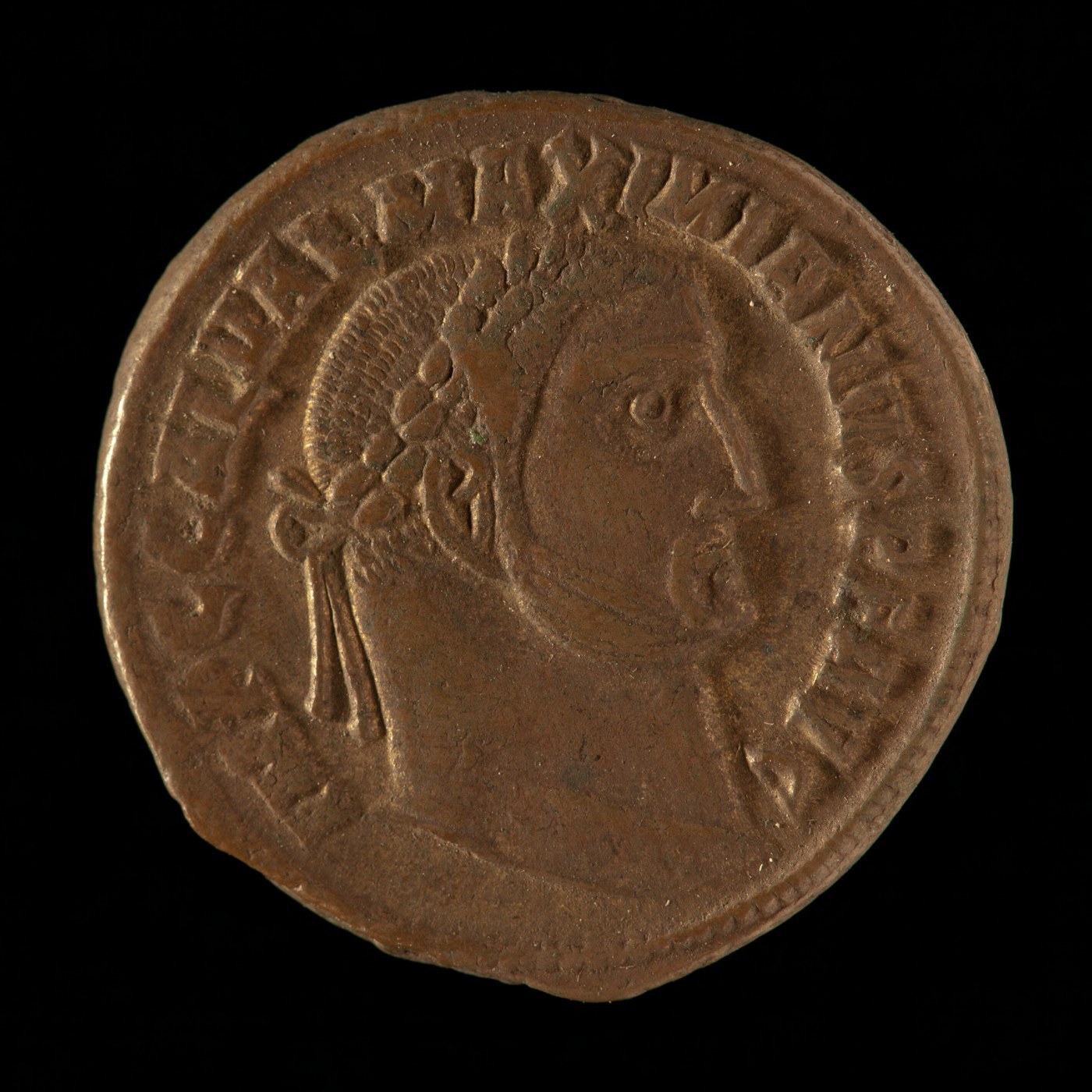
Start with the portrait and the name. A follis of Galerius shows a laureate head facing right in the heavy, blocky Tetrarchic style, wearing a laurel wreath rather than the spiked radiate crown of the earlier antoninianus. Read the legend around the edge and look for the name MAXIMIANVS preceded by GAL VAL, as in IMP C GAL VAL MAXIMIANVS P F AVG. This step matters because Galerius shared the name Maximianus with the western Augustus Maximian Herculius; the abbreviations GAL VAL (Galerius Valerius) are what separate the two, so never attribute from the portrait alone.
Check the fabric, size, and weight. A follis of about AD 308-310 is a fairly large bronze coin, roughly 24-27 mm across and generally around 6-8 grams, lighter than the heavy folles of the reform's first years in the 290s. Many examples keep patches of the original silvering as a pale grey film, while worn areas expose a brown or olive bronze surface beneath. Hand-struck irregularity, slightly off-centre legends, and small flan cracks are all normal for the period.
Use the reverse to attribute the type. The figure is a standing deity or personification whose identity is fixed by its attributes and legend, so read the two together. The most common Tetrarchic reverse is the Genius of the Roman People, a semi-nude male holding a patera from which he pours a libation and a cornucopia, under a legend such as GENIO POPVLI ROMANI or GENIO IMPERATORIS. Late issues can also show Sol, Providentia, or a similar figure. In the reverse field and exergue, look for the mint mark and officina letters, which place the coin to a specific mint such as Thessalonica, Serdica, Siscia, Heraclea, Nicomedia, Cyzicus, Antioch, or Rome and to a particular workshop.
Watch for look-alikes and check authenticity. Folles of the other Tetrarchs, including Diocletian, Maximian, Constantius, Severus II, Maximinus II, Licinius, and the early coins of Constantine, share the same laureate style, size, and Genius reverse, so the obverse name is decisive. Contemporary imitations and modern cast forgeries exist. Warning signs include a visible casting seam around the rim, a soft or granular surface, mismatched portrait and legend styles, bubbling or an unnaturally even, bright silvering, and weight or size well outside the expected range. For a coin bought as an investment, seek attribution from a specialist in late Roman coinage or a piece with reputable provenance.
Frequently asked questions
What is the fastest way to confirm a coin is a follis of Galerius?
Look for a laureate head facing right and read the legend for GAL VAL MAXIMIANVS. The coin should be a fairly large bronze, roughly 24-27 mm and about 6-8 grams for issues around AD 308-310, often with traces of silvering and a standing figure on the reverse.
How do I distinguish Galerius from the other Tetrarchs on these coins?
Read the obverse name rather than judging by the portrait, which is deliberately similar across the Tetrarchy. Galerius is named GAL VAL MAXIMIANVS, distinct from MAXIMIANVS HERCVLIVS (Maximian), DIOCLETIANVS, CONSTANTIVS, and the others who share the same reverse types and fabric.
What do the letters in the exergue mean?
They are mint and officina marks. A group of letters such as a mint abbreviation plus a workshop letter identifies which mint and which workshop struck the coin, letting you attribute it to a specific centre like Thessalonica, Nicomedia, or Antioch.
The silvering is patchy or gone. Is that a problem?
No. Folles are silvered bronze coins, and worn or partial silvering is entirely normal, leaving a brown or olive surface exposed. An unnaturally even, bright, or bubbling silver coat can instead be a warning sign of a modern reproduction.