
How to Identify the Follis of Diocletian
A collector's guide to the large silver-washed bronze of the Tetrarchy: laureate portrait, Genius reverse, size, and exergual mint marks.
Read the full Follis of Diocletian encyclopedia entry →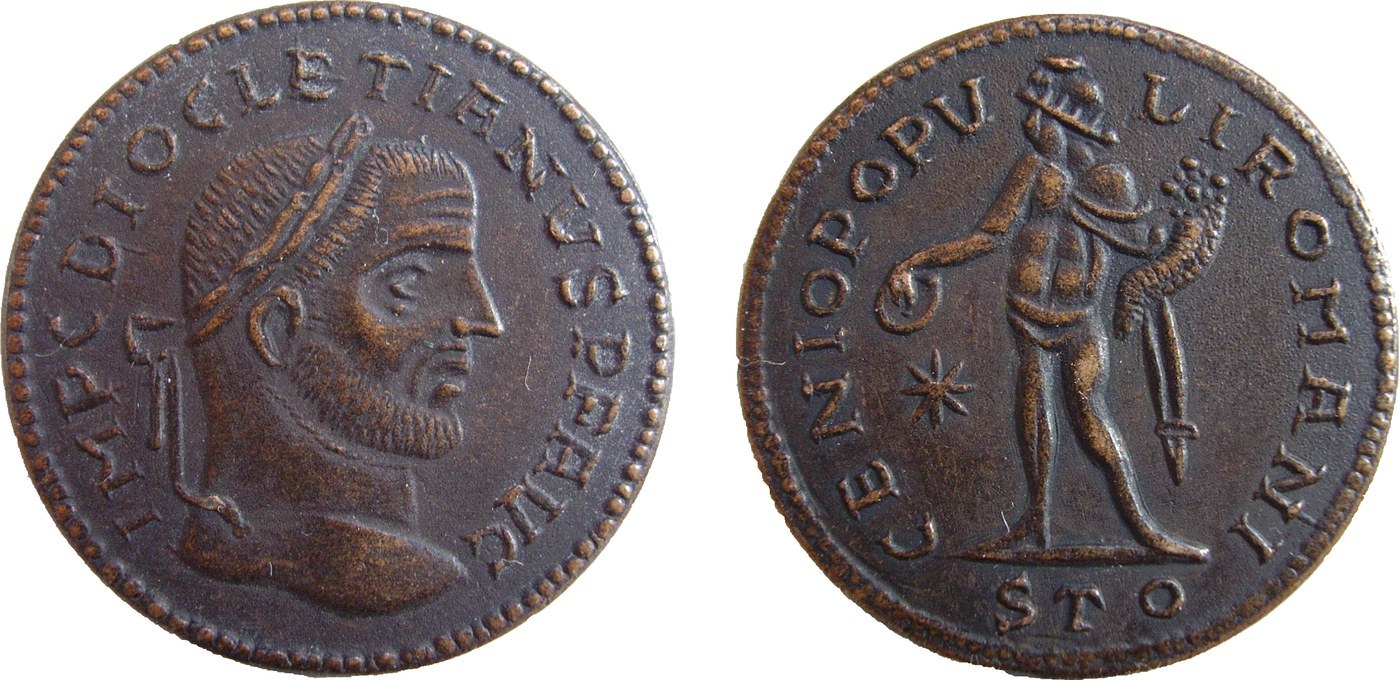
Start with the obverse legend, because it names the ruler directly. A follis of Diocletian shows a laureate head or cuirassed bust facing right, rendered in the heavy, squared-off Tetrarchic style. Read the legend around the edge: it should include DIOCLETIANVS, most often as IMP C DIOCLETIANVS P F AVG. Because the four Tetrarchs struck near-identical coins, the name in the legend, not the portrait style, is what separates a Diocletian follis from one of Maximian, Constantius, or Galerius.
Measure and weigh the coin next. An early follis is a large, heavy piece, roughly 26-30 mm across and about 8-11 grams, clearly bigger than the small radiate coins that preceded the reform. The metal is bronze that was originally silvered; expect a brown, green, or dark patina, sometimes with silvery traces surviving in the recesses of the design. Later folles struck toward the end of the period are smaller and lighter as the denomination was progressively reduced.
Read the reverse figure and its legend together. The standard type is the Genius of the Roman People: a standing near-nude male wearing a modius on his head, holding a cornucopia and pouring from a patera, with the legend GENIO POPVLI ROMANI. Other reverses, such as Sacred Moneta holding scales and a cornucopia (SACRA MONETA), also appear. Matching the figure's attributes to the legend is how the type is confirmed.
Check the exergue, the space below the reverse figure, for mint marks and officina letters. These short codes (for example marks associated with Trier, Rome, Ticinum, Aquileia, Siscia, Antioch, or Alexandria, often with a workshop numeral) identify where and in which workshop the coin was struck and are essential for full attribution. They also help distinguish genuine issues, since the mint-mark system was tightly standardized.
Watch for look-alikes and authentication concerns. Folles of the other Tetrarchs, and later reduced folles of Constantine-era rulers, share the fabric and reverse types, so always read the obverse name. Cast forgeries and tooled or artificially silvered coins exist; warning signs include a seam around the edge, a soft or bubbly surface, a portrait or legend style that does not match known Tetrarchic dies, and weight far outside the normal range. For a significant purchase, favor coins with a legible mint mark and, where possible, specialist attribution or reputable provenance.
Frequently asked questions
How do I know a follis is Diocletian's and not another Tetrarch's?
Read the obverse legend. Diocletian's coins include DIOCLETIANVS, usually as IMP C DIOCLETIANVS P F AVG. Maximian, Constantius, and Galerius struck nearly identical folles, so the name in the legend, not the portrait or reverse, identifies the ruler.
What size and weight should a genuine early follis be?
An early reform follis is large, about 26-30 mm in diameter and roughly 8-11 grams. Later issues shrink as the denomination was reduced. A coin far outside these ranges warrants closer scrutiny.
Where do I find the mint mark?
Look in the exergue, the area below the reverse figure. Short letter codes and a workshop numeral there identify the mint and officina. They are key to full attribution and to confirming a coin fits a known, standardized issue.
My follis has no silvery surface. Is it authentic?
Very likely yes. Almost all folles have lost their thin silver wash over the centuries and now show bronze patina. A brown, green, or dark surface is normal; surviving silvering is a bonus, not a requirement for authenticity.