
How to Identify the Flowing Hair Wreath Cent
A visual guide to the Flowing Hair Wreath Cent of 1793, the design that replaced the criticized Chain Cent, covering its revised Liberty portrait, wreath reverse, edge varieties, and identification tips.
Read the full Flowing Hair Wreath Cent encyclopedia entry →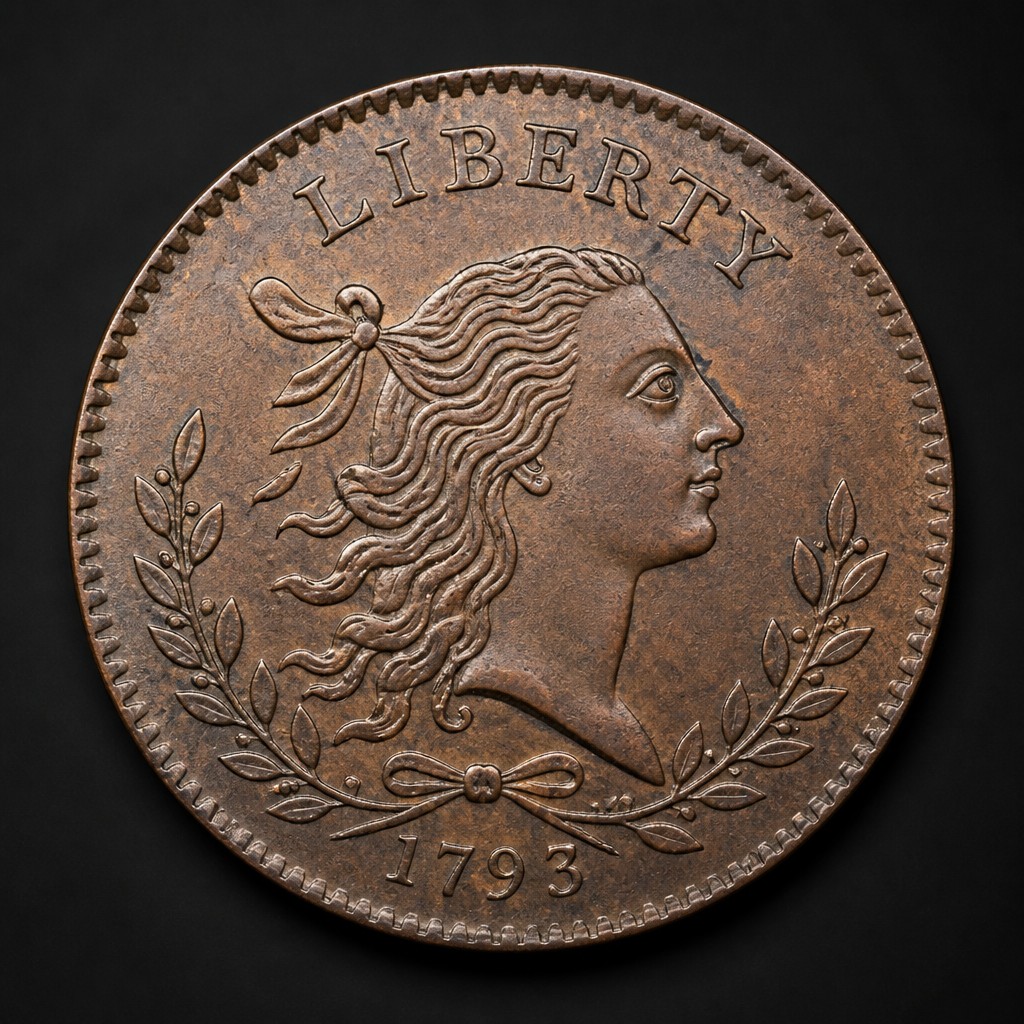
What It Is
The Flowing Hair Wreath Cent was struck in 1793 as a direct replacement for the short-lived Chain Cent, after that earlier design's chain-link reverse drew public criticism. The Wreath Cent used a friendlier, more conventional reverse and a somewhat improved Liberty portrait.
Obverse Design
Liberty again appears in right-facing profile with flowing, loose hair, with LIBERTY above and the date below. The portrait style is generally considered better proportioned than the earlier Chain Cent obverse, though it retains the hand-cut, slightly irregular look typical of the Mint's earliest dies.
Reverse Design
The reverse replaces the chain with a wreath, most commonly described as a wreath of leafy sprigs, encircling ONE CENT and the fraction 1/100. This wreath format, in various forms, would remain the basic reverse layout for large cents for decades afterward.
Size, Weight, Metal, and Edge
Like the Chain Cent, the Wreath Cent is struck in pure copper at the weight standards used in 1793, generally falling around 208 grains (about 13.48 grams) before later reductions applied to subsequent years, with diameters in the high 20s of millimeters that vary somewhat due to the era's hand-operated presses. Notably, this type is found with two distinct edge treatments: a plain vine-and-bars edge design and a lettered edge, which collectors use to help identify specific varieties.
Mint Marks
There is no mint mark on this coin. It was struck solely at the original Philadelphia Mint in 1793.
Telling It Apart From Similar Coins
The wreath reverse instantly separates this coin from the Chain Cent that preceded it. Compared to the Liberty Cap Cent introduced later in 1793, the Wreath Cent's obverse shows Liberty with bare, uncovered flowing hair, while the Liberty Cap design adds a cap mounted on a pole behind her head. Collectors also recognize a small number of rare die varieties within the Wreath Cent type, including one with an unusual leaf design on the obverse that is exceptionally scarce.
Judging Condition
Examine the wreath leaves, the hair strands, and the lettering for sharpness. As with other 1793 issues, uneven striking and planchet marks are common even on coins with little actual wear, so these should be weighed separately from true circulation wear when judging a coin's grade.
Authenticity Notes
Given the historical importance and value of 1793-dated cents, counterfeits and altered coins are a real concern. Warning signs include a surface texture that looks cast rather than struck, seams around the edge, a weight or diameter that falls outside known genuine ranges, and overly sharp design elements inconsistent with the hand-engraved dies used at the Mint that year.
Frequently asked questions
How is the Wreath Cent different from the Chain Cent?
The Wreath Cent replaces the chain-link reverse with a leafy wreath around ONE CENT; the obverse portrait was also slightly refined.
What edge varieties exist for the Wreath Cent?
It is known with both a vine-and-bars edge and a lettered edge, which collectors use to distinguish specific varieties.
Does the Wreath Cent have a mint mark?
No, it was struck only at the original Philadelphia Mint in 1793.
How do I tell the Wreath Cent from the later Liberty Cap Cent?
The Wreath Cent shows Liberty with bare flowing hair, while the Liberty Cap Cent adds a cap on a pole behind her head.