
How to Identify the Five Guinea
The Five Guinea piece was the largest regular British gold coin of its era, worth 105 shillings and struck between the reigns of Charles II and George II.
Read the full Five Guinea encyclopedia entry →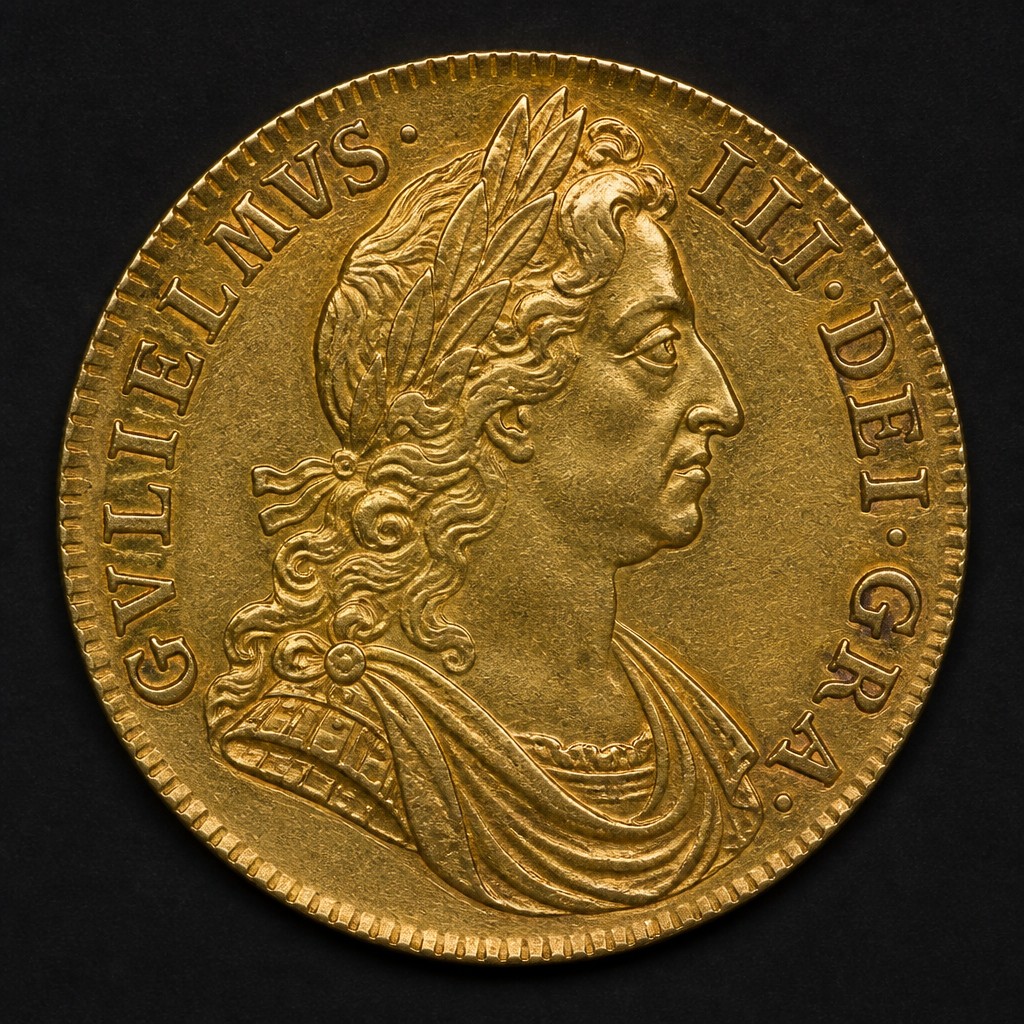
What Is It
The Five Guinea coin was the largest and most valuable regular gold denomination struck by the Royal Mint during the guinea era, worth five guineas, or 105 shillings. It was issued periodically from the reign of Charles II in the late 1660s through the reign of George II, with production ending by the mid-18th century. Because of its high value, it was used mainly for large transactions, gifts, and reserves rather than everyday spending, and surviving examples are scarce today.
Obverse Design
The obverse shows the portrait of the reigning monarch in the artistic style of the period, ranging from the laureate, heavily draped busts of the Stuart kings and Queen Anne to the more restrained portraiture used under the early Georgian kings.
Reverse Design
The reverse typically displays four crowned cruciform shields bearing the royal arms, arranged around a central rose, star, or sceptres filling the spaces between the shields, echoing the layout used on the Two Guinea piece but rendered on a larger, more elaborate scale befitting the coin's high value.
Size, Weight, and Metal
The Five Guinea is struck in 22-carat gold, weighs approximately 41.8 grams, and measures about 37 to 38mm in diameter, making it by far the largest and heaviest gold coin of the guinea series. Its substantial heft is immediately noticeable compared with any other guinea denomination.
Mint Marks and Where to Find Them
All Five Guinea coins were produced at the Royal Mint in London. As with other 17th-century guinea coinage, some examples carry a small elephant or elephant-and-castle privy mark beneath the monarch's bust, indicating gold supplied by the Royal African Company rather than a specific mint location.
Telling It Apart from Similar Coins
The Five Guinea's size alone sets it apart from every other coin in the guinea family; even the substantial Two Guinea piece is noticeably smaller and lighter at about 31mm and 16.8 grams. No other regularly issued British gold coin from this period approaches the Five Guinea's scale, so a coin of this size and weight in gold is almost certainly this denomination.
Judging Condition at a Glance
Wear appears first on the monarch's portrait, especially the hair, wig curls, or laurel wreath, and on the highest points of the crowned shields on the reverse. Because Five Guineas were high-value coins often kept carefully or used for savings rather than daily transactions, well-preserved examples exist, but given their age, most surviving specimens show at least moderate wear.
Authenticity Red Flags
Because of their considerable rarity and value, Five Guinea coins are frequently targeted by counterfeiters, both historically and in the modern collectibles market, so verifying the coin's weight near 41.8 grams and diameter near 37-38mm is an essential step before accepting authenticity. Genuine pieces almost always surface through established auction houses or long-documented collections; a coin of this rarity appearing without provenance, or showing soft, indistinct design details, warrants particular caution.
Frequently asked questions
How much was a Five Guinea coin worth?
It was worth five guineas, equal to 105 shillings, making it the highest-value regular gold denomination of the guinea coinage system.
When was the Five Guinea coin struck?
It was issued periodically from the reign of Charles II in the late 1660s through the reign of George II, with production ending by the mid-18th century.
How large is a Five Guinea coin compared to other gold coins of the era?
It is by far the largest, at roughly 37 to 38mm in diameter and about 41.8 grams, dwarfing even the substantial Two Guinea piece.
Why should I be cautious buying a Five Guinea coin?
Its high value and rarity make it a common target for counterfeits, so careful weight and diameter verification, along with a documented provenance, are especially important with this denomination.