
How to Identify the Fifty Pence
How to identify the UK 50p coin by its distinctive seven-sided shape, cupro-nickel composition, Britannia or commemorative reverse, and size change history.
Read the full Fifty Pence encyclopedia entry →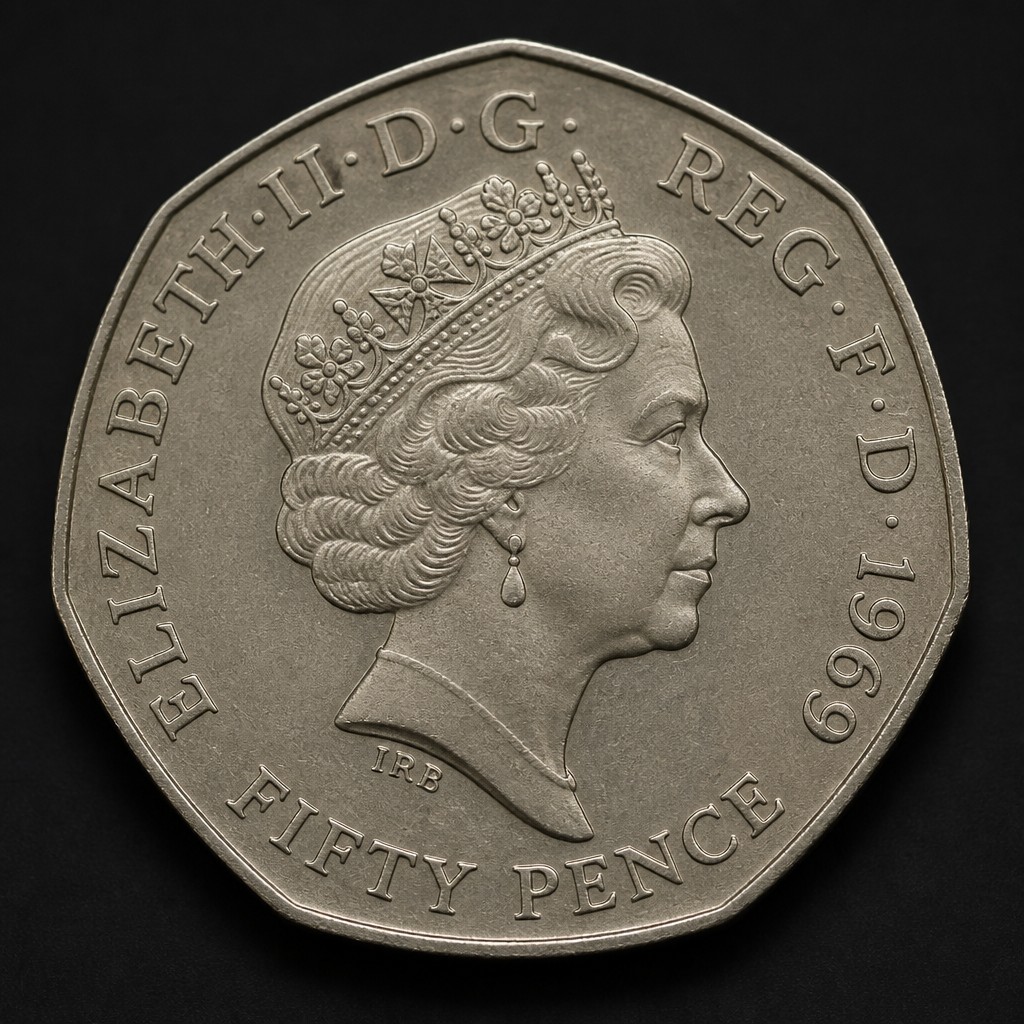
What It Is
The fifty pence coin was introduced in 1969 to replace the old ten-shilling note, ahead of full decimalization in 1971. It is best known for its distinctive seven-sided shape, technically a Reuleaux heptagon with curves of constant width, which lets the coin roll smoothly through vending machines despite not being round.
Obverse Design & Inscriptions
The obverse carries a portrait of Queen Elizabeth II, updated over time with different official effigies, along with her name and the date.
Reverse Design & Inscriptions
For much of its history the reverse featured Britannia, though this has been used alongside a long list of commemorative designs, including Kew Gardens (2009), Beatrix Potter characters (2016-2018), the World Wildlife Fund 50th anniversary, a series of 29 different Olympic sports designs (2011), and Brexit-related issues.
Size, Weight, Metal, and Edge
The coin is cupro-nickel. It was reduced in size in 1997; the modern coin measures 27.3mm across its flats and weighs 8 grams, noticeably smaller and lighter than the original large 50p (30mm, 13.5 grams). The seven curved sides serve as the edge feature, with no separate milling needed.
Mint Marks & Where to Find Them
All are struck at the Royal Mint with no separate branch mint mark. The date and reverse design together identify the specific issue.
Telling It Apart From Similar Coins
Check size first to separate the pre-1997 large 50p from the smaller modern one. For commemorative types, match the reverse artwork closely against the date, since some scarce designs, such as the original 2009 Kew Gardens coin, had a notably smaller original mintage than standard-issue years.
Judging Condition & Grade
Because the design sits in relatively high relief, wear shows first on the Queen's portrait and the raised elements of the reverse artwork. Commemorative coins are often saved by the public rather than spent, so worn examples of some special designs are less commonly seen than worn standard Britannia coins.
Authenticity Red Flags
Watch for a heptagon shape with uneven or inconsistent curve widths, incorrect weight or diameter, and soft or blurred detail in the commemorative artwork, all of which point to a counterfeit rather than a genuine Royal Mint strike.
Frequently asked questions
Why is the 50p coin seven-sided instead of round?
It uses a curve-of-constant-width shape called a Reuleaux heptagon, which still rolls smoothly through coin-operated machines while remaining visually and tactilely distinct from round coins.
How do I tell the old large 50p from the modern one?
The pre-1997 coin is noticeably bigger and heavier, at 30mm and 13.5 grams, compared to the current 27.3mm, 8 gram coin.
Why are some 50p designs worth more to collectors than face value?
Certain commemorative designs, like the original 2009 Kew Gardens coin, had smaller original mintages than standard years, making genuine surviving examples harder to find.
What metal is the 50p coin made from?
It is struck in cupro-nickel, giving it a silver-colored appearance.