
How to Identify the Faustina the Younger Denarius
A silver denarius of Faustina the Younger, wife of Marcus Aurelius, identified by her evolving braided hairstyles and reverse types celebrating fertility and family.
Read the full Faustina the Younger Denarius encyclopedia entry →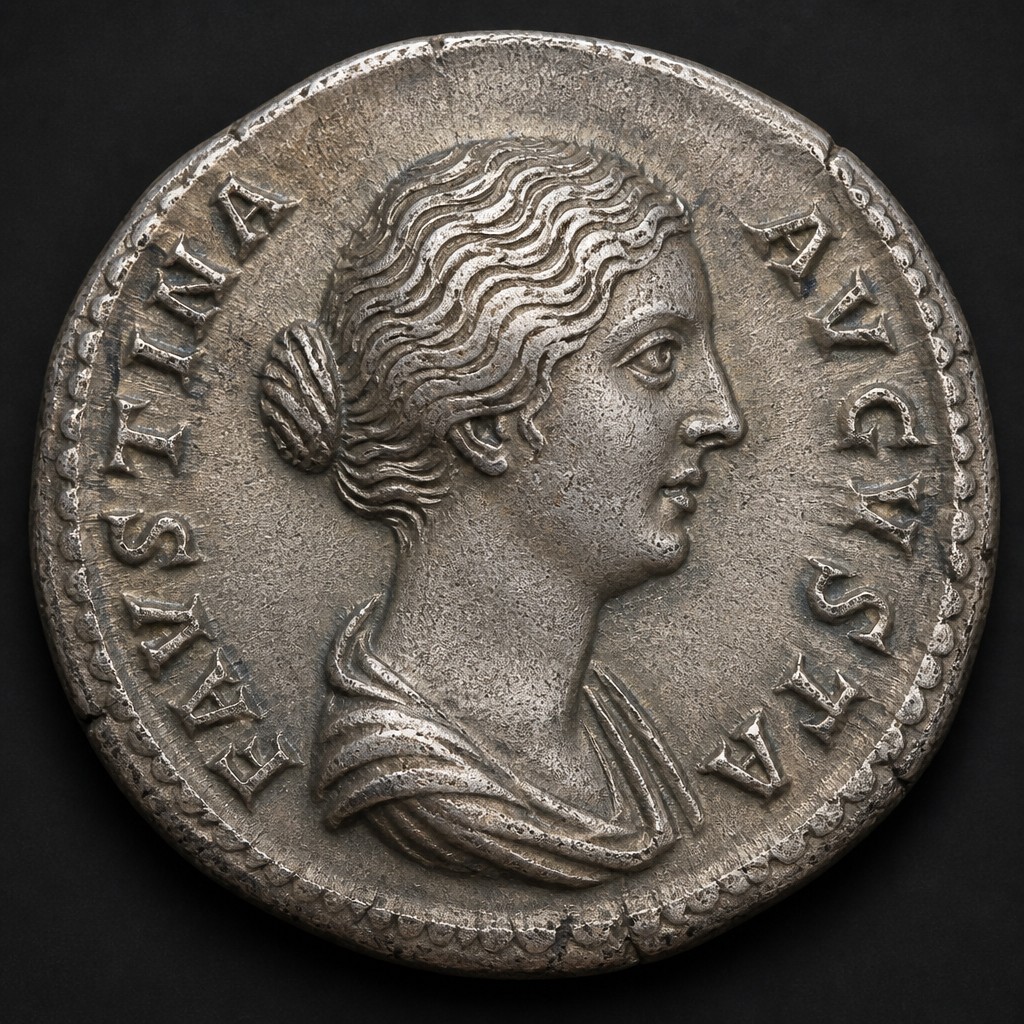
What the Coin Is
Faustina the Younger was the daughter of Antoninus Pius and Faustina the Elder, and became the wife of Marcus Aurelius. Coins were struck in her name both during her lifetime (roughly AD 147-175) and posthumously after her death, since she too was deified, making her denarii plentiful and varied.
Obverse Design & Inscriptions
The obverse shows a draped bust of Faustina the Younger right. Her hairstyle changed several times over her life, from center-parted waves gathered into a low bun at the back to later, more elaborate braided or layered arrangements piled toward the crown. While alive, the legend generally reads FAVSTINAE AVG PII AVG FIL, identifying her as the daughter of Antoninus Pius; posthumous issues instead read DIVA FAVSTINA PIA or a similar consecration formula.
Reverse Design & Inscriptions
Reverse themes emphasize fertility and family, fitting her role as mother of Marcus Aurelius's many children: Fecunditas standing with one or more children, Venus, Salus, Laetitia, and Concordia all appear regularly. A distinctive "family" reverse shows several small standing children grouped together, directly celebrating her role as a prolific imperial mother.
Size, Weight, Metal & Edge
The coin measures roughly 17-18mm in diameter and weighs about 3.0-3.3 grams, consistent with the mid-to-late second-century silver standard. The edge is plain.
Mint Marks & Where to Find Them
Most examples were struck at Rome, though some issues circulated more broadly across the empire during Marcus Aurelius's reign; there is no formal mint-letter marking system to look for.
Telling It Apart from Similar Coins
The clearest distinction from her mother, Faustina the Elder, is the legend structure: any coin naming her as "daughter of Pius Augustus" (PII AVG FIL) must be the younger Faustina, since that phrase only applies to her. Reverse subject matter is another clue, since the mother's posthumous consecration reverses (Ceres, an empty throne) differ from the daughter's fertility and family-themed types.
Judging Condition & Grade at a Glance
Pay close attention to the waves and coiled or braided portions of the hairstyle, since these finely engraved details wear down quickly and are a reliable guide to overall condition. On family-themed reverses, check whether the individual small children remain distinct and countable or have blurred into an indistinct cluster.
Authenticity Red Flags
Because Faustina's "family" coins are popular curiosities for their unusual subject matter, they attract some forgery attention; check for correct silver color and luster, an appropriate weight for the denomination, and an edge free of the raised seam line typical of cast reproductions. Any coin that looks suspiciously bright or new despite claimed heavy circulation deserves a closer look.
Frequently asked questions
How do I know a coin is Faustina the Younger and not her mother?
Look for the legend FAVSTINAE AVG PII AVG FIL, which identifies her specifically as the daughter of Antoninus Pius; her mother's coins never carry this phrase since they are posthumous DIVA issues only.
Why do so many reverses show children?
Faustina the Younger bore many children with Marcus Aurelius, and the mint celebrated her fertility through Fecunditas types and a distinctive reverse showing several small standing children together.
Did her hairstyle change over time?
Yes, her portraits evolved from simpler center-parted waves with a low bun early on to more elaborate braided or piled arrangements in later issues, which can help roughly date individual coins.
What happened to her coinage after she died?
Like her mother, she was deified, and posthumous DIVA FAVSTINA PIA coins continued to be struck in her memory after her death in AD 175.
What should I check to avoid a fake?
Confirm the silver has a proper white-gray luster and weight appropriate for a denarius, and examine the edge for a raised seam line, which would indicate a cast rather than struck coin.