
How to Identify the Faustina the Elder Denarius
A posthumous silver denarius honoring Faustina the Elder, wife of Antoninus Pius, recognized by her simple waved-back hairstyle and the DIVA FAVSTINA consecration legend.
Read the full Faustina the Elder Denarius encyclopedia entry →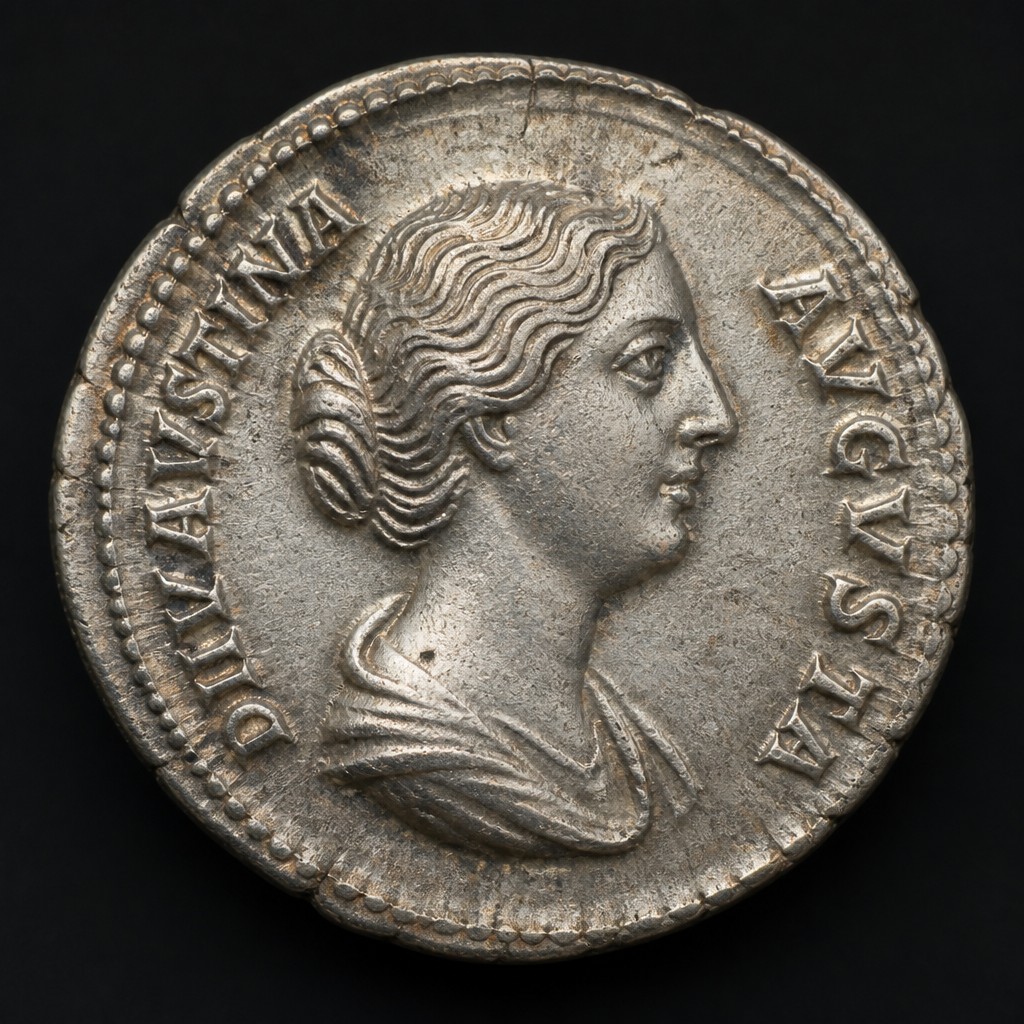
What the Coin Is
Faustina the Elder was the wife of Antoninus Pius and died around AD 140/141, early in his reign. Because she was deified after death, an extensive posthumous "DIVA" coinage was struck in her honor for years afterward, meaning far more denarii survive naming her than her brief life alone would suggest.
Obverse Design & Inscriptions
The obverse shows a draped bust of Faustina right, with hair styled in gentle waves pulled back and gathered into a simple coiled bun at the nape of the neck. Since she was never an empress in her own right during a living reign structure with imperial titles, the legend simply reads DIVA FAVSTINA, marking the coin as a posthumous consecration issue.
Reverse Design & Inscriptions
Reverse types focus on themes of deification and eternal memory: Ceres standing holding a torch and grain ears, Aeternitas standing with symbolic attributes, Juno standing with a peacock at her feet, an empty ceremonial throne symbolizing her memory, or Pietas performing a sacrifice at an altar. The legend AVGVSTA sometimes accompanies these types.
Size, Weight, Metal & Edge
The coin measures approximately 17-18mm across and weighs roughly 3.0-3.4 grams, in silver consistent with the mid-second-century standard. The edge is plain.
Mint Marks & Where to Find Them
All examples were struck at Rome; there is no mint-letter system on coins of this period.
Telling It Apart from Similar Coins
The most important distinction is between Faustina the Elder and her daughter, Faustina the Younger. The mother's legend always reads simply DIVA FAVSTINA, since it is entirely posthumous, while the daughter's coins struck during her lifetime read FAVSTINAE AVG PII AVG FIL ("of Faustina Augusta, daughter of Pius Augustus"). Hairstyle is the other key visual cue: the elder Faustina wears a simpler, plainer waved coil, while the younger Faustina's portraits show more elaborate braided or layered arrangements that changed several times over her life.
Judging Condition & Grade at a Glance
Because reverse designs are generally simple standing or seated figures, the portrait itself is often the best guide to grade: look at how clearly the individual waves of hair and the coiled bun are rendered, along with the profile's overall sharpness.
Authenticity Red Flags
This posthumous series was struck over a long period with many minor die varieties, so common worn types are inexpensive and rarely worth faking, but collectors should still check for cast reproductions, identifiable by a grainy surface and a raised seam line, and confirm the flan has the slightly irregular, hand-cut shape typical of genuine ancient blanks rather than a perfectly round modern-struck edge.
Frequently asked questions
How do I tell Faustina the Elder apart from Faustina the Younger?
Check the legend and hairstyle: the mother's coins always read simply DIVA FAVSTINA as a posthumous issue with a plain waved-and-coiled hairstyle, while the daughter's lifetime coins read FAVSTINAE AVG PII AVG FIL and often show more elaborate braided styles.
Why are there so many surviving coins for someone who died so early in the reign?
Antoninus Pius deified her after her death, and the resulting DIVA consecration coinage continued to be struck for years, producing a large body of surviving denarii despite her short time as empress.
What does DIVA mean on the legend?
DIVA indicates a deified woman, confirming the coin is a posthumous commemorative issue rather than one struck during her lifetime.
What reverse designs should I expect?
Common reverses include Ceres, Aeternitas, Juno with a peacock, an empty throne, or Pietas at an altar, all reflecting themes of memory and deification rather than everyday civic subjects.
Is this coin type commonly faked?
Ordinary worn examples are inexpensive and not a major forgery target, but cast copies do exist, so checking for a seam line, grainy texture, and an appropriately irregular ancient flan shape is still good practice.