
How to Identify the Fatimid Gold Dinar
A high-purity gold coin of the Ismaili Shia Fatimid Caliphate (909-1171 AD), recognizable by its concentric circles of Kufic inscription and consistent weight standard.
Read the full Fatimid Gold Dinar encyclopedia entry →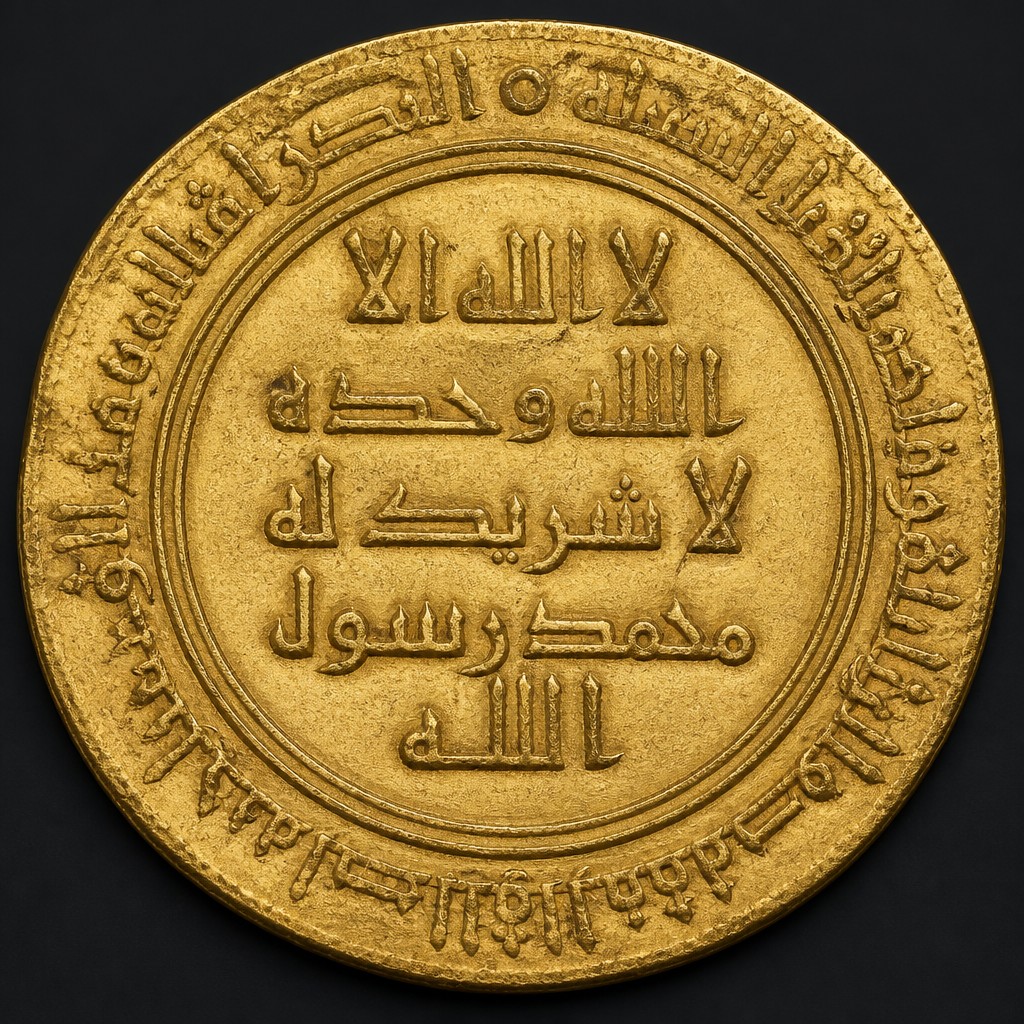
What It Is
The Fatimid Caliphate ruled Egypt and much of North Africa from 909 to 1171 AD and became renowned for issuing gold dinars of exceptionally consistent weight and fineness, which made them a trusted trade currency across the medieval Mediterranean and Middle East.
Obverse Design
The obverse is arranged in two or more concentric circles of Kufic script. The innermost circle typically names the reigning Fatimid caliph-imam and often invokes Ali, reflecting the dynasty's Shia Ismaili religious identity, while the outer circle carries the shahada and other pious formulas. There are no images of any kind.
Reverse Design
The reverse mirrors this concentric layout with further religious and dynastic text, sometimes naming the heir-designate, and the mint city and date are typically included within the circular legends.
Size, Weight, Metal, and Edge
Fatimid dinars are notably small but thick and dense, roughly 18-25mm in diameter and about 4.0-4.25 grams of gold at a very high purity, often in the range of 21-22 karat. The flan is compact rather than broad and thin.
Mint Marks and Dates
The mint city, such as Misr (Cairo), al-Mansuriya, or Filastin, is spelled out within the circular inscriptions along with the Hijri date written in words, following the broader Islamic convention of writing out both rather than using symbols.
Telling It Apart from Similar Coins
Abbasid dinars typically use horizontal lines of script rather than the Fatimid's signature concentric circles, so the overall layout is a fast way to separate the two. After Saladin's Ayyubid dynasty took over Egypt in 1171, early Ayyubid dinars closely imitated the Fatimid circular format for continuity, so identifying the ruler's name in the inscription is necessary to tell late Fatimid and early Ayyubid dinars apart. Crusader states also struck imitation gold "bezants" copying Fatimid dinar designs for regional trade, sometimes with a tiny, easily overlooked cross discreetly worked into the design.
Judging Condition at a Glance
Because the script is small and densely packed into narrow circular bands, judge sharpness by how clearly each letter in the innermost circle can be read. Long-used dies wear down over time, so some later strikes from a given die appear softer even on an otherwise lightly circulated coin; centering and overall gold luster also factor into a quick condition assessment.
Authenticity Red Flags
Genuine near-pure gold dinars have a rich, deep yellow color and should weigh close to the expected standard for the type. Cast forgeries often show porosity or tiny surface bubbles, while struck forgeries may contain subtle errors in the Arabic letterforms. Significant deviation from the expected weight for a given period is a strong warning sign.
Frequently asked questions
What makes the Fatimid dinar's design distinctive?
Its hallmark is concentric circles of Kufic script on both sides rather than the horizontal lines of text used by contemporaries like the Abbasids, making the circular layout a quick visual identifier.
How do I know which Fatimid caliph issued my coin?
The innermost circle of the obverse names the reigning caliph-imam, so reading that central inscription is the most direct way to attribute the coin to a specific ruler.
How can I tell a late Fatimid dinar from an early Ayyubid dinar?
Early Ayyubid dinars under Saladin closely copied the Fatimid circular format, so the key distinguishing feature is the ruler's name and titles in the inscription rather than the overall design layout.
Why is this coin so small compared to other medieval gold coins?
Fatimid dinars were struck on a compact, thick flan rather than a broad, thin one, which is why the diameter looks small relative to its gold weight compared to some other contemporary coinages.
What should make me suspicious of a Fatimid dinar for sale?
Be cautious of examples that are noticeably underweight for the type, have a dull or inconsistent gold color, or show porosity and bubbling consistent with casting rather than striking.