
How to Identify the Fatimid Dinar of Imam Nizar
A collector's guide to Fatimid gold dinars: the concentric Kufic rings, epigraphic faces, gold flan, marginal mint-and-date, and authentication cautions.
Read the full Fatimid Dinar of Imam Nizar encyclopedia entry →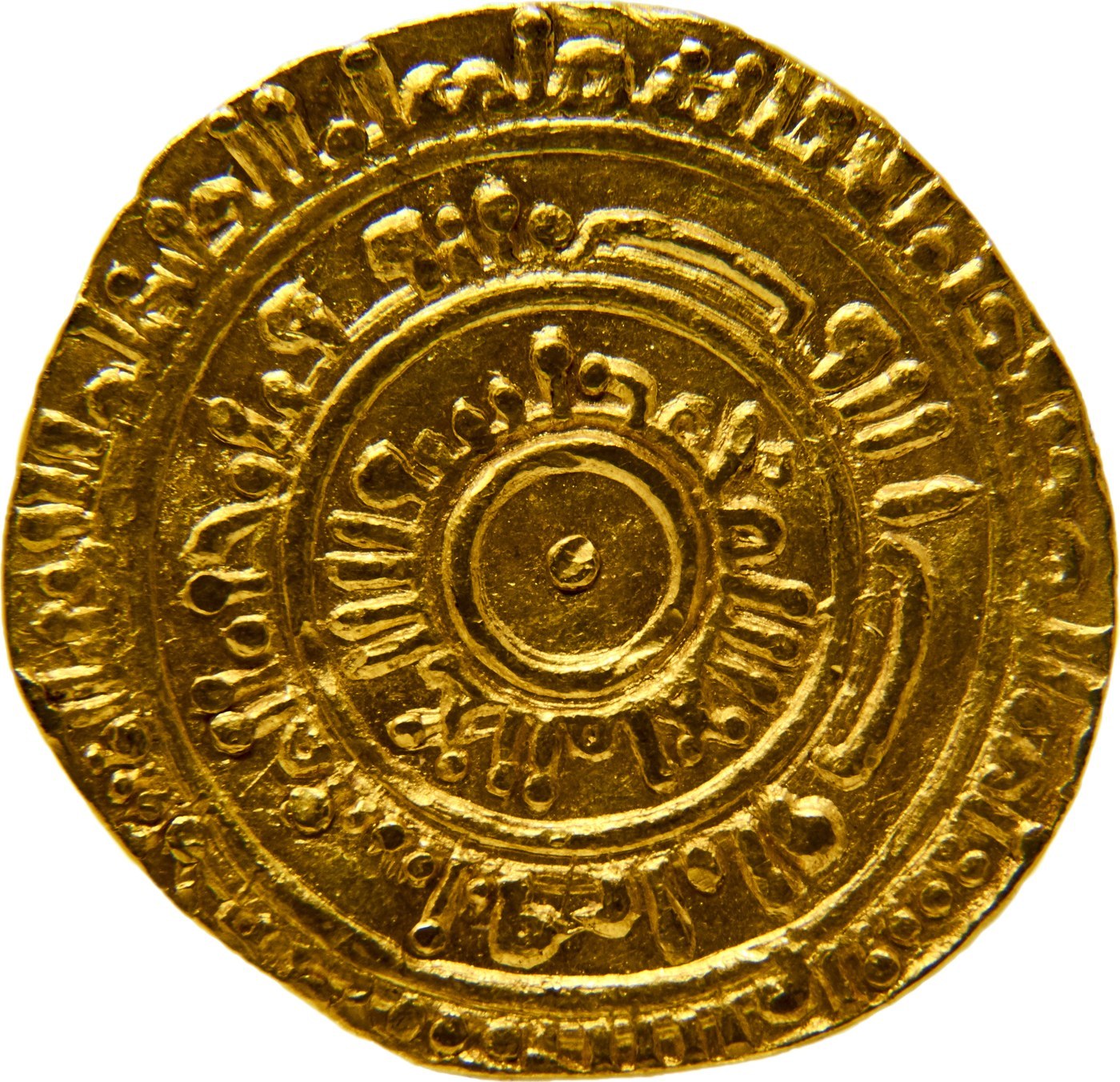
Start with the layout, because it is the quickest way to place the coin in the Fatimid series. Each face shows concentric circles of Arabic text — usually two or three rings around a short central legend — rather than the horizontal lines of field text seen on Abbasid or Umayyad dinars. That bullseye arrangement of Kufic script is the defining Fatimid trait; if you see rings of text on high-purity gold, you are very likely looking at a Fatimid dinar.
Read the two faces by role. The obverse carries a ruler's name together with Shi'a religious invocations — expect formulas centered on the oneness of God, the prophethood of Muhammad, and the authority of Ali and the imams, which reflect the Fatimids' Isma'ili Shi'a identity. The reverse carries the issuing authority and, crucially, the mint name and Hijri date in the outer marginal ring. To attribute the coin to a specific caliph, mint and year you must parse those Kufic legends, so photograph both faces clearly and, if you cannot read Kufic, seek an expert transcription.
Check the physical coin. This is a hand-struck gold piece, thin and broad, on the order of roughly 20–25 mm across and about 4 grams, with deep yellow high-purity surfaces. Because the dies were larger than the flan and striking was done by hand, expect some off-center strikes, slightly irregular flan shape, and part of the outer legend running off the edge. These are normal, not defects. Weigh and measure the coin: a genuine dinar should sit close to the expected gold weight and show the density of real gold, not the lightness of a base-metal copy.
Separate look-alikes and beware of over-attribution. Later imitations, Crusader-era imitative gold, and other Islamic dinars can superficially resemble Fatimid work, but the concentric-ring format and specific Fatimid formulas are distinctive; horizontal field text points away from the Fatimids. Be especially skeptical of any strong claim tying a coin to Nizar and the 1094 succession — such specific attributions hinge on the exact names, mint and date in the legends and should be confirmed against a reference or by a specialist rather than taken on a seller's word.
Apply standard gold-coin authentication. Genuine dinars are struck, with crisp angular Kufic and metal that behaves like solid gold; watch for cast copies with soft, blurry lettering, seams or bubbles, for gilded base-metal fakes betrayed by wrong weight, and for tooled or added legends. When value or attribution is at stake, verify weight, diameter and specific gravity, compare the legends against a catalog of Fatimid coinage, and consider third-party authentication.
Frequently asked questions
How do I tell a Fatimid dinar from other Islamic gold dinars?
Look for the concentric circular inscriptions. Fatimid dinars arrange their Kufic text in two or three rings around a small central legend, while most other Islamic dinars use horizontal lines of field text. That ring layout, combined with high-purity gold, is the key Fatimid signature.
Where are the mint and date on the coin?
They are written in Kufic in the outer marginal ring, normally on the reverse. The mint names a Fatimid city and the date is given in the Hijri calendar. Reading that margin — or having a specialist read it — is how you pin down the exact issue.
Can I be sure my coin is specifically the 'Nizar' type?
Only by the legends. The specific ruler named in the inscriptions determines the attribution, and claims tied to Nizar and the 1094 succession are significant, so they should be confirmed by an expert transcription rather than assumed from the style alone.
How can I spot a fake?
Genuine dinars are struck with sharp Kufic lettering and behave like solid high-purity gold. Be wary of soft cast detail, casting seams or bubbles, wrong weight or diameter, and gilded base metal. Verify weight, size and specific gravity and compare against a Fatimid reference when in doubt.