
How to Identify the Farthing
A visual guide to the British bronze Farthing, the smallest pre-decimal denomination, identified by its tiny size and distinctive wren reverse design.
Read the full Farthing encyclopedia entry →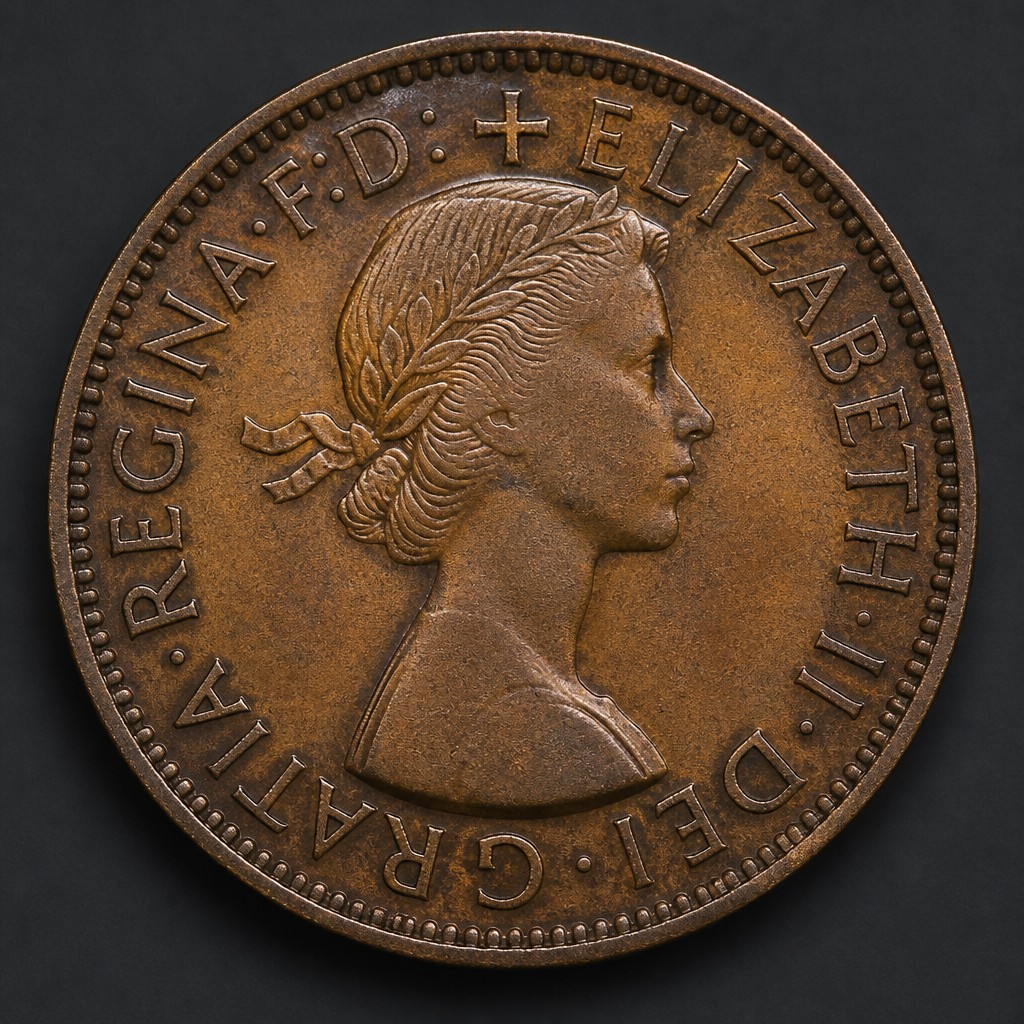
What It Is
The Farthing, worth one-quarter of a penny, was the smallest denomination in regular British circulation for much of its history. It was demonetised in 1960, well before decimalisation, as its purchasing power had become negligible. The coin's name comes from "fourthing," reflecting its status as a quarter of a penny, and it had been part of English coinage in various metals for many centuries before settling into the bronze format most collectors encounter today.
Obverse Design and Inscriptions
The obverse carries the monarch's profile portrait with the customary Latin title and date, matching the style used on the penny and halfpenny of the same reign.
Reverse Design and Inscriptions
Earlier farthings showed a seated Britannia design similar to the penny and halfpenny. From 1937, the reverse changed to a small wren (a common British bird) shown perched, a design that continued until the coin's final issues in the 1950s. The choice of the wren, one of Britain's smallest birds, was considered a fitting match for the farthing's status as the smallest coin in the currency.
Size, Weight, Metal, and Edge
The farthing is small, measuring about 20 mm in diameter and weighing roughly 2.83 grams, struck in bronze. The edge is plain (smooth).
Mint Marks and Where to Find Them
Regular London-struck farthings for domestic use carry no visible mint mark.
Telling It Apart From Similar Coins
The farthing is the smallest of Britain's bronze coins, so diameter alone usually settles identification against the halfpenny (25.5 mm) or penny (31 mm). The wren reverse used from 1937 onward is unique to the farthing among British coins and makes later dates easy to confirm at a glance. Earlier Britannia-reverse farthings can be mistaken for a small, worn halfpenny at first glance, so checking the diameter with a ruler is the most reliable way to settle any doubt.
Judging Condition at a Glance
On wren-reverse farthings, check the fine detail of the feathers and the wren's feet and perch, which wear smooth quickly given the coin's small size and correspondingly shallow relief. A well-defined rim and legible date are good signs of lighter wear.
Authenticity Red Flags
Be cautious of farthings that feel unusually light for their size or show a grainy, pitted surface consistent with casting rather than striking. Given the coin's low face value, outright counterfeits are less commonly encountered than with more valuable coins, but poorly made replicas and novelty items do circulate among collectors, so comparing weight and diameter against genuine examples is worthwhile. Jewelry conversions, where a genuine farthing has been drilled, mounted, or plated for use as a pendant, are also common and should be noted since they permanently alter the coin from its original struck state.
Frequently asked questions
When was the farthing withdrawn?
It was demonetised in 1960, over a decade before Britain's 1971 decimalisation.
What bird is on the farthing?
A wren, a small British bird, appears on the reverse of farthings dated 1937 and later.
How big is a farthing?
It measures about 20 mm in diameter, making it the smallest regularly circulated pre-decimal British coin.
What metal is a farthing made of?
Like the penny and halfpenny, it is struck in bronze.