
How to Identify the Euro €2 Commemorative Coins
Special €2 coins issued by eurozone countries carry unique national designs but a shared map reverse. Identify the issuing country and theme on the national side.
Read the full Euro €2 Commemorative Coins encyclopedia entry →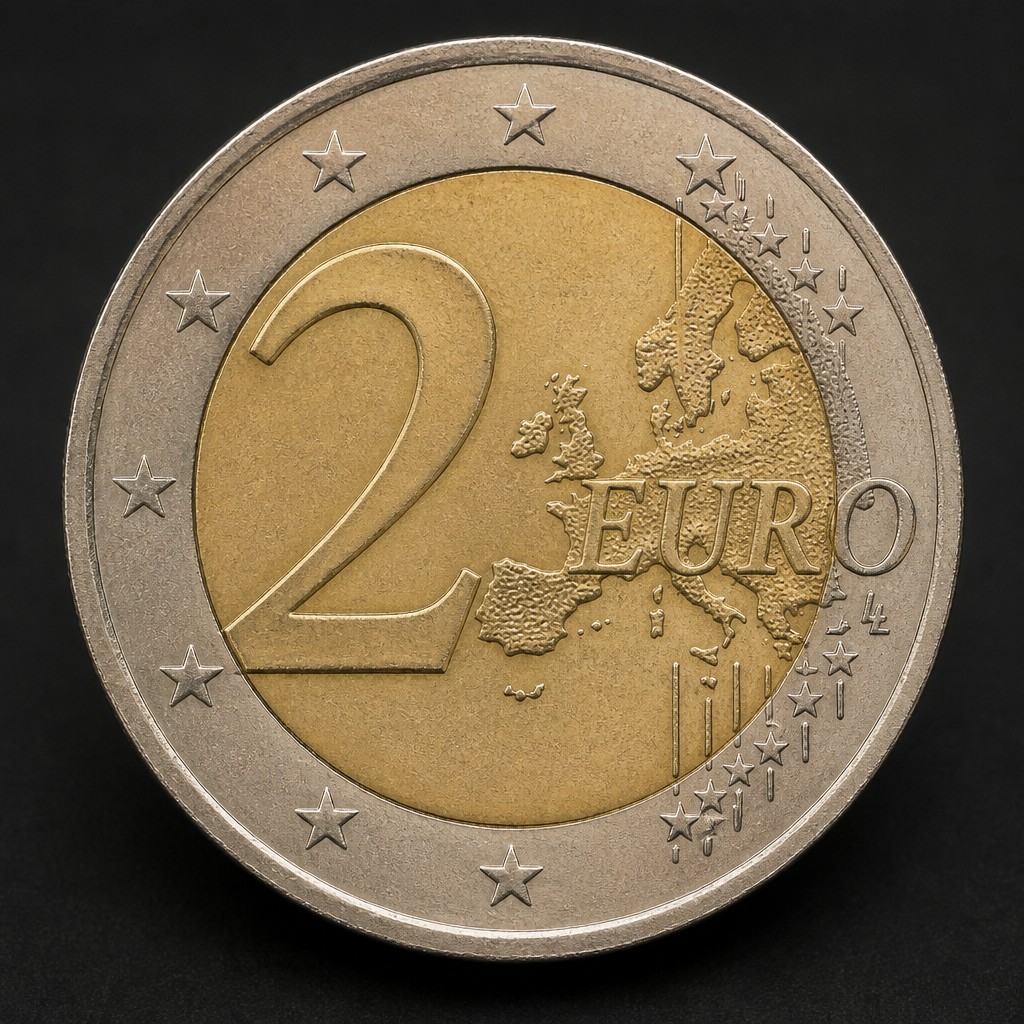
What These Coins Are
Since 2004, eurozone countries have been permitted to issue commemorative €2 coins, usually one or two per country each year, marking anniversaries, events, or shared European themes. They are legal tender throughout the eurozone and circulate alongside standard €2 coins, differing only in the national design.
Obverse (National Side) Design and Inscriptions
The commemorative design occupies the national side. Each country chooses its own theme, so this side shows anything from a portrait to a monument to an abstract emblem, along with the issuing country's name or abbreviation, the year, and often a mint mark or engraver's initials. This side is the key to identification.
Reverse (Common Side) Design and Inscriptions
The common side is identical to a regular €2 coin: the numeral 2, the word EURO, and a map of Europe with twelve stars, designed by Luc Luycx. This side never changes for commemoratives, so it cannot tell you which coin you have.
Size, Weight, Metal and Edge
All €2 coins, commemorative or not, are 25.75 mm in diameter, weigh 8.5 grams, and are 2.2 mm thick. They are bimetallic, with a nickel-brass ring around a copper-nickel center. The edge carries fine reeding with country-specific edge lettering.
Mint Marks and Where to Find Them
Mint marks and mintmaster marks appear on the national side, their placement varying by country. German coins add a letter (A, D, F, G, or J) for the five mints. French, Italian, and Spanish issues include small mint and engraver marks near the design edge.
Telling It Apart From Similar Coins
A commemorative €2 differs from a standard €2 only on the national side: standard coins show each country's regular emblem, while commemoratives show a special one-time design. If the national side depicts a specific event or anniversary with a descriptive inscription, it is a commemorative.
Judging Condition at a Glance
Check the raised design and the boundary between the two metals for wear and grime. Uncirculated coins retain full luster and sharp lettering; circulated ones show flattened high points and dulled edges. Proof versions from mint sets have mirror fields and frosted designs.
Authenticity Red Flags
Because some commemoratives are scarce, colorized or gold-plated versions are sold as novelties and are not official once altered. Counterfeit bimetallic euros exist; genuine coins show a clean, tight seam between ring and center and respond weakly to magnets due to their alloy structure.
Frequently asked questions
How do I find which country issued a €2 commemorative?
Read the national side, which shows the issuing country's name or abbreviation along with the commemorative design and year.
Why do all €2 coins look the same on one side?
The common side, with the numeral 2 and map of Europe, is shared by every €2 coin regardless of country or design.
Are commemorative €2 coins legal tender?
Yes, they circulate as normal money throughout the eurozone and are worth two euros.
What does the letter on German coins mean?
It identifies the mint: A Berlin, D Munich, F Stuttgart, G Karlsruhe, and J Hamburg.