How to Identify the Eukratides I Gold Stater (Baktria)
A Greco-Bactrian gold stater of King Eukratides I, showing his distinctive helmeted portrait and the twin Dioskouroi charging on horseback, among the finest royal portraits from the Hellenistic Far East.
Read the full Eukratides I Gold Stater (Baktria) encyclopedia entry →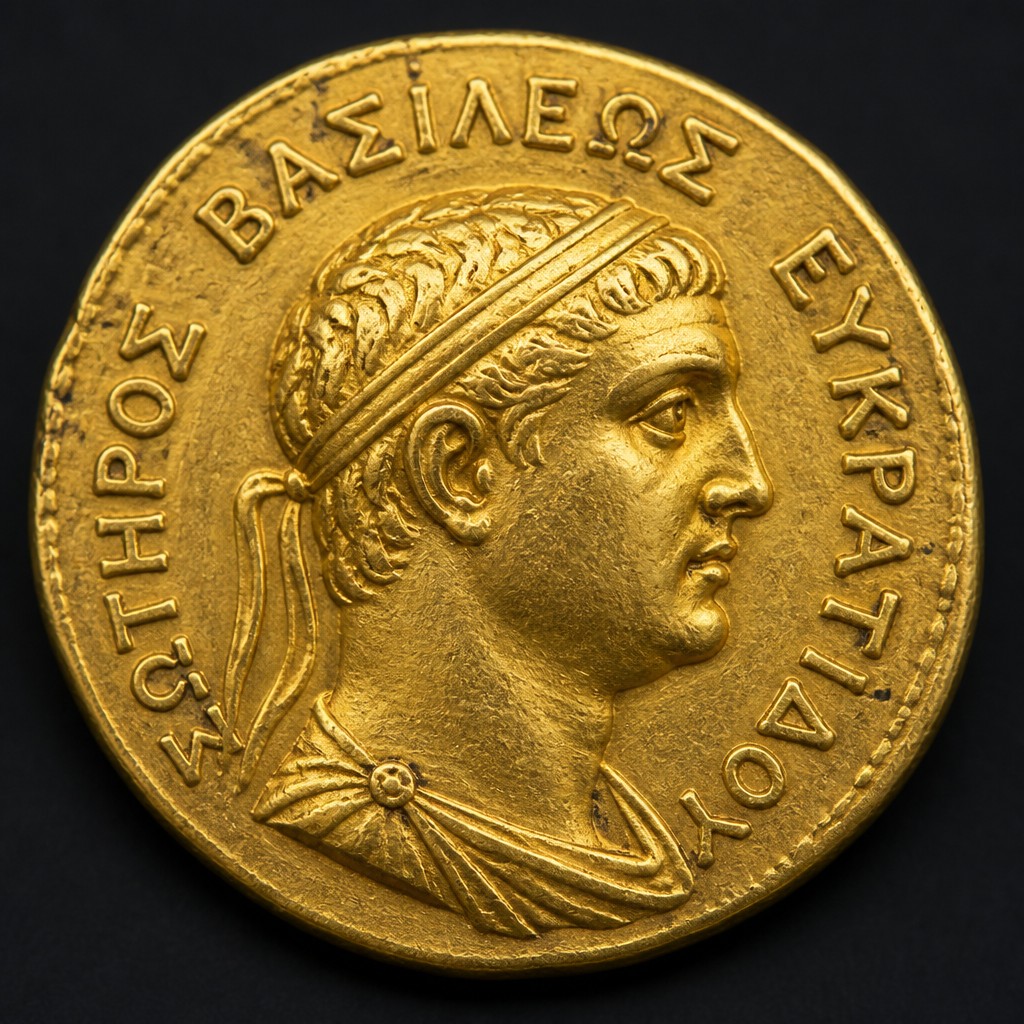
What the Coin Is
Eukratides I was a powerful king of the Greco-Bactrian kingdom in Central Asia during the second century BC, ruling over a Greek-descended state far to the east of the Mediterranean world. His gold stater coinage is renowned for its exceptionally vivid royal portrait and is considered one of the artistic high points of Hellenistic numismatics, alongside the much larger and extremely rare commemorative gold piece struck in his name.
Obverse Design
The obverse shows a diademed and helmeted bust of Eukratides I facing right, wearing a crested helmet decorated with a bull's horn and ear, a distinctive combination linked to the region's iconography of royal or divine authority. A spear is often shown resting over his shoulder behind the helmet, adding to the martial character of the portrait, which is engraved with unusually strong individualized features for a Hellenistic ruler.
Reverse Design
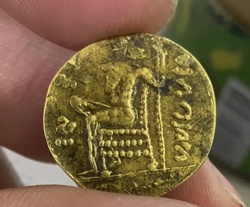
The reverse depicts the Dioskouroi, the twin gods Castor and Pollux, mounted on galloping horses and charging to the right, each holding a palm branch in one hand and a couched spear in the other. The royal legend BASILEOS MEGALOU EUKRATIDOU (of the Great King Eukratides) runs around the design in Greek, and on bilingual issues intended for local circulation, a Prakrit legend in Kharoshthi script appears as well, reflecting the kingdom's blended Greek and Indian cultural environment.
Size, Weight, and Metal
This is a gold stater, generally weighing close to 8.4 to 8.6 grams, distinct from the enormous unique twenty-stater gold piece struck in Eukratides's name, which is a separate and far larger commemorative issue rather than a circulating denomination. The regular gold stater described here was intended for normal circulation and trade within the kingdom.
Mint Marks and Where to Find Them
Small monograms or control marks appear in the field near the horses' legs or beneath the ground line on the reverse, helping to distinguish output from different mints or officials within the Greco-Bactrian kingdom. Because many Greco-Bactrian coin hoards have been found in the regions of modern Afghanistan and Tajikistan, these control marks are also useful for connecting specific issues to broader regional minting patterns.
Telling It Apart from Similar Coins
The bull-horned helmet portrait is unique to Eukratides I among Greco-Bactrian kings, so it is a reliable identifier on its own, while several later Indo-Greek rulers also used Dioskouroi imagery but paired it with different obverse portraits. Bilingual issues with both Greek and Kharoshthi legends should not be confused with purely Greek-legend issues intended for different parts of the kingdom, though both share the same core design.
Judging Condition at a Glance
On the obverse, check the fine features of the face and the texture of the helmet's horn and ear decoration, which are engraved in high relief and can wear down or strike weakly. On the reverse, the legs and manes of the charging horses are the first details to flatten, so a coin showing clear separation between the two mounted figures indicates a well-preserved strike.
Authenticity Red Flags
Given the high value and desirability of Greco-Bactrian gold, this series has attracted modern forgeries, some with a portrait that looks subtly generic or lacks the sharp individualized features of genuine dies. Always verify the gold color and weight carefully, since base-metal or gold-plated fakes are common in this market, and be cautious of coins with softened or mushy detail in the horses' legs and manes, which often indicates a cast copy rather than a struck original.
Frequently asked questions
What is distinctive about the king's helmet on the obverse?
It is decorated with a bull's horn and ear, an unusual and specific combination linked to regional royal iconography that helps distinguish Eukratides I's portrait from other Greco-Bactrian rulers.
Who are the two riders on the reverse?
They represent the Dioskouroi, the mythological twin brothers Castor and Pollux, shown charging on horseback with palm branches and spears.
Is this the same as the famous giant gold coin of Eukratides?
No, the huge twenty-stater piece attributed to Eukratides is a separate, extremely rare commemorative issue; the coin described here is the regular circulating gold stater, weighing around 8.4 to 8.6 grams.
Why do some examples have two different scripts?
Certain issues carry both a Greek legend and a Prakrit legend in Kharoshthi script, reflecting the blended Greek and local Indian cultural environment of the Greco-Bactrian kingdom's frontier regions.
Eukratides I Gold Stater (Baktria) identified by the community
Recent Eukratides I Gold Stater (Baktria) coins identified with Coin Identifier.