
How to Identify the Ethiopian Birr (Menelik II)
The Menelik II birr is a silver coin from late 19th/early 20th century Ethiopia, showing the Emperor's portrait on one side and the Lion of Judah on the other.
Read the full Ethiopian Birr (Menelik II) encyclopedia entry →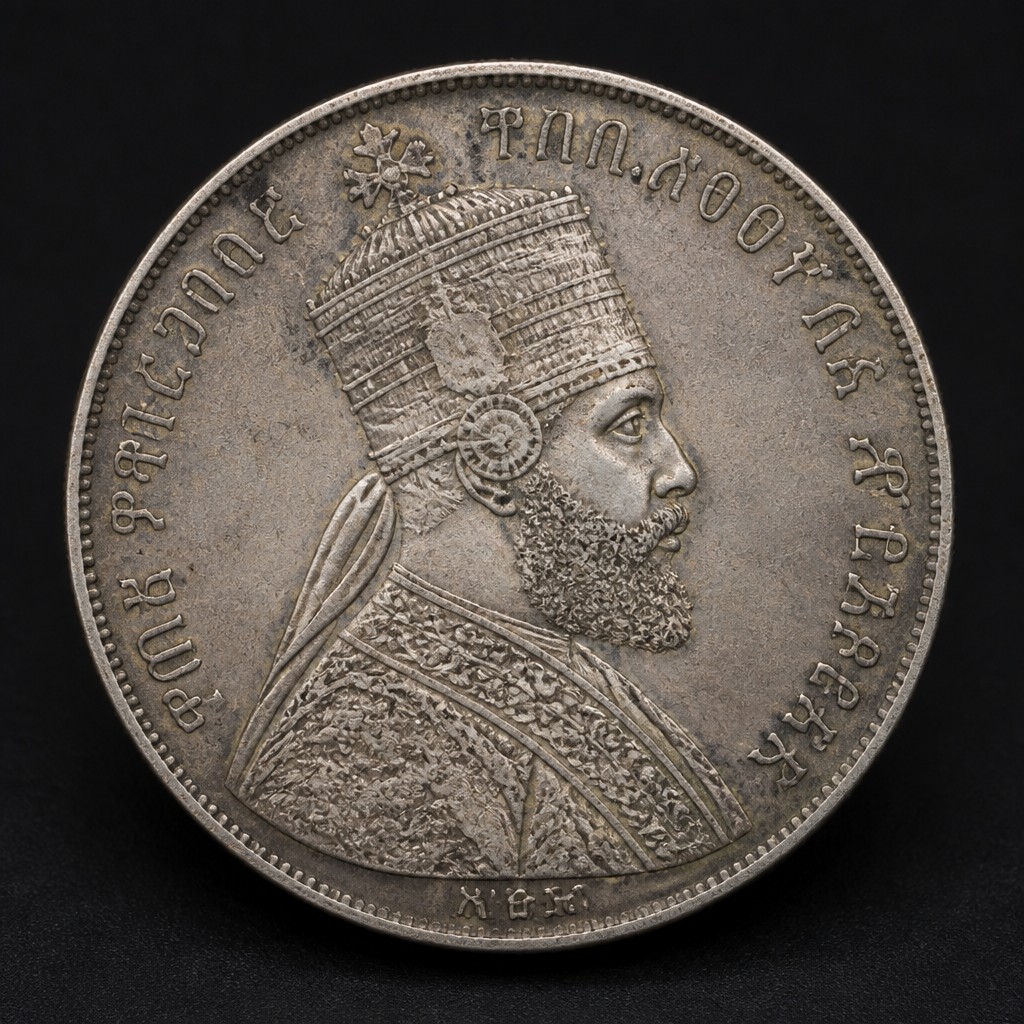
What It Is
The Menelik II birr was struck for Ethiopia around the turn of the 20th century, during the reign of Emperor Menelik II. It was part of Ethiopia's first standardized modern coinage, replacing older bar and salt currencies with a uniform silver-based monetary system that helped integrate Ethiopia into international trade. The coin remains a recognizable piece of African numismatic history and a popular entry point for collectors interested in African coinage.
Obverse Design & Inscriptions
The obverse shows a left- or right-facing portrait bust of Emperor Menelik II in formal dress, sometimes wearing a crown or ceremonial headwear. Surrounding the portrait is an inscription in Ge'ez (Ethiopic script) giving his name and imperial title.
Reverse Design & Inscriptions
The reverse displays Ethiopia's traditional emblem, the Lion of Judah, standing and holding a staff topped with a cross and flag, symbolizing the imperial line's claimed descent from Solomon. Ge'ez text around the border states the denomination and the mint date according to the Ethiopian calendar, which runs several years behind the Gregorian calendar.
Size, Weight, Metal, and Edge
The birr was struck in silver, roughly comparable in size to a large silver crown coin, with denominations also issued as fractional pieces (such as the gersh subunits). Weight and diameter are consistent with contemporary silver crown coinage of the period, and edges are typically reeded.
Mint Marks and Where to Find Them
Most Menelik II birr coins were struck at European mints on Ethiopia's behalf (coinage of this era was often produced at Paris or other continental mints), so identifying marks may appear as small symbols near the rim rather than large Western-style mint letters. The Ethiopian date in Ge'ez numerals is the primary tool for pinpointing the exact issue.
Telling It Apart From Similar Coins
Later Ethiopian coinage under Haile Selassie reuses the Lion of Judah motif but shows a different portrait and updated Ge'ez title, and coins from the intervening period under Empress Zewditu also carry a distinct portrait style. Comparing the specific facial portrait and the style of the crown or headwear helps separate Menelik II issues from later 20th-century Ethiopian coins carrying a similar lion reverse.
Judging Condition at a Glance
Look at the sharpness of the portrait's facial features and the lion's mane and staff details on the reverse; these high-relief areas wear down first. A well-preserved coin retains crisp lettering in the Ge'ez legend and a clear rim.
Authenticity Red Flags
Because silver crown-sized coins are frequent targets for counterfeiting, be wary of soft or mushy portrait details, an incorrect or garbled Ge'ez legend, and a weight that feels off for a silver coin of this size. Cast copies often show a seam line around the edge and lack the crisp reeding of a genuine struck coin. A magnet test can also help rule out base-metal fakes plated to imitate silver, since genuine silver is not magnetic.
Frequently asked questions
What calendar is used for the date on a Menelik II birr?
The date follows the Ethiopian calendar, which is roughly seven to eight years behind the Gregorian calendar, so it will not match the Western year directly.
What script appears on the coin?
The inscriptions are in Ge'ez, the traditional Ethiopian script, rather than Latin or Arabic lettering.
What does the reverse design represent?
It shows the Lion of Judah holding a cross-topped staff, a national symbol tied to Ethiopia's imperial dynasty.
Where were Menelik II coins actually struck?
Many were produced at contract mints in Europe rather than domestically in Ethiopia, which is why some pieces carry small foreign mint symbols.