
How to Identify the Erstein Notgeld 5 Pfennigs
Spot an Erstein 1917 emergency 5 Pfennig by its civic coat of arms, bold reverse 5, small zinc-iron body, and purely local design.
Read the full Erstein Notgeld 5 Pfennigs encyclopedia entry →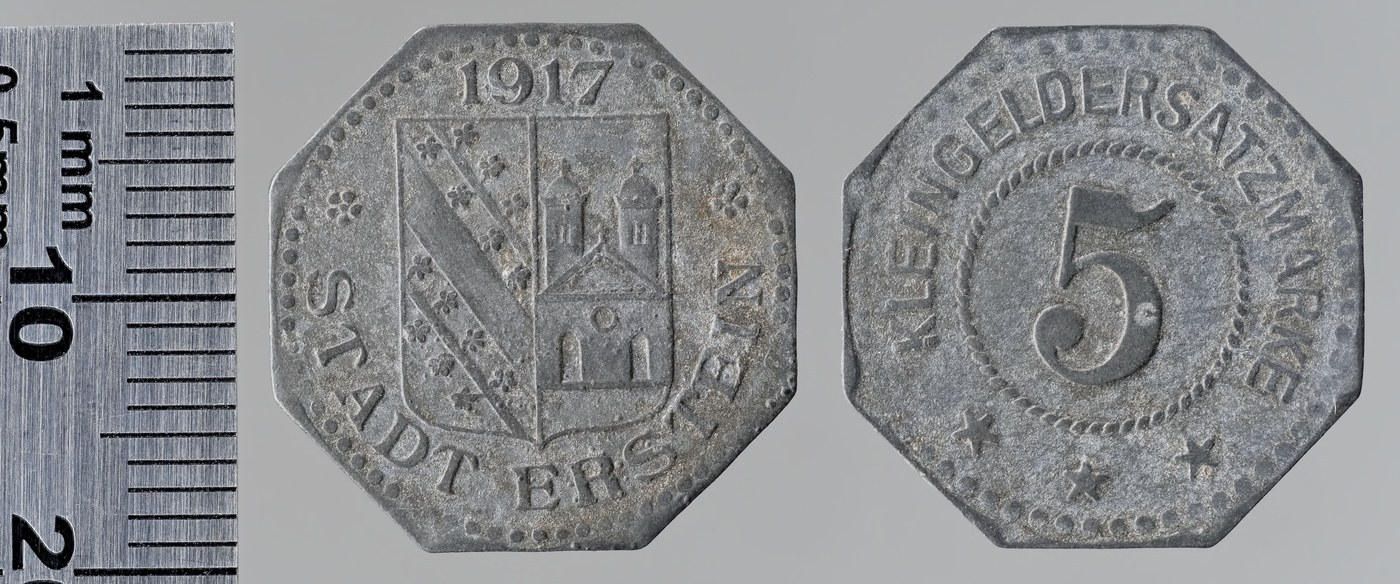
Start with the two faces. The Erstein 5 Pfennig pairs a coat-of-arms obverse with a numeral reverse. One side shows the Erstein town arms and lettering; the other is dominated by a large 5 with the Pfennig denomination and the date 1917. That arms-versus-value layout is the signature of coin-form municipal Notgeld.
Read the legend to fix the town. Because many German communities issued near-identical emergency coins, the town name in the inscription is what confirms this as an Erstein piece rather than a look-alike from another municipality. Check the lettering around the shield and the denomination wording carefully.
Judge the metal and size. This is a small, coin-sized piece in a zinc-iron alloy — expect a light weight, a gray tone, and matte or dull surfaces. Zinc typically shows dark spotting or chalky white oxidation over time, and iron-bearing alloys may respond to a magnet. Corrosion is normal for the type and helps confirm a wartime substitute metal rather than a copper or nickel regular coin.
Rule out regular imperial coinage. German Empire circulating Pfennigs of the era carry national elements such as an eagle and imperial legends; the Erstein Notgeld does not. A purely local design — civic arms plus a big value numeral with no national inscription — marks it as emergency money.
Watch for condition and reproductions. Notgeld is usually authenticated by comparison with catalogued town types, so match the arms, lettering style, denomination, and date against reference listings for Erstein. Be cautious of harshly cleaned zinc (which leaves it unnaturally bright and etched) and of any suspiciously crisp modern copy; for a scarce or high-grade example, compare with verified specimens or seek a specialist opinion.
Frequently asked questions
How do I confirm it is from Erstein and not another town?
Read the legend: the town name in the obverse lettering, together with the specific coat of arms, identifies Erstein. Many towns issued similar coins, so rely on the inscription and heraldry rather than the general layout.
How can I tell it apart from a regular German 5 Pfennig?
Regular imperial coins show national symbols like an eagle and empire-wide legends. This piece has only local content — the Erstein arms and a large value numeral — marking it as emergency Notgeld.
The coin looks corroded or spotty — is that a problem?
Some corrosion is typical for zinc and iron Notgeld and does not mean it is fake. Heavy pitting lowers value, but light spotting is expected. Avoid aggressive cleaning, which damages the surface and reduces desirability.
Does it contain any precious metal?
No. It is a base zinc-iron alloy chosen because copper, nickel, and silver were reserved for the war effort. Its value is collector-driven, not bullion-based.