How to Identify the Erstein Notgeld 10 Pfennigs
Identify Erstein's 1917 emergency coin by its city coat of arms and town name, the large 10 and Pfennig value, the 1917 date and its zinc-iron base metal.
Read the full Erstein Notgeld 10 Pfennigs encyclopedia entry →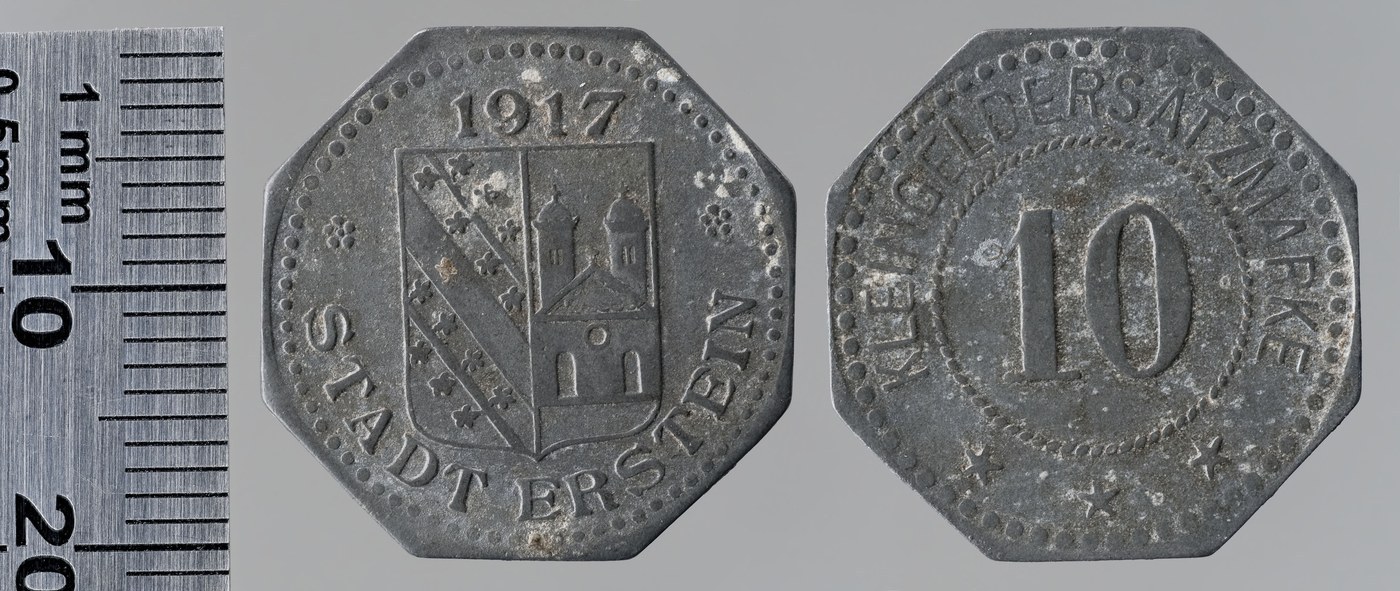
Read the town name and arms first. The obverse carries the coat of arms of Erstein and lettering naming the town. Confirming the place name in the legend is the surest way to attribute the piece, since hundreds of German municipalities issued visually similar Notgeld and the arms alone can be mistaken for another town's.
Check the value side and date. The reverse shows a large numeral 10 with the word Pfennig (often abbreviated Pf) and the date 1917. Match the ten-Pfennig value and the 1917 date to the Erstein obverse to tie both faces to the correct issue; a different date or value points to a separate emergency piece.
Assess the metal and size. This is a small zinc-iron base-metal coin, not silver or copper-nickel. Wartime substitute metal tends to look grey, may show iron-related corrosion or spotting, and can be lightly attracted to a magnet where iron is present. Weigh and measure the piece and compare against catalogued specifications for the type rather than relying on color alone.
Watch for look-alikes. Many Alsace and German towns issued 10-Pfennig Notgeld in the same period with a similar large-numeral reverse. Distinguish them by the specific coat of arms and town name, not the generic '10.' Regular imperial 10-Pfennig coins of the era differ in metal and design, so read the legends carefully before concluding it is Erstein's municipal issue.
Handle authentication with a light touch. These are low-value tokens, so outright faking is uncommon, but corrosion, cleaning and environmental damage strongly affect grade. Avoid harshly cleaned pieces, look for original if imperfect surfaces, and check the arms, date and value are all crisp. For attribution or variety questions, compare against reference listings of Erstein's Notgeld.
Frequently asked questions
How do I confirm the coin is from Erstein?
Read the town name in the obverse legend and match the coat of arms to Erstein. Many towns used similar large-numeral Notgeld, so the place name and arms together, not the '10' alone, make the attribution.
Where is the date and value?
The reverse shows a large numeral 10 with Pfennig or Pf and the date 1917. Confirming the ten-Pfennig value and the 1917 date links the reverse to the Erstein obverse.
How can I tell the metal?
It is a zinc-iron base-metal piece, which tends to look grey and can show corrosion or spotting; where iron is present it may be lightly magnetic. Weigh and measure it against catalogued specifications rather than judging by color.
Is it likely to be faked?
As a low-value emergency token, deliberate faking is uncommon. The bigger concerns are corrosion, harsh cleaning and damage, which affect grade; favor pieces with original, legible surfaces.
Erstein Notgeld 10 Pfennigs identified by the community
Recent Erstein Notgeld 10 Pfennigs coins identified with Coin Identifier.