
How to Identify the Eric XIV Silver Coin
A collector's checklist for attributing a silver coin of Eric XIV of Sweden: portrait, Vasa heraldry, legends, size and authentication cautions.
Read the full Eric XIV Silver Coin encyclopedia entry →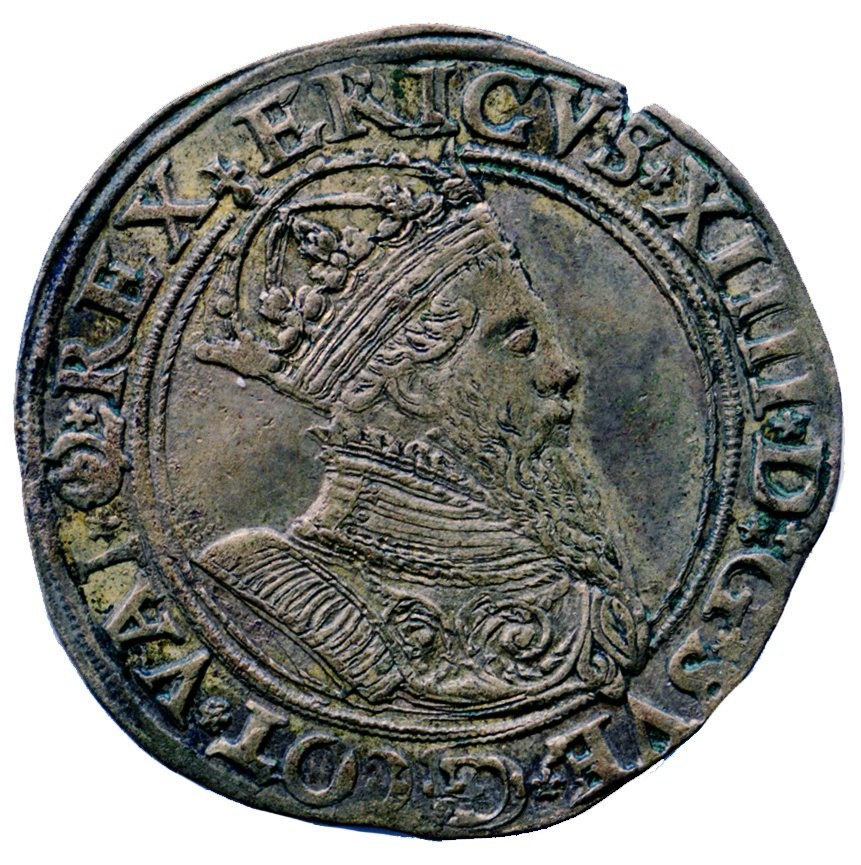
Start with the portrait. A genuine Eric XIV silver coin shows a right-facing profile bust of the king in Renaissance dress — an ornate plumed hat and a decorated collar rather than a crown-only or fully armored bust. Around it should run a Latin legend built from ERICVS (often ERICVS XIIII) and royal titles abbreviated as D G SVECORVM GOTORVM VANDALORVM REX. Because dies were cut by hand, expect variation in spelling, spacing and abbreviation; read the legend letter by letter rather than expecting a fixed string.
Turn to the reverse for the heraldry. Look for the Swedish Three Crowns (Tre Kronor) and the Vasa sheaf, presented as a shield or a group of small shields, usually within a second Latin inscription and frequently accompanied by a date such as 1565. Note any small letters, rosettes or privy marks beside the arms — these mint or die-control marks help place the coin and distinguish it from later imitations.
Measure before you name the denomination. The same basic design appears across öre, mark and daler, so a caliper reading of the diameter and a scale reading of the weight are essential: a small thin flan points to a minor silver piece, while a broad heavy flan suggests a daler. Confirm the metal is silver (a light gray, non-magnetic tone with age-appropriate toning) rather than a plated base-metal core.
Judge the fabric as hand-struck coinage. Authentic examples typically have slightly irregular, non-circular flans, some off-centering, and legends that fade into the rim — not the perfectly even edges, seams or sandy surfaces of cast copies. Sharp file marks on the edge, a visible casting seam, or a suspiciously uniform 'crisp' look are red flags.
Beware look-alikes and fakes. Coins of Gustav Vasa, John III and other Vasa monarchs share similar heraldry and can be misread if the legend is worn; always base attribution on the king's name in the legend, not the arms alone. Given the value and the prevalence of forgeries and tourist replicas, corroborate your attribution against published references and obtain third-party authentication for any high-value example.
Frequently asked questions
How can I tell an Eric XIV coin from other Vasa kings' coins?
Read the obverse legend for the ruler's name — ERICVS or ERICVS XIIII — rather than relying on the Three Crowns and Vasa sheaf, which appear on coins of several Vasa monarchs such as Gustav Vasa and John III.
What measurements should I record?
Record the diameter in millimeters and the weight in grams, and note the metal. These figures, together with the legends and date, are what let a specialist assign the correct denomination (öre, mark or daler).
How do I spot a cast forgery or replica?
Watch for a casting seam on the edge, sandy or porous surfaces, unnaturally even flans, and legends that are too crisp for a 1560s hand-struck coin. When in doubt, weigh and measure it and seek professional authentication.
Do I need an expert to attribute it?
For a low-grade minor piece a careful reading of the legend and measurements may suffice, but for any potentially valuable portrait coin, consult published Swedish coin references and use a reputable grading or authentication service before buying or selling.