
How to Identify the Ephesus Bee Tetradrachm
A visual guide to Ephesian silver tetradrachms, identified by the sacred bee of Artemis on the obverse and a stag beside a palm tree on the reverse.
Read the full Ephesus Bee Tetradrachm encyclopedia entry →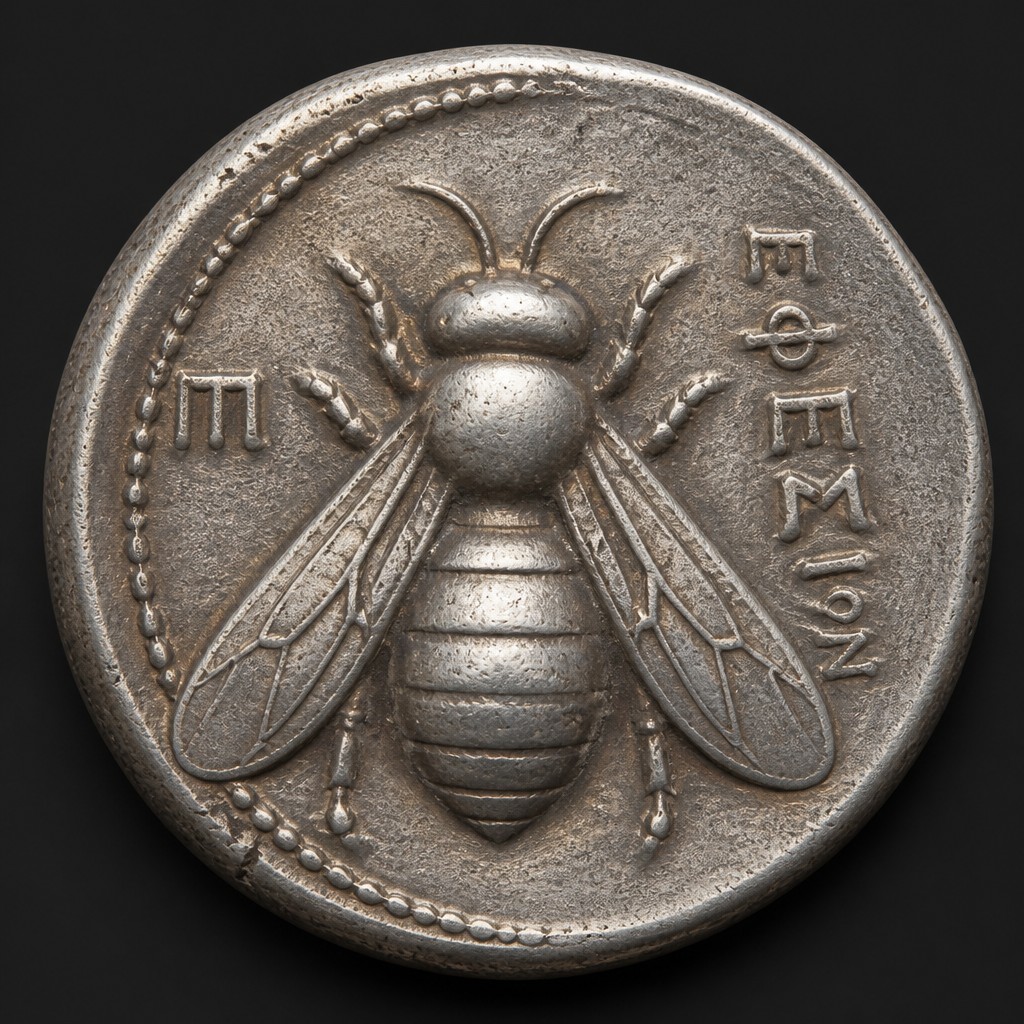
What It Is
Ephesus, the great Ionian city on the coast of Asia Minor and home to the famous Temple of Artemis, struck silver coinage over several centuries built around the bee, a sacred symbol of Artemis of Ephesus. The bee-and-stag tetradrachm represents the classic civic silver type before Ephesus later became a major mint for the broader Hellenistic cistophoric coinage.
Obverse
The obverse shows a bee viewed from above with outstretched wings, rendered in a stylized, almost heraldic manner. The bee was sacred to Artemis and closely associated with her cult at Ephesus, and it remained the city's primary coin emblem across multiple centuries and denominations.
Reverse
The reverse shows a stag standing or grazing, often beside a palm tree, both animals associated with Artemis as goddess of the hunt and nature. The abbreviated city name EΦ (for Ephesos) appears in the field, sometimes accompanied by a magistrate's name spelled out more fully on later issues.
Size, Weight, and Metal
Ephesian tetradrachms are silver, struck on a reduced weight standard in the neighborhood of 15 grams (lighter than the Attic tetradrachm standard of about 17.2 grams), reflecting the regional Ionian/Rhodian-influenced weight system used by several cities in this part of Asia Minor.
Identifying the Mint and Issue
The EΦ abbreviation, combined with the bee-and-stag design, is Ephesus's consistent mint signature across the classical and early Hellenistic periods. Later Ephesian coinage under Roman-era cistophoric standards uses a different design entirely (a snake emerging from a cista mystica), so the bee-and-stag pairing specifically marks the earlier civic silver.
Telling It Apart From Similar Coins
Other Ionian cities occasionally used bee imagery on smaller denominations, but the specific combination of a bee obverse with a stag-and-palm-tree reverse and the EΦ legend is distinctly Ephesian. Collectors should not confuse this classical tetradrachm with the later, very differently designed Ephesian cistophorus, which is a separate Hellenistic-era denomination and design entirely.
Grading at a Glance
Look for a fully struck bee with distinct wing and body detail, and a stag with a clear head, antlers (if shown), and legs. Because the design fills a relatively small central area on both sides, off-center strikes that cut off part of the bee or stag are common and reduce visual appeal even on coins with little actual wear.
Authenticity Red Flags
Be cautious of a bee design that looks flat, smudged, or asymmetrical, a stag with indistinct or melted-looking legs, and an EΦ legend that appears crudely added or spaced incorrectly. Confirm the weight matches the reduced Ephesian standard rather than the heavier Attic standard, since a mismatch can indicate a modern reproduction or a coin from a different, misattributed mint.
Frequently asked questions
Why does Ephesus use a bee on its coins?
The bee was a sacred symbol of Artemis of Ephesus, the city's patron goddess, and became the city's consistent coin emblem.
What does the EΦ inscription mean?
It is an abbreviation of Ephesos, identifying the coin as an official issue of the city.
How is this different from the later Ephesian cistophorus?
The cistophorus is a separate, later Hellenistic-Roman era denomination with a completely different design (a snake and cista mystica), while the bee-and-stag tetradrachm belongs to the earlier classical civic coinage.
What weight standard were Ephesian tetradrachms struck on?
A reduced regional standard of roughly 15 grams, lighter than the common Attic tetradrachm standard of about 17.2 grams.