
How to Identify the English Sovereign of Henry VII
The first English sovereign, introduced in 1489, a large and impressive gold coin showing the king enthroned in majesty on the obverse and the royal arms on a Tudor rose on the reverse.
Read the full English Sovereign of Henry VII encyclopedia entry →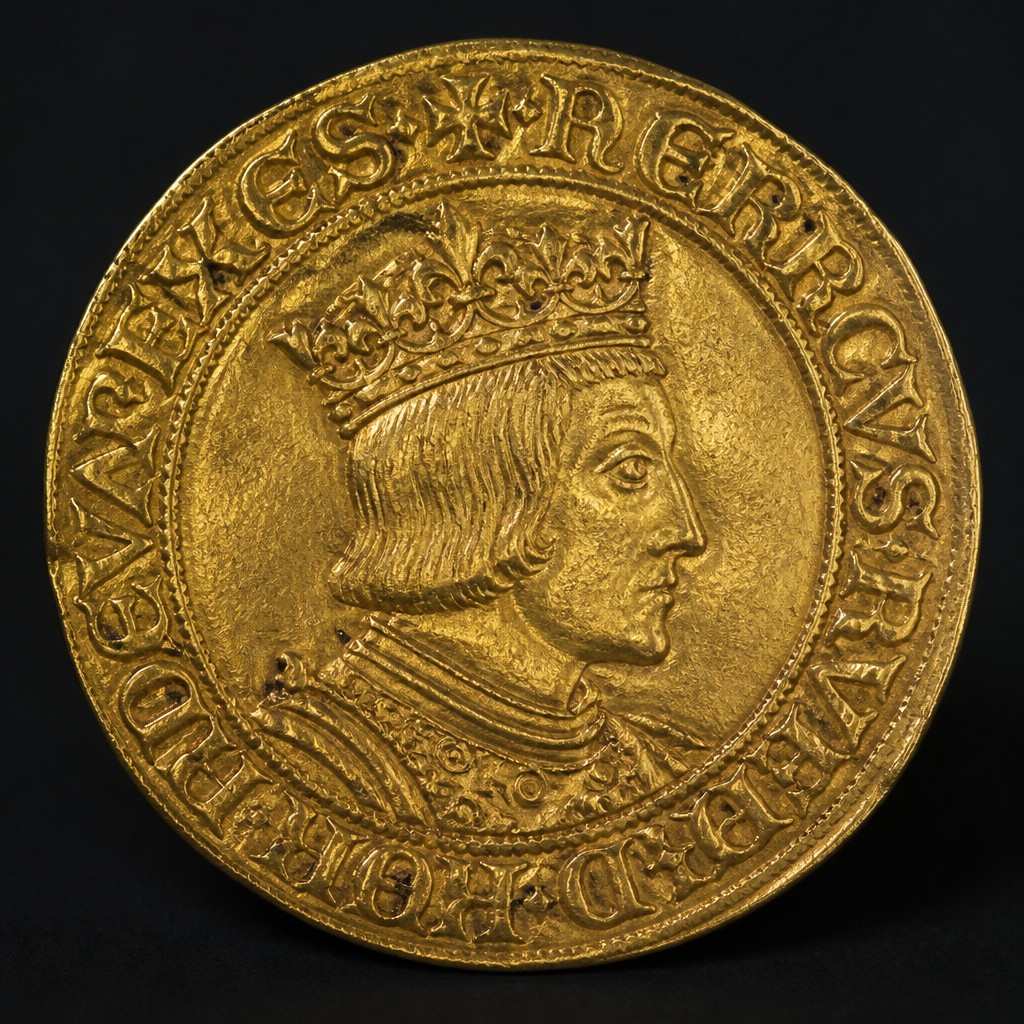
What It Is
The Sovereign was introduced by King Henry VII in 1489 as a new, prestigious gold coin intended to showcase the wealth and authority of the Tudor monarchy following the end of the Wars of the Roses. It was, at the time, one of the largest and most valuable gold coins struck in England.
Obverse Design
The obverse shows King Henry VII seated in full majesty on an ornate throne, facing forward, wearing his crown and holding an orb and scepter, flanked by decorative Gothic architectural elements. A Latin legend giving his name and titles, such as "HENRICUS DEI GRA REX ANGLIE Z FRANC," surrounds the design.
Reverse Design
The reverse depicts the royal coat of arms displayed on a large Tudor rose, symbolizing the union of the houses of Lancaster and York that ended the civil wars, with a Latin legend continuing the king's titulature around the border.
Size, Weight, and Metal
Struck in 23-karat gold (.958 fine), the sovereign was notably large for its time, with a diameter around 40mm and weight of approximately 15.5 grams, making it a substantial and visually impressive coin meant to project royal authority.
Mint Marks
As with most English hammered coinage, a small mint mark (a specific symbol used to date the coin's production period, since regnal years were tracked by mint mark changes rather than printed dates) may appear at the start of the obverse legend; comparing this symbol to known Henry VII mint mark charts helps narrow the striking period.
Telling It Apart From Similar Coins
Later sovereigns issued under Henry VIII and subsequent monarchs changed both the portrait and reverse details, so the enthroned king facing fully forward combined with the specific Tudor rose reverse and Henry VII's name in the legend identifies this particular early issue. It should not be confused with the modern sovereign coin introduced in 1817, which uses an entirely different George and Dragon reverse design and is much smaller.
Judging Condition at a Glance
Because these coins are hand-struck (hammered) rather than machine-made, look for slightly uneven strikes, a somewhat irregular round shape, and variable centering, all normal for the period rather than signs of damage. High-grade survivors show crisp throne detail and legible full legends, while worn examples may have flattened facial features and partial legend loss, especially at the strike's weakest points.
Authenticity Red Flags
Given the sovereign's rarity and historical importance, forgeries and later-made "fantasy" reproductions exist. Verify the weight and gold fineness carefully, and be cautious of examples with overly regular, perfectly round shapes and crisp, uniform strikes that don't match the expected hand-hammered character of genuine 15th-century English gold coinage.
Frequently asked questions
Why is this coin historically significant?
It was the first English sovereign, introduced in 1489 by Henry VII to project the wealth and legitimacy of the new Tudor dynasty after the Wars of the Roses.
What does the reverse design symbolize?
The royal arms displayed on a Tudor rose, representing the union of the houses of Lancaster and York.
How is this different from the modern British sovereign coin?
This early Tudor sovereign is much larger, shows the king enthroned rather than St. George and the dragon, and predates the modern sovereign (introduced in 1817) by over three centuries.
How was this coin dated if there's no printed year?
Like other English hammered coinage, dating relies on identifying the specific mint mark symbol used at the start of the legend during Henry VII's reign.