
How to Identify the English Angel
A gold coin issued by English monarchs from the 15th through 17th centuries, named for its obverse image of the Archangel Michael slaying a dragon.
Read the full English Angel encyclopedia entry →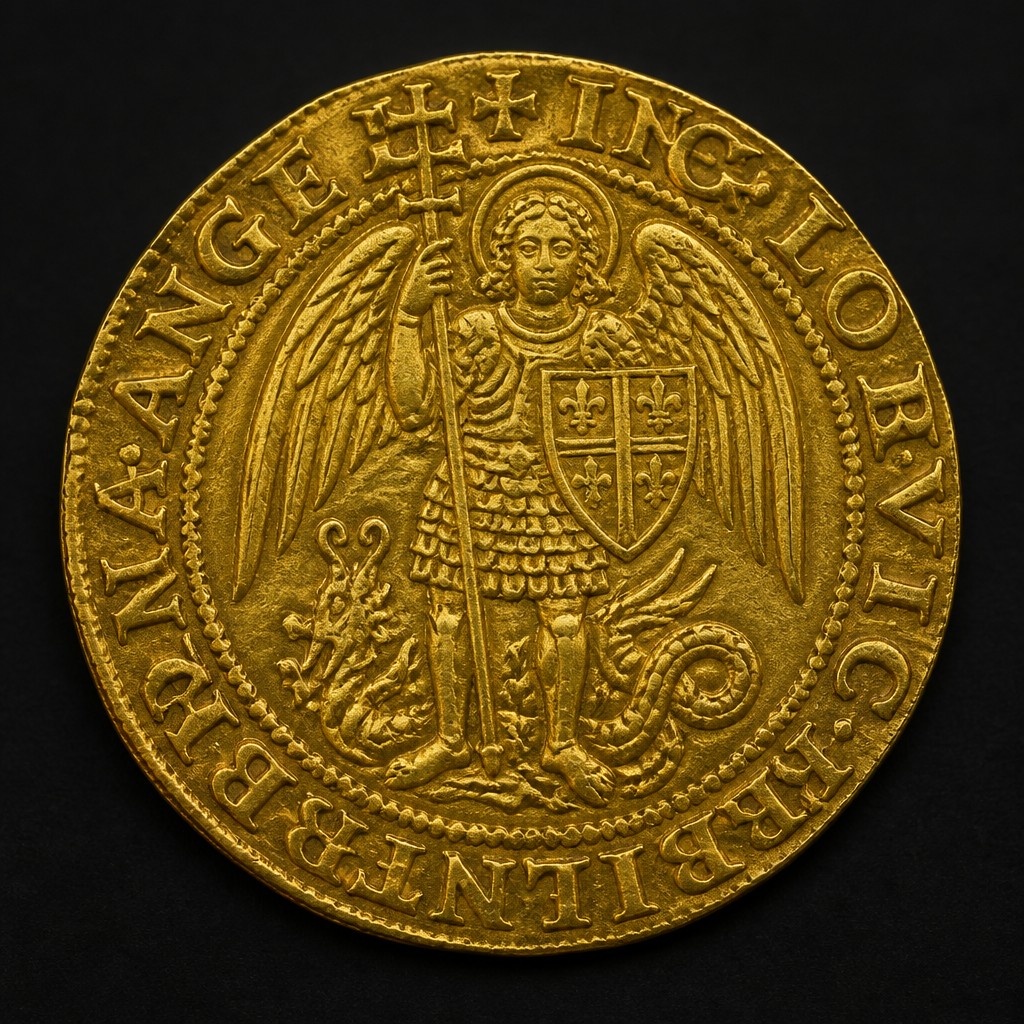
What It Is
The Angel was an English gold coin first introduced under Edward IV in 1465 and continued, with design refinements, under successive monarchs through the reign of Charles I in the 17th century. It gained lasting cultural significance as the coin traditionally given by the monarch to those touched during the royal "touching for the King's Evil" ceremony, believed to cure scrofula.
Obverse Design
The obverse shows the Archangel Michael standing and spearing a dragon beneath his feet, a design referencing the Book of Revelation. A Latin legend naming the reigning monarch and his or her titles surrounds the image.
Reverse Design
The reverse depicts a ship at sea, with a large cross as its mast and a shield bearing the royal arms hanging from the ship's side, along with a sun or star sometimes shown to one side. A continuing Latin legend, often a religious phrase invoking salvation, wraps around the border.
Size, Weight, and Metal
Struck in high-purity gold, generally close to .994 fine in earlier issues, the Angel is a small coin, typically around 25-29mm in diameter, with weight varying by reign but often in the range of 4.5 to 5 grams, as weight standards were adjusted periodically over the coin's long production span.
Mint Marks
As a hammered coin without printed dates, identification relies on a small mint mark symbol at the start of the obverse legend, which changed periodically during each reign and can be cross-referenced to determine the approximate striking period.
Telling It Apart From Similar Coins
The Angel's dragon-slaying obverse is distinct from the enthroned-king imagery of the sovereign or the standing-king imagery of other English gold denominations of the period, making it relatively easy to identify by design alone. However, because the coin was struck across many reigns, comparing the specific monarch's name in the legend and the exact style of the ship and shield on the reverse helps narrow down the specific ruler and approximate date range.
Judging Condition at a Glance
Because these are hand-hammered coins, expect some natural irregularity in shape and centering even on high-grade examples. Look for sharp detail in the Archangel's wings and the dragon's form, and legible full legends, as indicators of better preservation; heavily worn or clipped examples (a common historical practice of shaving small amounts of gold from the edge) will show a reduced diameter and weight along with softened design details.
Authenticity Red Flags
Given its long and historically celebrated production run, the Angel has been counterfeited both in its own time and by later forgers. Check that weight and diameter fall within the expected range for the specific reign, and be wary of coins with edges that appear artificially built up or altered to disguise historical clipping, as well as any inconsistency between the named monarch's legend and the stylistic details expected for that reign.
Frequently asked questions
Why is this coin called the Angel?
Because its obverse shows the Archangel Michael slaying a dragon, a striking and easily recognizable image that gave the coin its popular name.
What is the historical 'touching' ceremony associated with the Angel?
English monarchs traditionally gave Angels to individuals during ceremonies where the monarch touched sufferers of scrofula, a practice believed at the time to have healing power.
What does the reverse of the Angel show?
A ship at sea with a cross as its mast and a shield of royal arms hanging from its side.
How do I know which monarch issued a specific Angel?
Read the Latin legend around the obverse for the ruler's name and titles, and compare the mint mark symbol to charts for that reign to narrow the date further.