
How to Identify the Elis Olympia Zeus Stater
A guide to identifying the silver staters of Elis, the city that administered the Olympic Games, featuring the head of Zeus and eagle or thunderbolt imagery.
Read the full Elis Olympia Zeus Stater encyclopedia entry →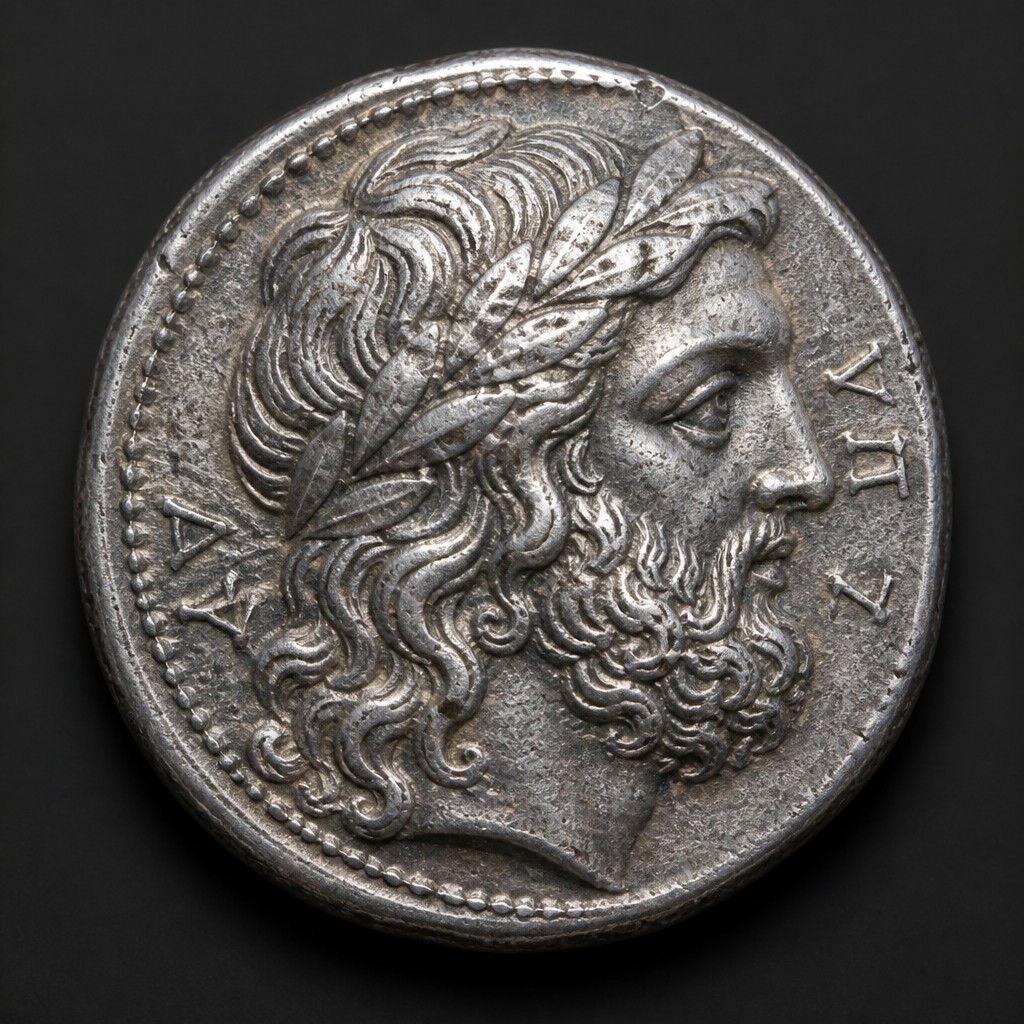
What It Is
Elis was the city-state responsible for organizing and hosting the ancient Olympic Games at nearby Olympia, and its coinage, struck from the late 6th century BC into the Roman period, celebrates Zeus, chief god of the Olympic sanctuary. Many issues are believed to have been struck specifically to mark the quadrennial festival, giving the series close ties to the games themselves.
Obverse
Most staters show the head of Zeus, often laureate (wearing a wreath of laurel or olive leaves) and rendered with a full beard in earlier styles or a more youthful appearance on some later issues. A minority of issues instead show the head of Zeus's consort Hera or other related deities, since Elis varied its designs considerably across its long coinage history.
Reverse
The reverse commonly shows an eagle, either standing, flying, or grasping a serpent or hare in its talons, and on some issues instead a thunderbolt, Zeus's chief attribute, appears alone within a wreath. The inscription reads FA (using the archaic digamma letter) or a fuller ΗΛΕΙΩΝ / FΑΛΕΙΩΝ, abbreviations of "of the Eleans."
Size, Weight, and Metal
Elis struck silver staters on the Aeginetic standard, weighing approximately 12 grams, alongside smaller silver fractions. The coinage spans several centuries, so style, flan shape, and exact weight shift gradually from archaic through classical and into later, more artistically refined issues.
Identifying the Mint and Issue
The FA or ΗΛΕΙΩΝ inscription is the key identifier of an Elis issue, since the Zeus-and-eagle theme alone is shared conceptually with several other Greek mints. Some Elis coins additionally carry a small letter or symbol thought to correspond to a specific Olympic festival year, a detail of particular interest to specialists in this series.
Telling It Apart From Similar Coins
Zeus-head and eagle types were popular across the Greek world, so an Elis stater is confirmed primarily by its inscription (FA/ΗΛΕΙΩΝ) rather than by the imagery alone. It should not be confused with the later, much more common eagle-and-thunderbolt coinage of the Ptolemies of Egypt, which uses a Greek king's portrait rather than the head of Zeus and carries a different inscription.
Grading at a Glance
Look for full detail in Zeus's beard, hair, and laurel wreath on the obverse, and clear feather detail on the eagle's wings on the reverse. Because Elis struck over a long period with varying die quality, condition should be judged against the style typical of the specific period the coin represents.
Authenticity Red Flags
Be alert to a Zeus portrait that looks generic, flat, or stylistically inconsistent with the claimed period, a garbled or missing FA/ΗΛΕΙΩΝ legend, and incorrect weight for the Aeginetic standard. Cast reproductions often show soft, rounded edges on the eagle's talons and feathers rather than the crisp lines of a genuinely struck coin.
Frequently asked questions
Why does Elis's coinage feature Zeus?
Elis administered the Olympic Games at Olympia, sanctuary of Zeus, and honored the god as the city's chief deity on its coinage.
What does the FA inscription mean?
It uses the archaic digamma letter and abbreviates 'of the Eleans,' identifying Elis as the issuing city.
Were these coins struck for the Olympic Games specifically?
Many specialists believe certain Elis issues were struck to coincide with individual Olympic festivals, though not every issue can be tied to a specific games with certainty.
How can I avoid confusing this with Ptolemaic eagle coinage?
Check the obverse portrait and inscription: Elis shows the head of Zeus with an Elean legend, while Ptolemaic coins show a Greek king's portrait with a Ptolemy inscription.