
How to Identify the Egyptian Qirsh (Muhammad Ali Era)
Ottoman-Egyptian coinage struck under Muhammad Ali Pasha, identifiable by its Ottoman-style tughra and Arabic inscriptions in silver, billon, or copper.
Read the full Egyptian Qirsh (Muhammad Ali Era) encyclopedia entry →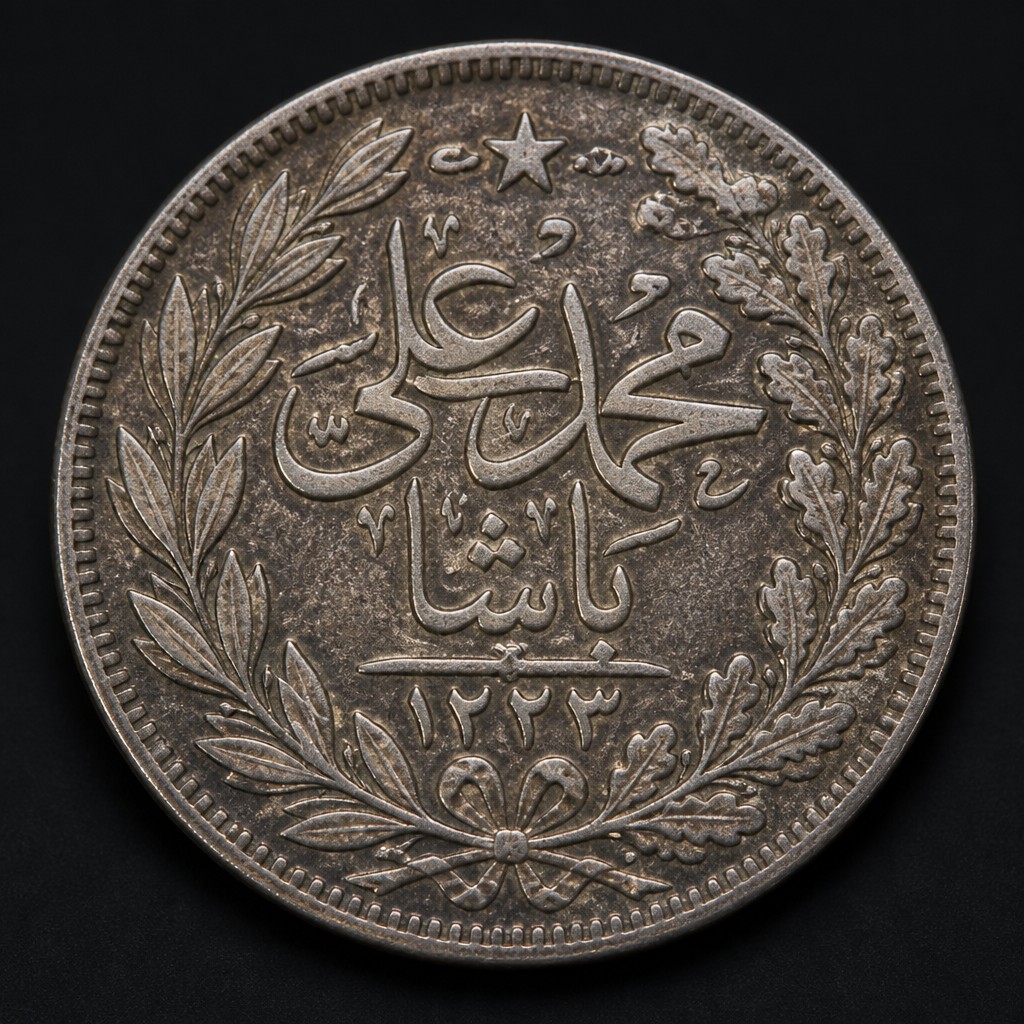
What It Is
The qirsh (also transliterated piastre) was the standard denomination of Egyptian coinage during the reign of Muhammad Ali Pasha in the early-to-mid 19th century, when Egypt operated as an autonomous province within the Ottoman Empire. Coins were struck in multiple metals and denominations, from small copper pieces up to larger silver qirsh multiples, reflecting the mixed metallic currency system of the period.
Obverse Design & Inscriptions
The obverse typically features the Ottoman-style tughra, an ornate calligraphic monogram representing the reigning Sultan (since Egypt still nominally answered to Constantinople), rendered in flowing Arabic script rather than any portrait.
Reverse Design & Inscriptions
The reverse gives the denomination, the mint name (commonly Misr, the Arabic name for Cairo/Egypt), and the regnal year of the Sultan's reign, all in Arabic script and Arabic-Eastern numerals.
Size, Weight, Metal & Edge
Because the era used a mixed metallic system, coins range from small copper fractions to silver qirsh and multiple-qirsh pieces of varying weight and diameter; some issues are debased silver (billon) rather than pure silver. Edge treatment varies by denomination and mint, from plain to lightly milled, so a specific coin should be checked against reference weights for its particular denomination and date rather than a single blanket figure.
Mint Marks & Where to Find Them
The mint name appears written out within the Arabic legend, most often "Misr" for the Egyptian mint, rather than as a separate abbreviated symbol. Look within the inscription band, usually near the date, for this mint name.
Telling It Apart From Similar Coins
Because Egypt remained under nominal Ottoman sovereignty, these coins closely resemble contemporary Ottoman coinage from Constantinople and other provincial mints, sharing the tughra design. The distinguishing detail is the mint name within the legend: coins reading "Misr" were struck in Egypt under Muhammad Ali's administration, while coins naming other mint cities come from different parts of the empire even though the overall design language is similar.
Judging Condition at a Glance
The fine curling lines of the tughra wear down first, so a well-preserved coin shows crisp, separated loops and legible surrounding text, while a heavily worn example shows a blurred, flattened monogram that is hard to read. Silver and billon pieces may also show toning, while copper pieces often show a brown or verdigris patina consistent with age.
Authenticity Red Flags
Because this coinage circulated widely and has long been collected, both contemporary counterfeits and modern reproductions exist. Red flags include a weight or diameter inconsistent with the stated denomination, poorly formed or asymmetric tughra calligraphy, a surface color inconsistent with the claimed metal (for example, a "silver" coin with a yellowish or overly bright appearance suggesting base-metal plating), and mint or date text that appears re-cut or altered under magnification.
Frequently asked questions
What is the ornate symbol on the obverse of these coins?
It is a tughra, an elaborate calligraphic monogram representing the Ottoman Sultan, used because Egypt was still nominally part of the Ottoman Empire during Muhammad Ali's rule.
How do I identify these coins as specifically Egyptian rather than Ottoman?
Look for the mint name 'Misr' (the Arabic name for Egypt/Cairo) written within the reverse legend; other mint names indicate the coin was struck elsewhere in the Ottoman Empire.
Why do coins from this era vary so much in metal?
The period used a mixed metallic currency system, so qirsh coinage was struck in copper, debased silver (billon), and finer silver depending on the denomination, resulting in noticeable differences in weight and appearance across the series.
What causes the monogram to look blurry on some coins?
The fine curling lines of the tughra wear down with circulation, so heavily used coins show a flattened, less legible monogram compared with lightly circulated examples.