
How to Identify the Egyptian Pound (gold)
A historic gold coin from Egypt's monarchy era, identified by its royal portrait and gold content, alongside modern bullion pound issues struck by Egypt's central bank.
Read the full Egyptian Pound (gold) encyclopedia entry →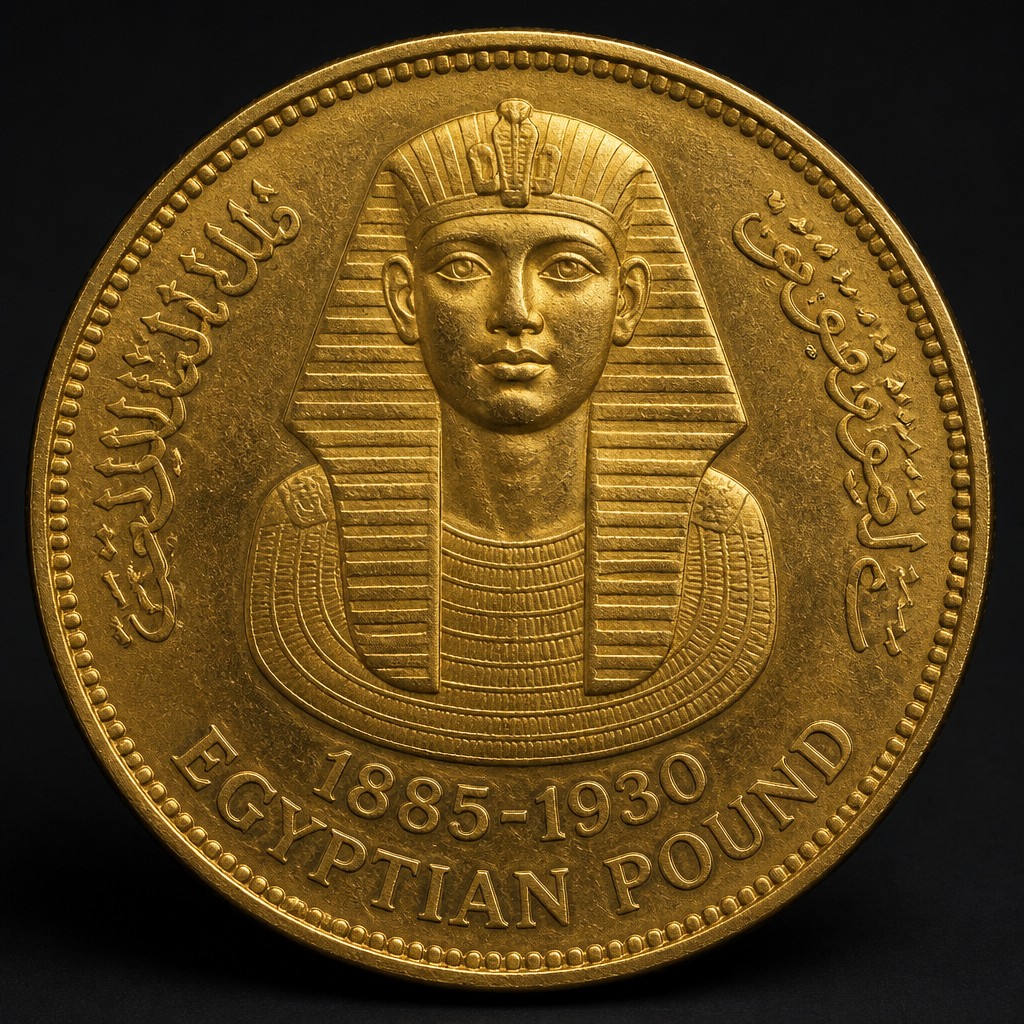
What Is the Egyptian Gold Pound?
The gold pound was Egypt's principal gold coin during the monarchy era (kings Fuad I and Farouk, early-to-mid 20th century), serving both as high-value circulating currency and as a store of wealth. Egypt has also issued modern gold "pound" bullion and commemorative pieces, so design details matter for placing a given coin in the right era. Because the denomination spans very different periods of Egyptian history, from a constitutional monarchy through a republic, a single glance at the overall design language usually narrows a coin down to a rough era before you even read the fine print.
Obverse Design
Monarchy-era gold pounds show a profile portrait of the reigning king (Fuad I or Farouk) with Arabic royal titles around the rim. Modern Egyptian gold bullion issues instead typically favor national or cultural imagery, such as pharaonic motifs, the Sphinx, or pyramids, rather than a royal portrait.
Reverse Design
The reverse of the classic monarchy-era gold pound displays the denomination in Arabic within a wreath or decorative border, along with the date. Modern bullion issues carry the issuing bank's name, the denomination, and the striking year, often alongside additional national symbols.
Size, Weight, and Metal
Historic gold pounds were struck at a high fineness (commonly in the range of .875, or 21 karat) and are somewhat heavier than a standard sovereign-class coin, with a diameter in the low-20mm range. Modern gold bullion pounds vary in weight and fineness by specific issue, so check any accompanying documentation or the coin's own purity marking.
Mint Marks
Monarchy-period Egyptian gold coinage generally does not carry a distinguishing mint-mark letter; identification instead relies on the portrait, inscriptions, and date.
Telling It Apart from Similar Coins
Because "Egyptian pound" gold coins span both the monarchy period and the modern era, check first whether the obverse shows a king's portrait (monarchy-era) or a national or cultural emblem without a portrait (modern issue) — this single detail places the coin in the right category quickly.
Condition and Grading at a Glance
On portrait coins, check the king's cheek, hair, and any collar or medal detail for wear. Modern bullion issues are often kept in protective packaging specifically because handling can visibly mark the soft, high-purity metal, so mark-free surfaces are common and expected on those. On the reverse of monarchy-era pieces, look at the wreath's leaf detail and the sharpness of the Arabic denomination text, since these fine elements smooth out quickly once a coin has seen meaningful circulation.
Authenticity Red Flags
Confirm weight and diameter against the specific issue's published specifications, since gold's high value makes this denomination a frequent counterfeiting target. Be suspicious of coins that are noticeably underweight, show file marks on the edge, or have blurry or doubled lettering compared to known genuine examples of the same date and type.
Frequently asked questions
Are all "Egyptian gold pounds" from the monarchy era?
No, Egypt has also issued modern gold bullion and commemorative coins denominated in pounds, using different, non-royal designs.
How can I quickly tell a monarchy-era coin from a modern one?
Check the obverse: a king's portrait indicates a monarchy-era coin, while pharaonic, pyramid, or purely textual designs point to a modern issue.
What is the typical gold fineness of the historic gold pound?
Around .875 fine (21 karat) was common for Egyptian monarchy-era gold coinage.
Does the coin have a mint mark?
Generally no separate mint-mark letter is used; the portrait, inscriptions, and date are the primary identifiers.