
How to Identify the Egyptian Farouk 5 Piastres
A small silver coin from the reign of King Farouk of Egypt (1936-1952), identifiable by his portrait, Arabic legends, and dual Hijri-Gregorian dating.
Read the full Egyptian Farouk 5 Piastres encyclopedia entry →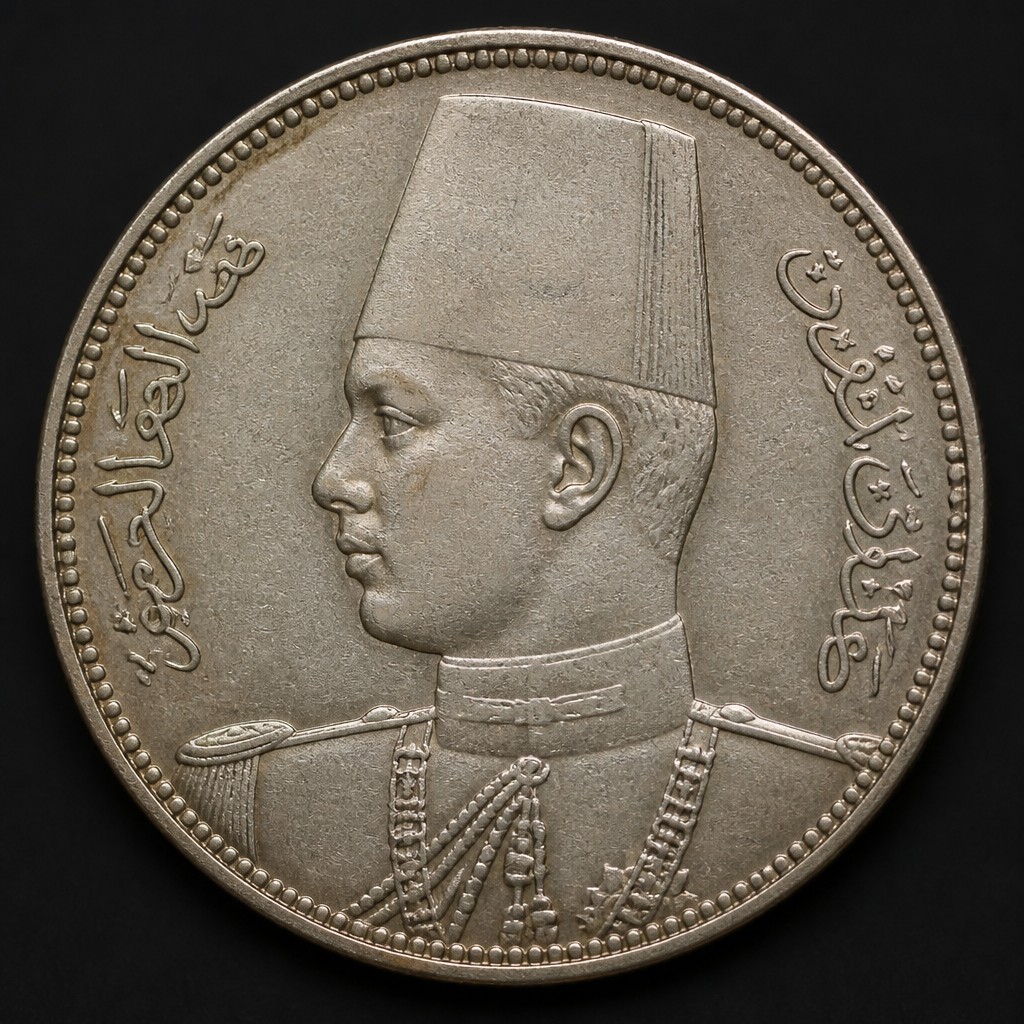
What Is the Farouk 5 Piastres?
Issued during the reign of King Farouk I of Egypt, this silver coin was part of the kingdom's regular circulating coinage. Farouk became king as a teenager in 1936, so coins struck earlier in his reign show a noticeably younger portrait than pieces made closer to his 1952 abdication. Piastre coins like this one were everyday transactional currency in the Kingdom of Egypt, used alongside larger silver denominations and smaller copper-alloy coins to round out the country's coinage system of the period.
Obverse Design
The obverse bears a profile portrait of King Farouk facing left, with his name and royal title rendered in Arabic script around the rim. The exact portrait style varies somewhat across his reign as he aged.
Reverse Design
The reverse shows the numeral "5" along with the Arabic word for piastres, typically framed by a decorative wreath or scrollwork border, and carries the date. Egyptian coins of this era commonly show two dates: the Gregorian year and the corresponding Islamic Hijri year, so you may see two different numbers on the same coin.
Size, Weight, and Metal
The 5 piastres was struck in silver during Farouk's reign, at a fineness typical of subsidiary silver coinage of the period, with a small diameter appropriate to its low face value compared to the larger 10- and 20-piastre pieces in the same series.
Mint Marks
Egyptian royal coinage of this era generally does not carry a separate mint-mark letter; the portrait style and date are the primary tools for placing a coin within Farouk's reign.
Telling It Apart from Similar Coins
Compare the portrait against coins from Farouk's father, King Fuad I, and against later Egyptian Republic coinage, which replaced royal portraits with the Egyptian eagle and other national emblems after the 1952 revolution. A coin with a youthful royal portrait and Arabic royal titles is a Farouk-era piece; one with an eagle belongs to a later republican period. Fuad I's portrait tends to show an older, heavier-set man, while Farouk's earliest coins show a slim, youthful face, so age of the sitter is a useful visual cue even before reading any inscription.
Condition and Grading at a Glance
Check the high points of Farouk's portrait — the cheek, forehead, and any collar detail — for smoothing, and examine the numeral and wreath on the reverse for crispness. A well-preserved coin retains fine lines in the wreath and sharp numeral edges.
Authenticity Red Flags
Because silver coins of this era are sometimes replicated for the tourist or novelty market, verify the coin's weight and diameter against known values for the denomination, check that the Arabic script is crisp and correctly formed rather than blurry, and be cautious of coins with an unnaturally bright or inconsistent surface color for a coin of its claimed age.
Frequently asked questions
When did King Farouk rule Egypt?
From 1936 until his abdication in 1952, so coins bearing his portrait date to that range.
Why does the coin show two different dates?
Egyptian coinage of this era commonly used dual dating, showing both the Gregorian calendar year and the Islamic Hijri calendar year.
How do I tell a Farouk coin from a Fuad I coin?
Compare the portrait style and check the Arabic royal name and title inscribed around the rim, which names the specific king.
What metal is the 5 piastres made of?
It was struck in silver, though at a modest fineness typical of small-denomination subsidiary coinage of that period.