
How to Identify the Edward VII Large Cent
How to identify a Canadian Edward VII large cent by its bare-headed portrait obverse, maple leaf wreath reverse, bronze content, and 1902-1910 date range.
Read the full Edward VII Large Cent encyclopedia entry →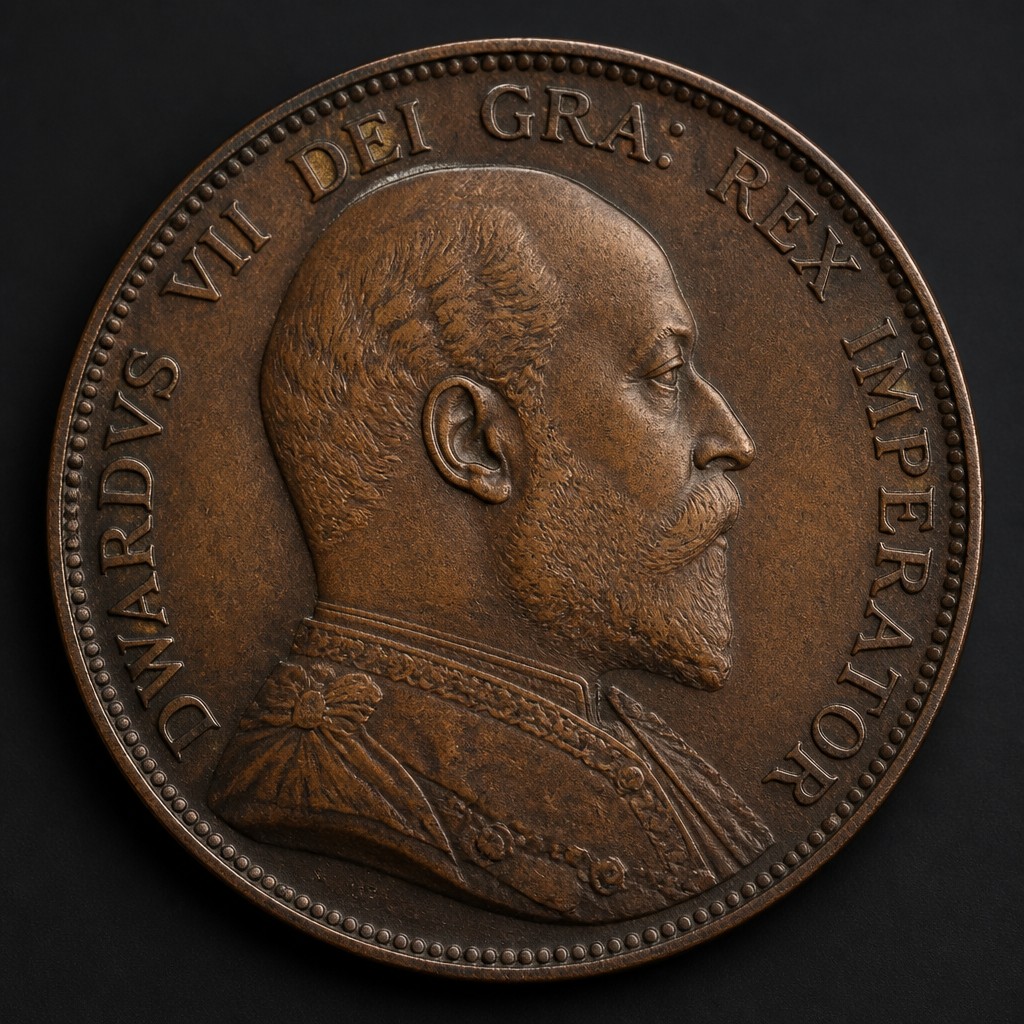
What It Is
The Edward VII large cent was struck for Canada from 1902 to 1910, continuing the large-cent format inherited from the Victorian series before the country moved to a smaller cent size in 1920.
Obverse Design & Inscriptions
The obverse shows a bare-headed, uncrowned portrait of King Edward VII facing right, with a legend such as "EDWARDVS VII DEI GRA REX ET IND IMP," reflecting his titles as King and Emperor of India.
Reverse Design & Inscriptions
The reverse continues the familiar maple leaf wreath design tied at the bottom, framing "ONE CENT" and the date, refreshed in engraving from the Victorian version but similar in overall layout.
Size, Weight, Metal, and Edge
Struck in bronze, the coin measures about 25.4mm across and weighs approximately 5.67 grams, with a plain edge.
Mint Marks & Where to Find Them
Coins were struck at the Royal Mint in London or the Heaton Mint in Birmingham; Canada's own Ottawa mint opened in 1908 and began contributing to production toward the end of this reign. Heaton-struck coins may show a small "H" mintmark below the date, while Royal Mint and Ottawa-struck coins show none.
Telling It Apart From Similar Coins
The bare, uncrowned head is the quickest way to separate an Edward VII cent from the laureate Victoria portrait that came before it or the different profile used later for George V. Confirm the date falls strictly within 1902-1910 for this reign.
Judging Condition & Grade
Check the finer lines in the portrait's hair and the top loops of the wreath for the earliest signs of wear. An even, natural brown patina is typical and expected on circulated bronze coins of this age.
Authenticity Red Flags
Watch for altered dates aimed at creating a rarer-looking year, applied or artificial toning used to mask cleaning, and mintmark details that look added on or don't match the genuine font and position used on real Heaton coins.
Frequently asked questions
How can I quickly recognize an Edward VII large cent?
Look for a bare, uncrowned head facing right on the obverse, which distinguishes it from the laureate Victoria portrait and the different George V profile used later.
What years were Edward VII large cents produced?
They were struck from 1902 through 1910, matching the length of Edward VII's reign.
How do I identify a Heaton Mint example?
Look for a small H mintmark below the date; coins without it were struck at the Royal Mint in London or, toward the end of the reign, at the new Ottawa mint.
What is a normal, healthy patina for these coins?
An even brown tone is typical for circulated bronze coins of this age; unnaturally bright or blotchy surfaces can indicate cleaning or artificial toning.