
How to Identify the Edward IV Ryal
Collector checks for the Rose Noble: the king-in-ship obverse, rose-on-sun reverse, gold size and weight, mint letters, and fakes to watch for.
Read the full Edward IV Ryal encyclopedia entry →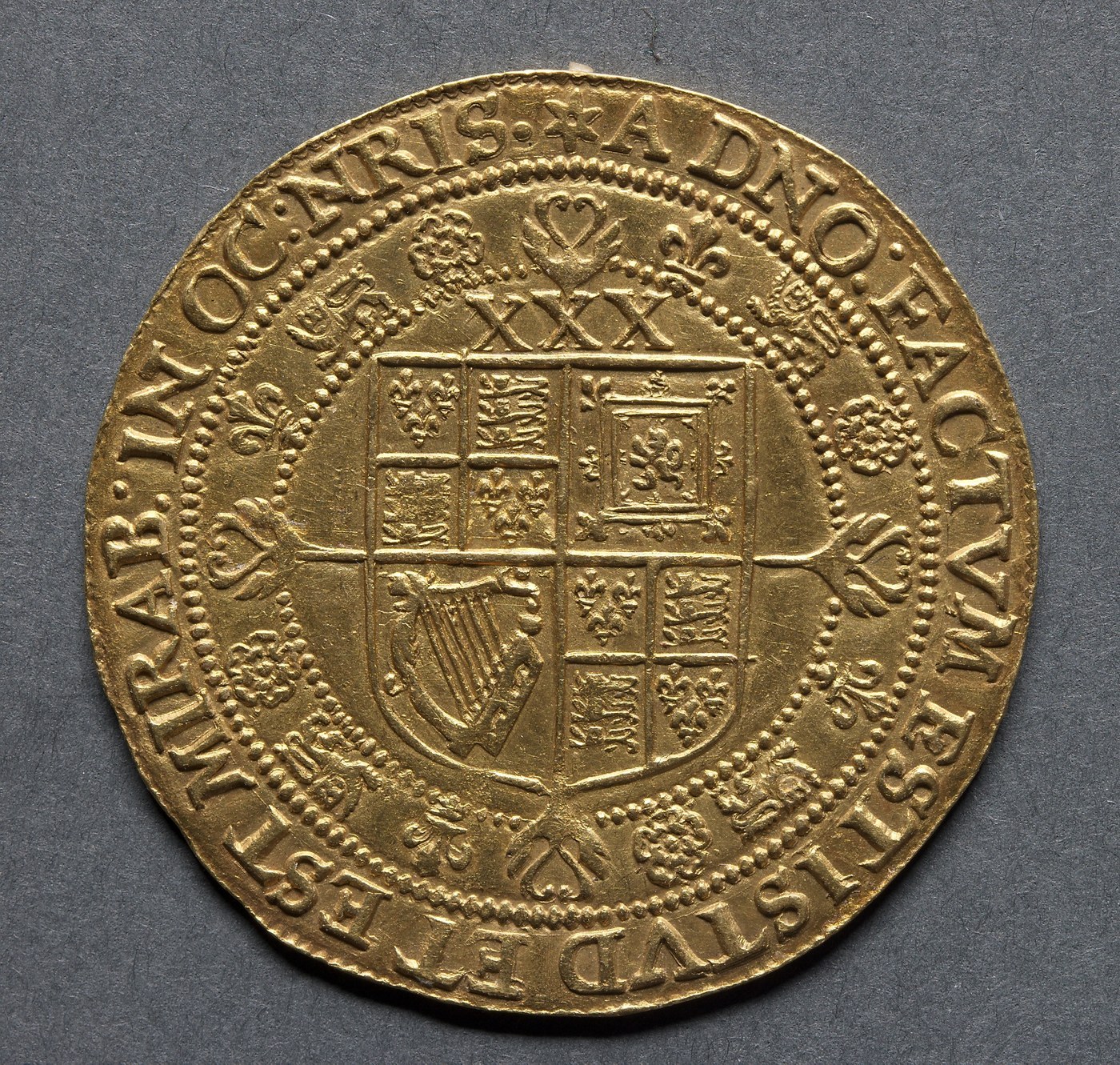
Start with the overall look and metal. The ryal is a broad, thin gold coin, larger in diameter but lighter in hand than most modern coins of similar size. The color should be a warm, high-purity gold. A coin that is thick and heavy for its width, or that shows base-metal tones under wear, warrants suspicion.
Read the obverse carefully. The defining feature is the armored king standing facing in a single-masted ship, holding an upright sword in one hand and a large heraldic shield in the other. The shield carries the quartered arms of France and England (fleurs-de-lis and lions), and a rose sits on the ship's hull. Look in the field of the ship for a single initial letter, which typically indicates a provincial mint; London strikes usually lack such a letter.
Check the reverse for the rose-on-sun. At the center you should see a floreate cross with a large rose laid over a radiant sun, surrounded by small lions passant and crowns arranged within a tressure of arcs. A Latin legend rings the design. This central rose-and-sun is the detail that separates the ryal (Rose Noble) from the plainer earlier gold noble, which lacks the sun.
Be careful with look-alikes. The earlier English noble of Edward III and Henry VI shows a very similar king-in-ship layout but no radiant sun and a different value. Continental imitations (for example, Burgundian and later Dutch "rose nobles") copied the type closely; check the legends and mint details rather than the picture alone. The design was also revived and enlarged as the "Rose Ryal" under Elizabeth I and James I, which are later and distinct coins.
Authenticate with caution. High-value medieval gold is a frequent target for casts and struck copies, and genuine coins are sometimes mounted, bent, clipped, or "repaired." Examine the edge and surfaces for casting seams or a soft, sandy texture, weigh and measure the coin against reference figures for the type, and for any significant purchase seek an experienced medieval-coin dealer or third-party authentication before committing.
Frequently asked questions
How do I tell a ryal from the earlier gold noble?
Both show a king standing in a ship, but the ryal (Rose Noble) adds a large rose over a radiant sun at the center of the reverse. The earlier noble has no sun and was a lower value.
What does the letter in the ship mean?
A single initial letter in the ship's field usually marks a provincial mint, such as B for Bristol, C for Coventry, N for Norwich, or E for York. Coins without a letter are generally London strikes.
Could my coin be a later or foreign copy?
Possibly. Continental mints struck close imitations, and Elizabeth I and James I revived an enlarged "Rose Ryal." Compare legends, size, and mint details, not just the ship image, to place the coin correctly.
What most affects whether it is genuine and valuable?
Correct weight and diameter for medieval gold, natural hand-hammered surfaces, clear legends, and no mounting, bending, or clipping. Because fakes exist, expert authentication is strongly advised before buying or selling.