
How to Identify the Edward IV Half Groat
Collector checks for the Edward IV half groat: crowned bust, long-cross-and-pellets reverse, small silver flan, mint names, initial marks, and look-alikes.
Read the full Edward IV Half Groat encyclopedia entry →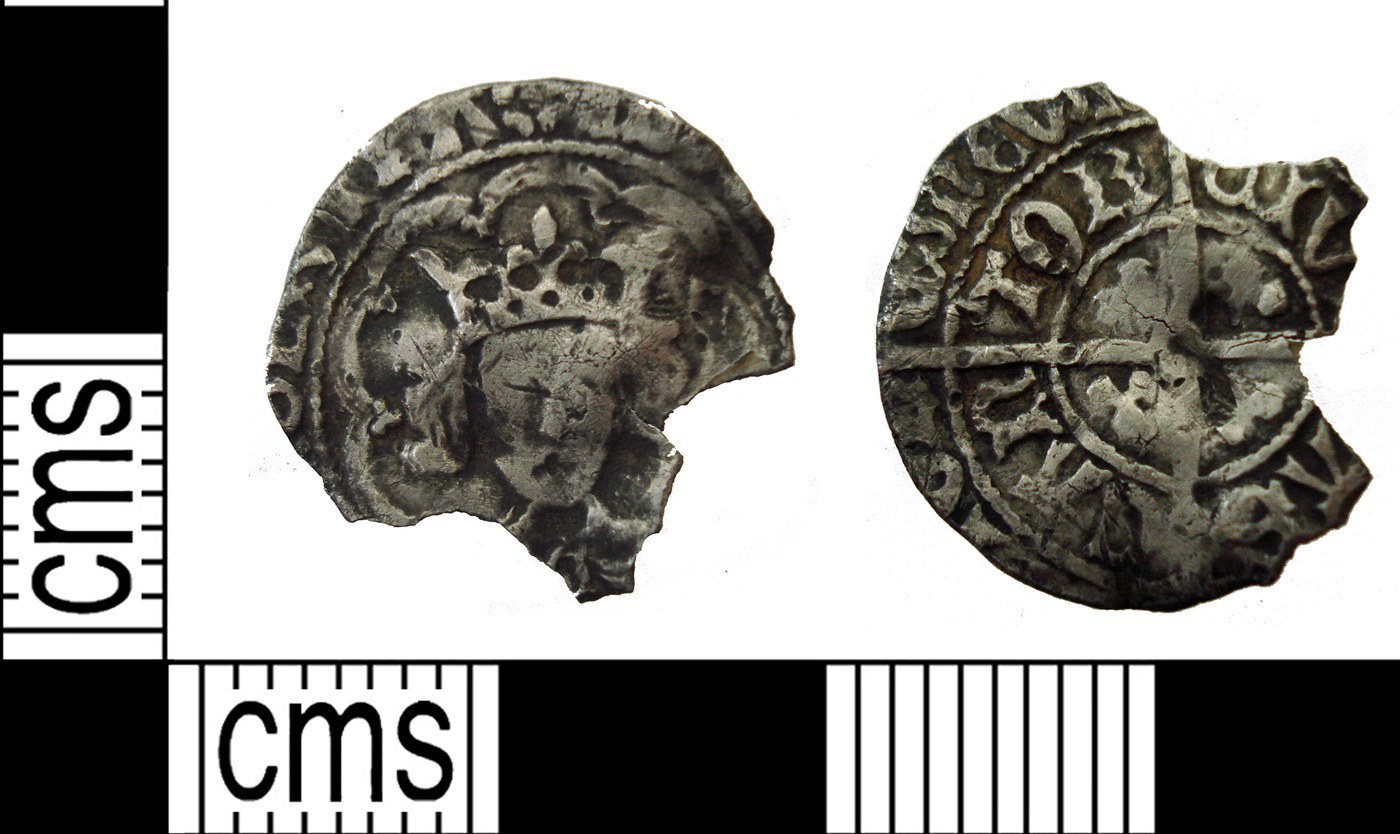
Start with size and fabric. This is a thin hammered silver coin, larger than a penny but smaller than a groat, roughly 19-21 mm across and only about a gram and a half in weight, with a hand-struck, often slightly irregular flan. If your coin is thick, perfectly round, or machine-sharp, it is not a genuine medieval half groat of this type.
Read the obverse. Look for a crowned bust of the king set within a tressure of arcs, ringed by a Latin legend naming Edward as king. On many coins the portrait is weak or partly off the flan, so use the crown and the arc border together rather than relying on facial detail alone. Note any small symbol at the start of the legend, called the initial mark, since specialists use it to place the coin within Edward IV's reign.
Confirm the reverse, which is the decisive test. You want a long cross whose arms reach the edge of the coin, dividing the legends, with three pellets grouped in each of the four quarters. An inner Latin legend and an outer legend naming the mint town circle the cross; even a partial mint name greatly helps attribution and value.
Separate look-alikes and denominations. A groat of the same king shares the design but is noticeably larger and heavier, while a penny is smaller and lighter; matching the size to a half groat is essential. Half groats of Henry VI, Edward V, Richard III, and Henry VII use very similar crowned-bust and long-cross designs, so the king's name in the legend and the initial mark are what separate them. Ecclesiastical issues from York or Durham may show extra marks tied to the archbishop or bishop.
Authenticate with care. Genuine coins show hand-cut die detail, honest wear consistent with circulated silver, and a thin, slightly irregular flan rather than a cast one. Be wary of cast copies with soft, mushy detail or a seam around the edge, and of tooled or added legends. When value is significant, consult an experienced hammered-coin dealer or a recognized attribution reference before buying or selling.
Frequently asked questions
How do I tell a half groat from a groat?
Size and weight. Both share the crowned bust and long-cross design, but the groat is a larger, heavier fourpence coin, while the half groat is a smaller twopence at roughly 19-21 mm and about a gram and a half.
How do I know it is Edward IV and not another king?
Read the king's name in the obverse legend and check the initial mark. Half groats of Henry VI, Edward V, Richard III, and Henry VII look very similar, so the legend and the mark are the reliable way to separate them.
The legend is unreadable. Can it still be identified?
Often yes. The crowned bust and the long-cross-with-pellets reverse identify the type even when legends are weak, though a legible king's name, mint, and initial mark will improve both attribution and value.
What does the reverse legend say?
The inner legend is a short Latin motto and the outer legend names the mint town, commonly a form of CIVITAS with a city name. Reading the mint name helps place where the coin was struck and can affect its value.