
How to Identify the Edward IV Half Angel
Collector checks for the medieval English gold half angel: the Saint Michael obverse, ship-and-cross reverse, size and metal, mint marks, and authentication cautions.
Read the full Edward IV Half Angel encyclopedia entry →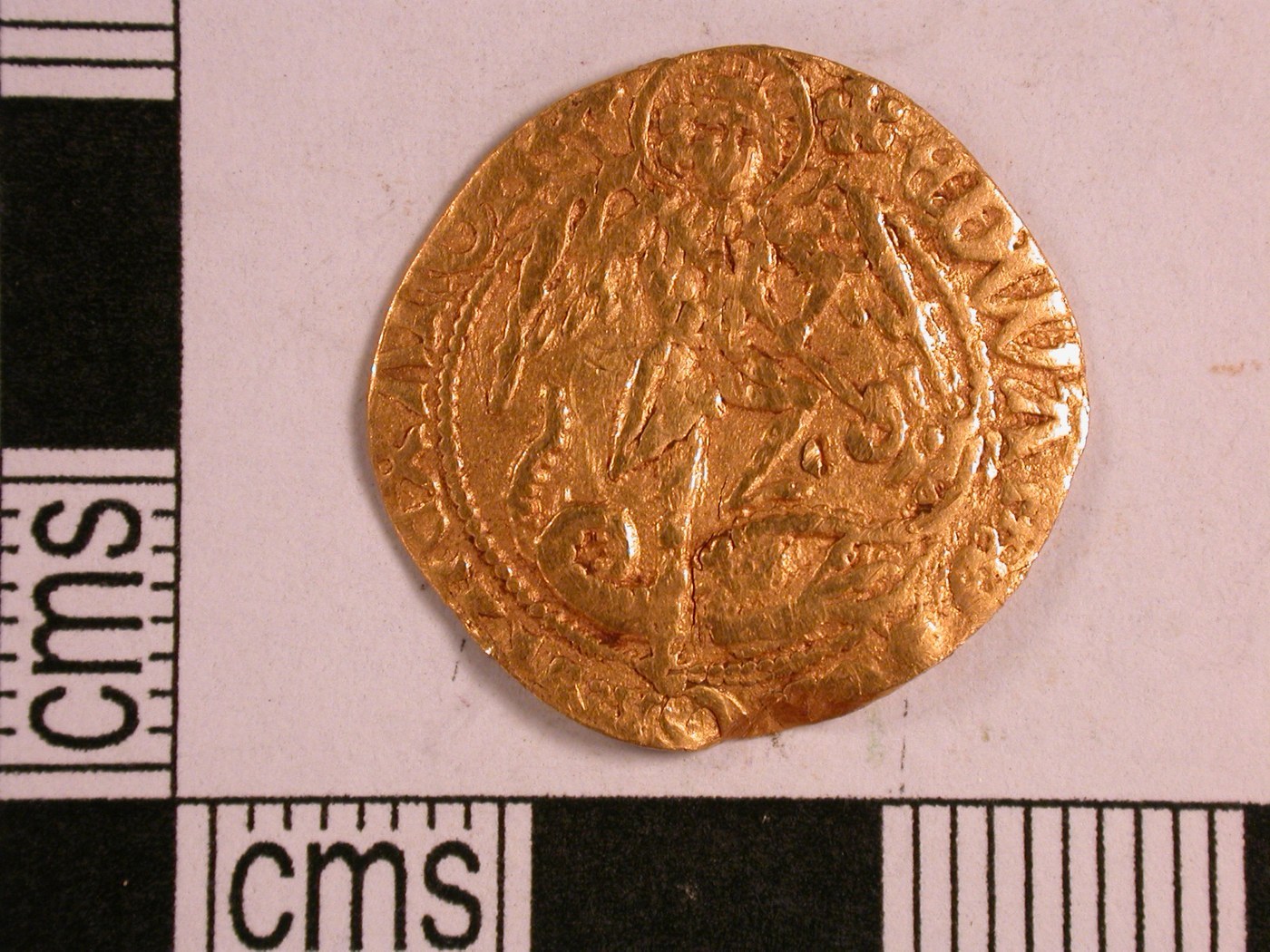
Begin with the obverse, which is the half angel's clearest fingerprint. Look for Saint Michael the Archangel shown as a standing, winged, armored figure driving a spear or lance downward into a dragon beneath his feet, while carrying a shield. A Latin legend and a beaded border surround the scene. This Saint Michael and dragon image immediately places the coin in the angel family and separates it from the ship-and-cross designs of the earlier noble series.
Check the reverse if it is visible. The angel and half angel typically show a single-masted ship carrying a tall cross, with a shield of the royal arms of England and France at the base and a devotional Latin legend. Rays or ornaments may flank the cross. The combination of a ship, a large upright cross, and a royal shield is characteristic and helps confirm the type.
Assess size and metal to separate the half angel from the full angel. The half angel is a small, thin gold coin, roughly half the diameter-area and weight of the full angel that shares the same designs. It should be struck in high-purity gold with a warm, rich color rather than pale or brassy tone. A base-metal or notably underweight piece is a warning sign.
Use mint marks and legends to narrow the issue. Edward IV's coinage divides into first-reign and second-reign phases, and mint marks placed at the start of the legend, along with letter forms and small design differences, help assign a coin to a particular period. These fine points are best confirmed against a specialist catalogue rather than judged by eye alone.
Authenticate carefully. Medieval gold coins like the half angel are frequently faked through casting, modern reproduction, or alteration. Watch for casting seams, soft or mushy detail, incorrect weight or diameter, wrong lettering styles, and suspiciously flawless surfaces. Given the value and the number of forgeries, seek expert authentication or third-party grading before any significant purchase or sale.
Frequently asked questions
How do I tell a half angel from a full angel?
They share the same Saint Michael and ship designs, so judge by size and weight. The half angel is noticeably smaller, thinner, and lighter, worth half the value of the full angel. Diameter and weight are the key clues.
What is the single most distinctive feature to look for?
Saint Michael the Archangel on the obverse, winged and armored, spearing a dragon while holding a shield. This scene defines the angel family and sets it apart from the noble and most other medieval gold coins.
How can I date the coin within Edward IV's reign?
Use the mint mark at the start of the legend along with letter forms and small design differences. Edward IV's coinage splits into first-reign and second-reign issues, and a specialist catalogue helps place a given coin.
How can I spot a fake half angel?
Check weight, diameter, and gold color, and look for casting seams, soft detail, or incorrect lettering. Because these coins are often faked, expert authentication or third-party grading is strongly advised before buying.