
How to Identify the Edward IV Groat
A collector's guide to recognizing Edward IV groats by their crowned facing bust, long-cross reverse, size and metal, mint marks, and common look-alikes.
Read the full Edward IV Groat encyclopedia entry →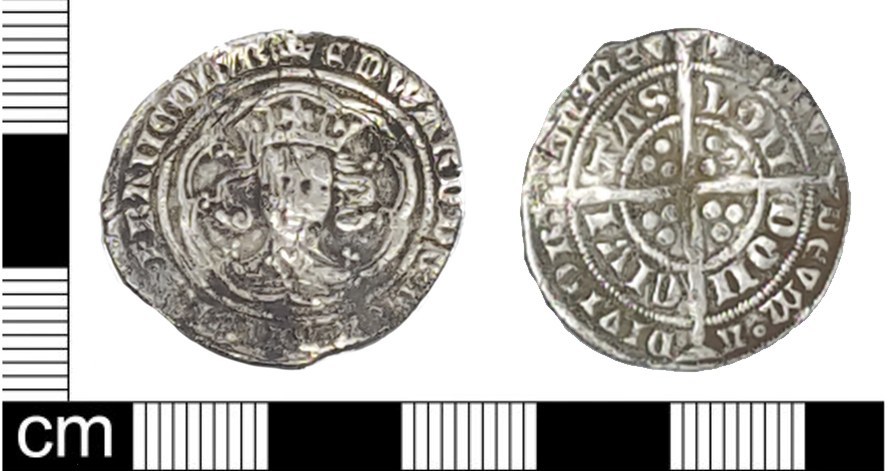
Start with size, metal, and denomination. A groat is a broad, thin hammered silver coin noticeably larger than a penny, struck to represent four pence. Weigh and measure against known figures for the type, remembering that Edward IV reduced the groat's weight early in his reign, so first-reign and second-reign coins differ slightly. Genuine silver of this age usually shows soft grey toning; bright, uniform white surfaces can indicate cleaning or a modern copy.
Read the obverse carefully. You should see a crowned bust facing forward inside a beaded circle, with a Latin legend around the rim giving the king's name and titles. The key dating clue is the initial mark, a small symbol at the start of the legend, together with the exact form of the name and titles; specialists use these to separate Edward's first reign from his second. The bust is deliberately stylized, so do not expect a realistic likeness.
Turn to the reverse and confirm the long cross reaching to the coin's edge, dividing the field into four quarters, each holding a cluster of pellets, with rosettes or other small marks as on the coin shown. Two concentric legends surround this: the inner one normally names the mint, so look for a place name such as London, York, Canterbury, or Bristol. Matching the mint name to the initial mark is the single most useful step in attributing the coin.
Separate the groat from its look-alikes. Groats of neighboring reigns, such as Henry VI and Henry VII, use a very similar crowned facing bust and long-cross reverse, so the legends and initial marks, not the overall design, are what identify Edward IV specifically. The half-groat, worth twopence, is the same design on a smaller flan and is easily confused if size is not checked. Continental imitations of English groats also exist and can mislead a quick glance.
Finally, weigh authenticity against condition honestly. Hammered coins are naturally uneven, off-center, and often weakly struck in places, and clipping of the edge was common in circulation, so an irregular outline is normal. Be cautious of cast copies, which look soft or grainy with mushy lettering and sometimes a seam at the edge, and of tooled or re-engraved surfaces. When a coin is valuable or a scarce mint, confirmation from published references or a reputable specialist is worthwhile before relying on the attribution.
Frequently asked questions
How do I tell an Edward IV groat from a Henry VI or Henry VII groat?
The crowned facing bust and long-cross reverse are shared across these reigns, so rely on the legends and the initial mark rather than the general design. The king's name and title in the obverse legend confirm the ruler.
Is my coin a groat or a half-groat?
Both use the same design, but the groat is the larger fourpence and the half-groat is a smaller twopence. Measuring the diameter and weight against reference figures is the reliable way to tell them apart.
What is the little symbol at the start of the legend?
That is the initial or mint mark. It varies through the reign and, combined with the mint name on the reverse, is the main tool for dating and attributing the coin.
My groat is uneven and off-center. Is it fake?
Not necessarily. Hammered coins were struck by hand, so irregular flans, weak areas, and off-center strikes are normal. Cast fakes instead look soft and grainy with blurred lettering and sometimes an edge seam.