
How to Identify the Edward IV Angel
Practical checks for the medieval gold angel: the Saint Michael figure, ship-and-cross reverse, gold, initial marks, and forgery cautions.
Read the full Edward IV Angel encyclopedia entry →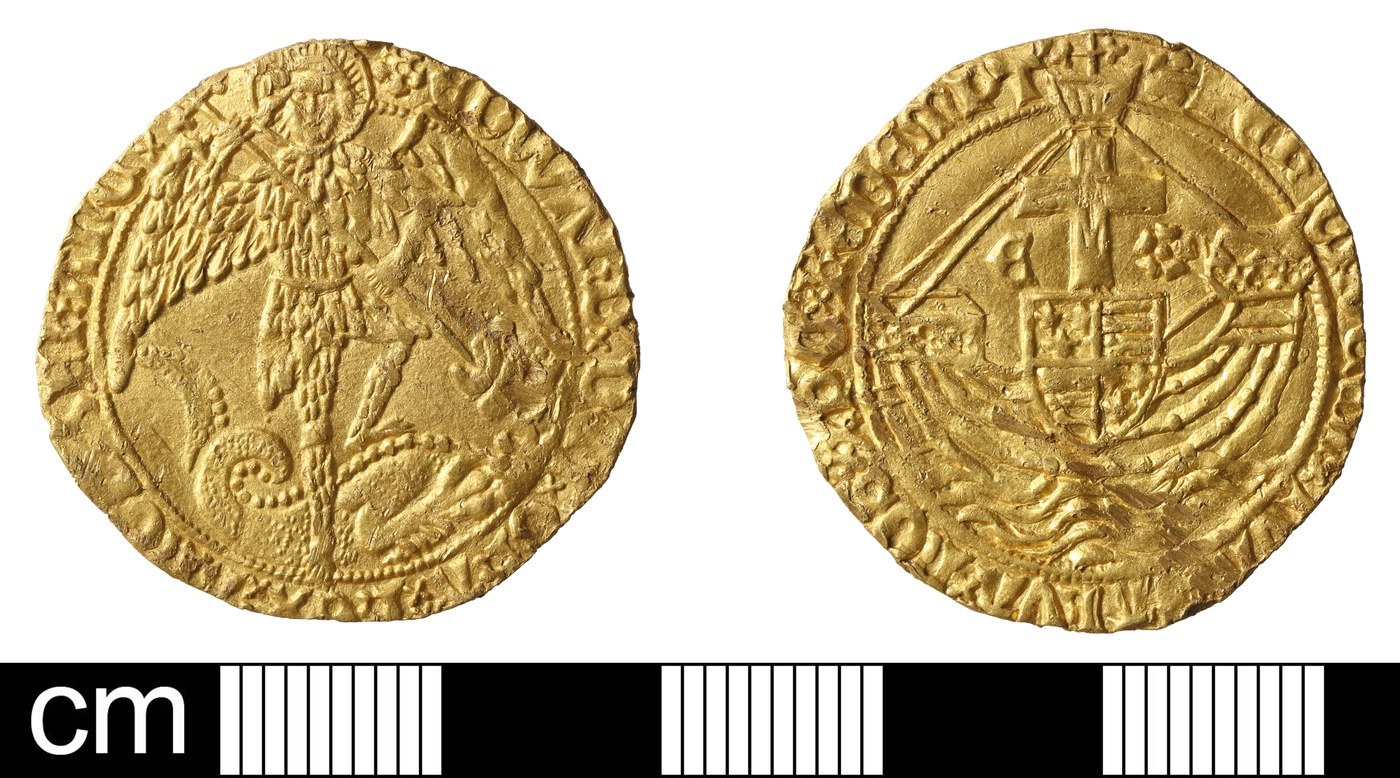
Start with the obverse image, which is the fastest identifier. The angel shows Saint Michael the Archangel standing and facing forward, winged and in armor, driving a long spear downward into a small demon or dragon beneath his feet, typically with a cross-headed shield. A coin that shows a royal portrait, a seated figure, or a plain cross is not an angel of this type.
Read the reverse. Instead of a bust you should find a ship, with a shield bearing the royal arms set against the hull and a tall cross rising above it, frequently accompanied by rays, a sun, a crown, or the king's initial letter in the field, all wrapped in ornament and a Latin religious legend. Confirm the surrounding legend names Edward rather than a later monarch such as Henry, whose angels reuse the same overall design.
Check metal, size, and fabric. The angel is gold and struck as a thin, broad, hand-hammered flan, so expect a coin that is light for its diameter, slightly uneven in outline, and not perfectly centered. A perfectly round, machine-even coin, or one that does not behave like gold, should raise immediate suspicion.
Use the initial (mint) mark to place the coin. At the start of the legend there is usually a small symbol; on hammered coinage these marks changed over time and are used by specialists to assign a coin to a particular part of the reign. Matching the mark, legend spelling, and design details against a standard reference is the reliable way to confirm an Edward IV attribution rather than a Henry VI, Edward V, or later issue.
Authenticate carefully. Because it is medieval gold, the angel is heavily faked, from cast copies to struck forgeries and gilt base-metal pieces. Weigh and measure it, examine the edge and surfaces for casting seams or a soft, sandy texture, and be wary of unusually crisp or greasy-looking detail. Given the values involved, have any candidate coin verified by an experienced dealer or third-party grading service before you buy or sell.
Frequently asked questions
What is the single easiest way to spot an angel?
The standing figure of Saint Michael spearing a demon on the obverse is the giveaway. No other common English gold type of the period uses that image.
How do I tell an Edward IV angel from a later one?
Later kings such as Henry VII and Henry VIII kept the same Saint Michael and ship design, so you must read the legend for the king's name and check the initial mark and design details against a reference.
Should the coin look perfectly round and even?
No. It is hand-hammered gold, so a slightly irregular shape, off-center striking, and uneven rims are normal and expected on genuine examples.
How can I guard against fakes?
Check weight and diameter against published figures, inspect for casting seams or a grainy surface, and seek expert authentication before any significant purchase or sale, since this type is frequently counterfeited.