
How to Identify the Edward III Quarter Noble
Collector checks for the medieval gold quarter noble: crowned shield, floral cross reverse, small size, mint marks, look-alikes and authentication.
Read the full Edward III Quarter Noble encyclopedia entry →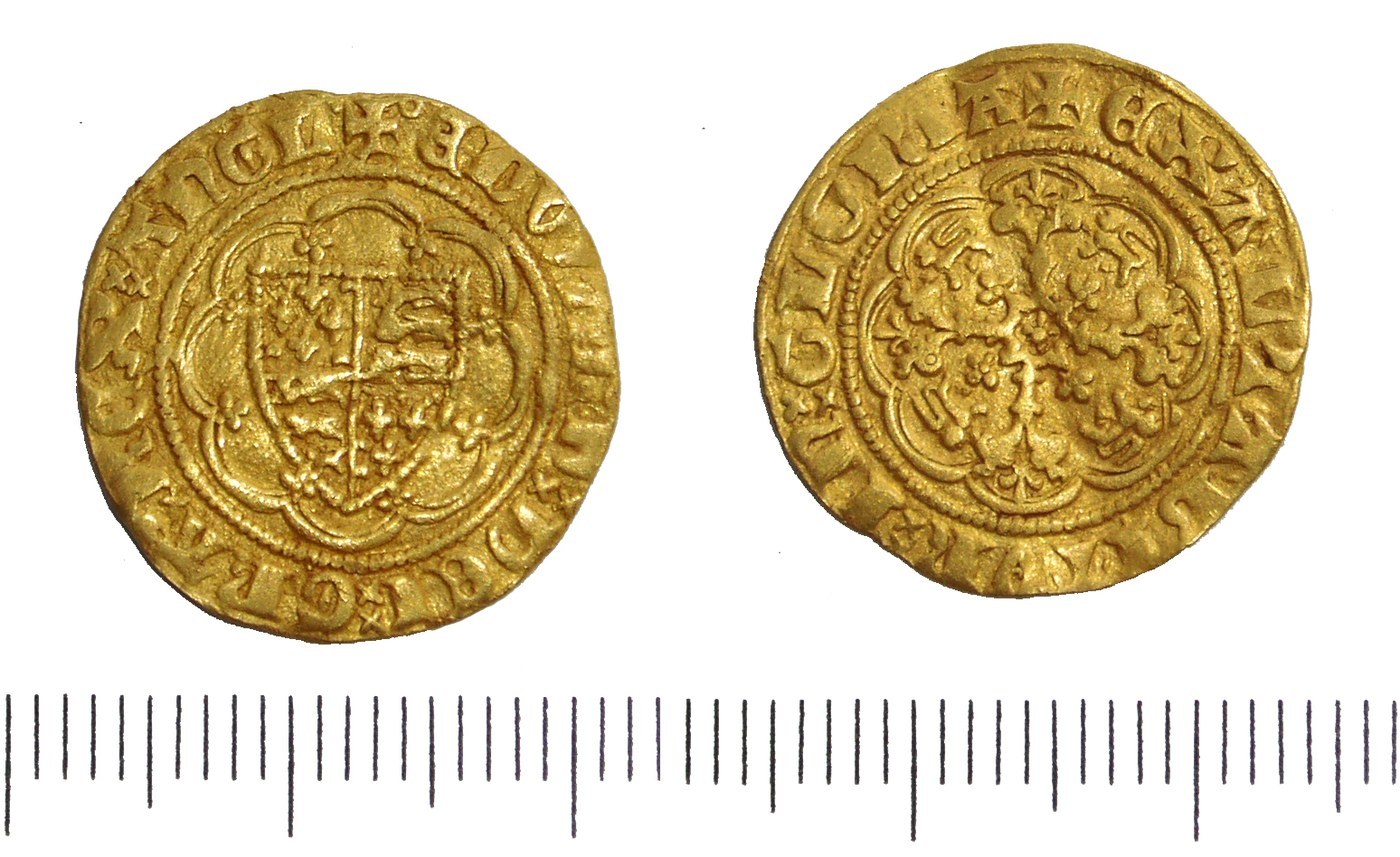
Begin with size and metal. The quarter noble is a small, thin gold coin, distinctly smaller than the half noble and the full noble. If you have a related design on a larger flan, you are likely looking at one of the bigger denominations rather than the quarter noble. Genuine gold shows a warm, soft yellow color, resists tarnish, and feels dense despite the thin fabric.
Read the obverse. Expect a crowned heraldic shield at the center, framed by a beaded and ornamental border, with a Latin legend around the rim naming Edward and his titles. The shield normally quarters the lions of England with the fleurs-de-lis of France, a hallmark of Edward III's gold reflecting his claim to the French throne. The exact form of the royal titles is important, since it changes between the pre-treaty, treaty, and post-treaty phases of the reign.
Check the reverse. The quarter noble reverse is an ornate design built on a central cross, with floral tracery, leaf ornament, and often a central letter or emblem, all enclosed by a religious or royal Latin legend. The overall look is decorative and symmetrical rather than a portrait or scene. Note the mint mark (initial mark) at the start of the legend, as this, together with the titles, is the key to dating the coin within 1327-1377.
Separate look-alikes. Do not confuse the quarter noble with the half noble or noble, which share the shield-and-cross vocabulary but on larger flans, nor with later gold quarter nobles of Richard II or the Henrys, which carry different names and details in the legends. French and Anglo-Gallic gold of the period can also look superficially similar; the English royal titles and heraldry are the deciding evidence.
Authenticate with care. English hammered gold is valuable and has long been forged, both by cast copies and by modern struck fakes, and some genuine coins have been mounted, bent, or gilded. Weigh and measure the coin, examine the edges and fields for casting seams or a grainy surface, be wary of solder traces or filed rims, and for any significant purchase seek an experienced hammered-gold dealer or third-party authentication before relying on a valuation.
Frequently asked questions
What is the quickest way to confirm the denomination?
Judge the size. The quarter noble is the smallest of Edward III's three gold pieces; the half noble and full noble use related shield-and-cross designs on progressively larger flans.
What do the shield and legends tell me?
The crowned shield quartering England and France identifies it as Edward III gold, while the precise royal titles and the mint mark place the coin in the pre-treaty, treaty, or post-treaty phase.
Why does the strike look uneven or off-center?
Quarter nobles are hammered coins, struck by hand between dies, so slightly irregular flans and off-center strikes are normal and are not by themselves signs of a fake.
How do I avoid buying a forgery?
Check weight, diameter, and color, look for casting seams or a grainy surface, watch for mounting or gilding, and use a reputable hammered-gold dealer or third-party grading for valuable examples.