
How to Identify the Edward III Half Noble
Collector's checks for the medieval gold half noble: size versus the noble, crowned portrait and shield, legends, mint marks, and authentication cautions.
Read the full Edward III Half Noble encyclopedia entry →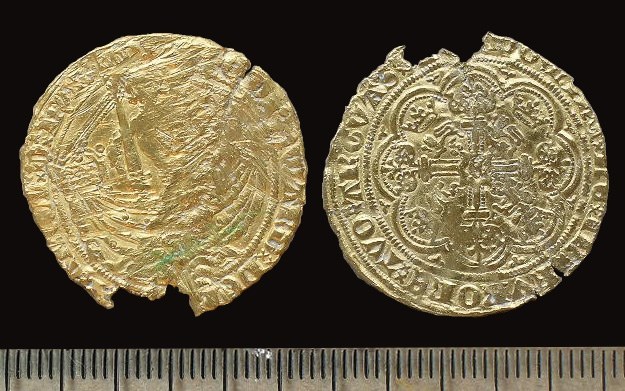
Start with metal and size. The half noble is a gold coin, smaller and lighter than the full noble but distinctly larger and thinner than the silver pennies of the same era. If your coin is gold, hand-struck, and clearly a fraction of a large medieval denomination, you are in the right family. Weigh and measure it and compare against published figures for the noble series, since the half should sit at roughly half the full noble's weight.
Read both faces. On this example the obverse shows the king crowned with heraldic elements, and the reverse centers on a shield bearing a heraldic design surrounded by scroll-like ornament, usually set within tracery around a central cross. Trace the Latin legends in their Gothic lettering; the king's name and titles are essential, because the same design types were reused by later reigns and only the legend and style pin the coin to Edward III.
Examine the field marks and lettering closely. Edward III's gold was struck across several phases, and specialists separate them using initial marks, the exact letter forms, and small symbols placed in the fields or by the shield. These details, more than the overall picture, determine the precise series and heavily influence value, so note them carefully and match them against a specialist catalogue.
Watch for look-alikes. The most important confusion is with half nobles of later kings such as Richard II and the Lancastrians, which share the same layout; distinguishing them relies on the royal name and stylistic detail rather than the general design. Be alert too for the full noble and quarter noble, which use the same imagery at different sizes, and for later gold or even modern reproductions.
Authenticate with care. Medieval gold is valuable and therefore faked, so look for genuine hand-struck detail with slightly irregular flans rather than the soft surfaces or seams of cast copies, and check that weight, diameter, and gold color are consistent with the type. Clipping, mounting marks, tooling, and repairs are common on medieval gold and affect both authenticity and value. For any coin of real worth, seek an experienced dealer or specialist and, for finds, follow local treasure and reporting rules.
Frequently asked questions
How do I tell a half noble from a full noble?
The half noble uses the same imagery as the noble but on a smaller, lighter flan, sitting at roughly half its weight. Measuring and weighing the coin and comparing to published figures is the surest way to separate the denominations.
How can I be sure it is Edward III and not a later king?
Because the design types continued under Richard II and the Lancastrians, you must read the royal name and titles in the legend and check the style and field marks. The picture alone does not confirm an Edward III attribution.
Why do the mint marks and lettering matter so much?
Edward III's gold was struck in several phases distinguished by initial marks, letter forms, and small field symbols. These details set the exact series, which in turn affects rarity and value, so they deserve close attention.
How do I check that a half noble is genuine?
Look for crisp hand-struck detail and a slightly irregular flan rather than soft, seamed cast surfaces, and confirm the weight, size, and gold color fit the type. Given the value of medieval gold, have anything significant checked by a specialist.