
How to Identify the Edward III Half Groat
Practical checks for the hammered silver twopence of Edward III: facing bust, long cross with pellets, size, mint, and authentication tips.
Read the full Edward III Half Groat encyclopedia entry →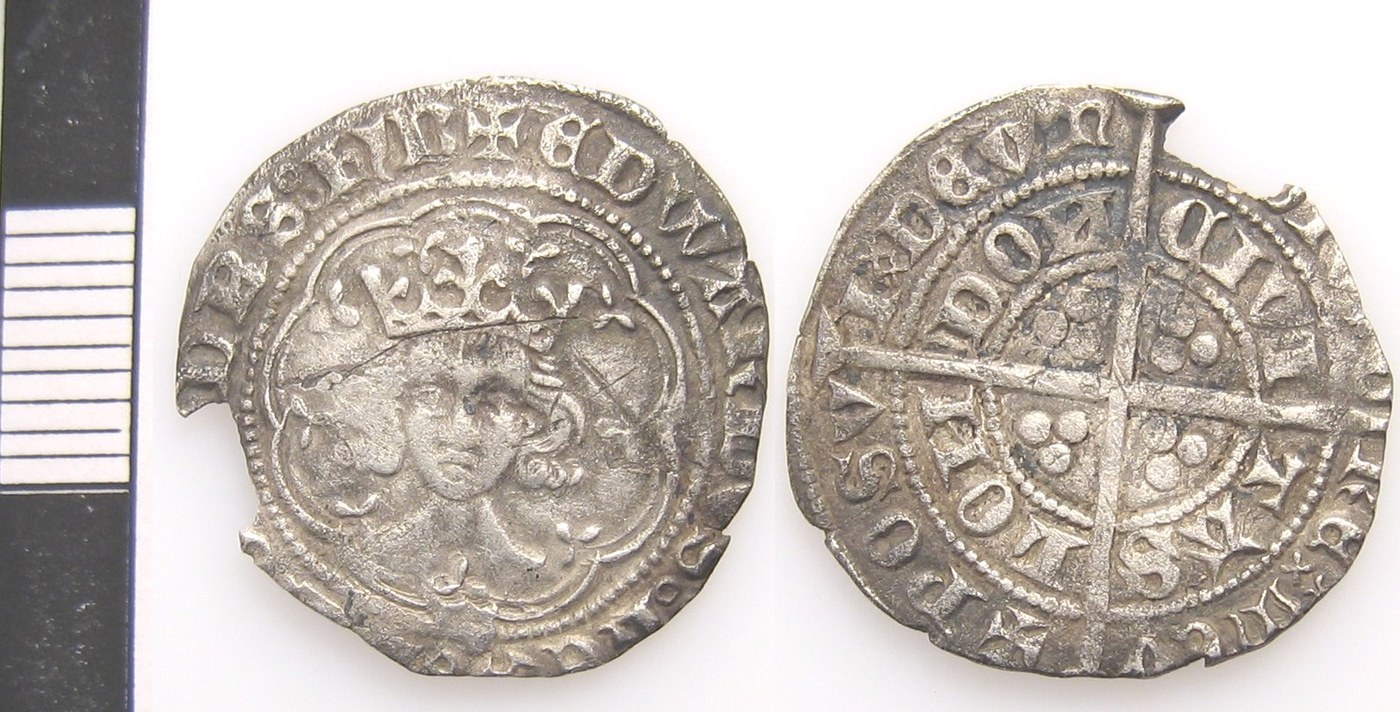
Start with the obverse portrait. The half groat shows a crowned head facing straight out at the viewer, set within a beaded inner circle, with a Latin legend running around the rim naming the king. A forward-facing crowned bust (rather than a profile portrait) is typical of English hammered silver of this era and is the first thing to confirm.
Read the reverse. You should see a long voided cross whose arms reach all the way to the edge of the coin, dividing the field into four quarters, each containing a group of pellets. An inner legend often names the mint, with London being the most common; the cross-to-the-rim design was deliberate, meant to reveal any clipping of silver from the coin's edge.
Use size and metal to place the denomination. The half groat is larger than an Edward III penny but smaller than the fourpenny groat, and it is a thin coin of good silver. Weighing and measuring it, and comparing against known figures for pennies, half groats, and groats, is the surest way to separate the twopence from its neighbors when legends are worn.
Watch for look-alikes and phases. Edward III's long reign produced several coinage phases with differing bust styles, lettering, and legends, so two genuine half groats can look noticeably different. Similar facing-bust designs continued under later kings such as Richard II and the Henrys, so read the legend for the king's name and compare bust and lettering styles rather than relying on the cross alone.
Authenticate with care. Genuine pieces show hand-struck irregularity: uneven flan, weak or partly off-edge legends, and a slightly wavy surface, not the crisp uniformity of a modern strike. Be cautious of cast copies (look for seams, bubbles, or a soft, soapy surface), tooled or re-engraved detail, and modern replicas. When value is significant, seek an experienced dealer or specialist in hammered English coins before buying or selling.
Frequently asked questions
How do I tell a half groat from a penny or a groat?
Size and weight are the key. The half groat is larger and heavier than the penny but smaller than the fourpenny groat. Measuring and weighing the coin and comparing to reference figures is the most reliable check when legends are worn.
How can I be sure it's Edward III and not a later king?
Later kings used similar crowned facing busts and long-cross reverses. Read the Latin obverse legend for the king's name, and compare the bust style, crown, and lettering against documented Edward III types.
Where is the mint marked on the coin?
The mint is usually named in the reverse legend around the long cross. London is the most common, though other centers such as York also struck coins during the reign.
How do I spot a fake or cast copy?
Genuine hammered coins are irregular but crisp where struck. Casts often show seams, tiny bubbles, mushy detail, or a dull soapy surface. Unusual sharpness combined with a perfectly round, even flan is also a warning sign.