
How to Identify the Edward I Penny
Collector checks for the hammered penny: crowned facing bust, long-cross-and-pellets reverse, size and silver, reading the mint legend, and spotting fakes.
Read the full Edward I Penny encyclopedia entry →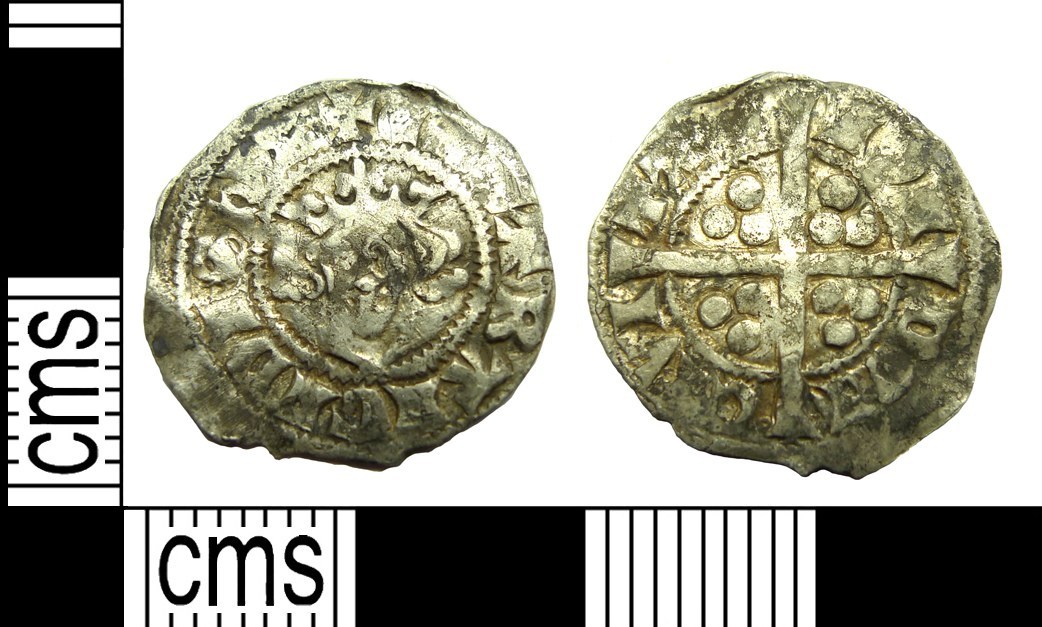
Start with the overall fabric. An Edward I penny is a small, thin, hand-struck silver coin, roughly 18-20 mm across and light in the hand, not a thick or heavy piece. If your coin is chunky, cast-looking, or made of base metal, it is probably something else. Genuine examples show the slightly irregular flan and occasional off-center strike typical of hammered coinage.
Read the obverse portrait. Edward's penny carries a stylized head facing straight out at the viewer, wearing an elaborate crown, framed by a Latin legend naming Edward as king. This front-facing crowned bust is characteristic of the type and distinguishes it from earlier and later English coins that use profile portraits. Do not expect a lifelike face; the image is formal and schematic.
Use the reverse as your key diagnostic. Look for a long voided cross whose arms run all the way to the rim, splitting the coin into four quarters, each containing three pellets. This long-cross-and-pellets layout is the signature of the type. The surrounding legend names the mint and the moneyer or place of striking, so reading it, even partially, helps you attribute the coin to a specific mint town.
Separate it from look-alikes. The long-cross pennies of Edward's father Henry III look very similar, and the design continued almost unchanged under Edward II and Edward III, so the same portrait and reverse can span several reigns. Because many coins do not spell out a distinguishing numeral, precise attribution often relies on small differences in crown style, lettering, and class, which are catalogued in specialist references; when in doubt, class it broadly as an Edwardian long-cross penny.
Authenticate with care. These coins are popular and widely collected, so cast copies and modern fakes exist. Favor pieces with crisp, hand-struck detail over soft, blurred surfaces or telltale casting seams, check that diameter, weight, and silver appearance fit the type, and be cautious of coins with suspiciously perfect centering. For anything of real value, seek an experienced dealer or specialist opinion, and where a coin is a find, follow local rules on reporting and provenance.
Frequently asked questions
What is the quickest way to recognize an Edward I penny?
Check the reverse for a long voided cross reaching the edge with three pellets in each quarter, then confirm a crowned facing bust on the obverse. That combination on a small, thin hammered silver coin points to an Edwardian penny.
How do I tell an Edward I penny from Henry III or Edward II?
It is genuinely hard, because the crowned bust and long-cross reverse continued across these reigns with little change. Fine differences in crown, lettering, and class distinguish them, so many collectors simply call an unattributed piece an Edwardian long-cross penny until a specialist confirms it.
Where do I look for the mint name?
The mint is named in the legend running around the reverse, alongside the cross. Reading that inscription, even a few letters of the town name, is the standard way to attribute the coin to its mint.
How can I spot a fake?
Genuine pennies are hand-struck with sharp, slightly uneven detail, while casts look soft and may show seams or a wrong weight. Confirm the size, weight, and silver look match the type, and get expert help before paying a premium.